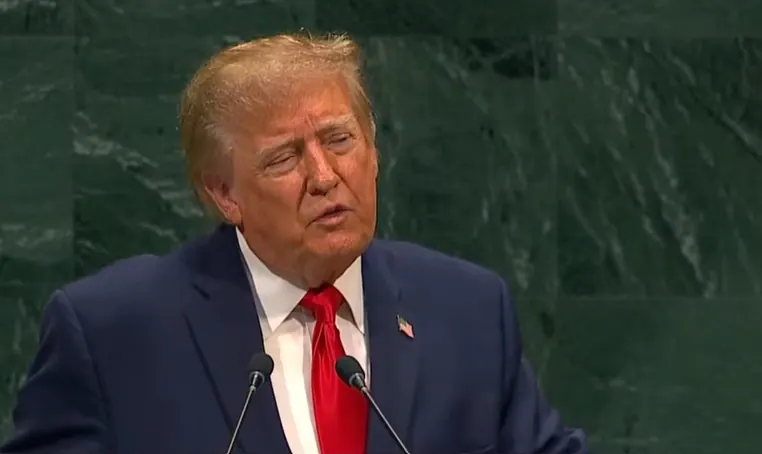
On September 22, US President Donald Trump announced that the US government will adopt the term "super intelligence" instead of "artificial intelligence" (AI) in its communication. Trump made the announcement during his address to the United Nations General Assembly, suggesting that the new term is more suitable and appealing. He emphasized that "super intelligence" better reflects the capabilities of the technology, which he believes has surpassed human reasoning and reflection in various domains.
Trump's opposition to global governance of AI was reiterated during his speech, as he rejected any attempts to establish a centralized international control over the technology. This stance aligns with the US government's position since Trump's inauguration. In September 2025, the US government's science and technology advisor, Michael Kratsios, expressed opposition to international efforts to control and govern AI in a centralized manner during a UN Security Council meeting.
The US plays a crucial role in the debate on AI governance, as it hosts many of the world's most advanced AI developers. The country's position on AI governance has significant implications, given its status as the world's largest economy. Trump's announcement comes as various countries and international organizations call for greater coordination and regulation of AI.
The term "superintelligence" refers to the stage at which AI surpasses human capabilities in all domains. Trump argued that the term "artificial intelligence" sounds "fake," whereas "super intelligence" is more accurate and appealing. He invited other nations to adopt the new terminology, promoting a unified approach to the technology.
On the eve of Trump's announcement, leaders from over 20 countries advocated for more stringent regulations on AI and the potential creation of an international regulatory body under the UN's auspices. However, Trump maintained that the US will not support any efforts to establish a global authority to control AI.
The US shift in terminology and its opposition to global AI governance reflect the country's interests and priorities in the rapidly evolving tech landscape. As AI continues to advance, the debate surrounding its governance and regulation is expected to intensify. The US stance on AI governance may influence the approaches taken by other countries and international organizations.
The implications of Trump's announcement and the US position on AI governance will be closely watched by the international community. As the world's largest economy and a hub for AI development, the US plays a significant role in shaping the future of AI and its regulation. The global community will likely continue to engage in discussions on AI governance, with the US position being a key factor in these deliberations.
Key points
- US President Donald Trump announces shift from 'artificial intelligence' to 'super intelligence' terminology.
- Trump opposes global governance of AI, rejecting centralized international control.
- The US stance on AI governance may influence international approaches to regulating the technology.