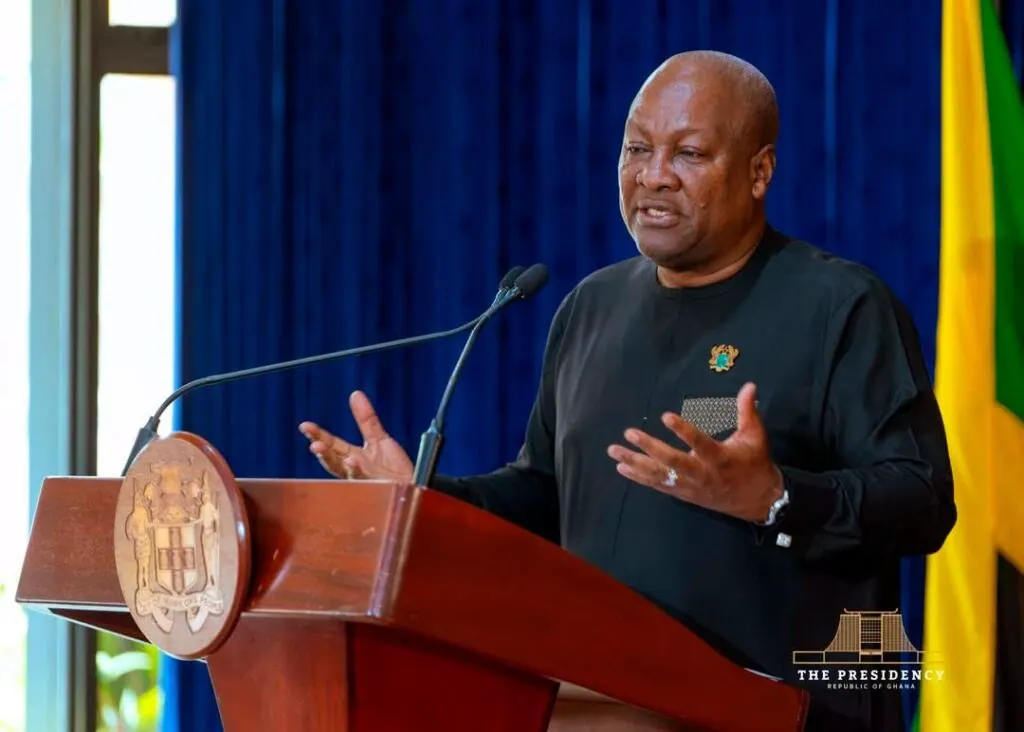
The United States has reached out to Ghana to renegotiate a $109 million health compact that was previously rejected by Ghana's Cabinet. The compact was designed to channel US health assistance to Ghana over five years, partly replacing funding Ghana had previously received through the United States Agency for International Development (USAID). President John Mahama disclosed this information at a citizens' engagement in Goaso in the Ahafo Region.
Ghana's Cabinet had rejected the proposed compact over several clauses, including requirements to share the country's "pathogen profile" — data on disease-causing organisms circulating in Ghana — as well as provisions that would have compelled the sharing of medical records. The President had already addressed the rejection publicly, telling a Council on Foreign Relations dialogue in New York on September 25 that the terms also included a counterpart funding requirement obliging Ghana to commit its own resources.
The compact's fate matters to ordinary Ghanaians because it was intended to help plug a funding gap left by reduced USAID support for health programmes. The FDA, Ghana's statutory body responsible for regulating the safety and quality of drugs, food and medical devices sold in the country, was also a major concern. Government's concern was that restricting its inspection powers under a foreign-funded health programme could weaken oversight of medicines entering Ghana.
President Mahama stated that the Americans had circled back after Cabinet's rejection of the agreement to propose a fresh round of talks aimed at fixing the contentious sections of the document. He said the US side wanted to sit down and discuss the clauses Ghana objected to, with a view to either amending or removing them. However, no date has been set for when those renewed negotiations will begin.
The proposed compact was designed to support health interventions in Ghana, and its collapse or eventual revival on amended terms could affect how certain health interventions are financed and regulated going forward. The FDA's role in regulating medicines and medical products imported under the programme was a major point of contention.
Mahama described some of the conditions attached to the deal as humiliating, according to an earlier account of his New York remarks. The President did not indicate which specific provisions the US side is willing to revise, leaving open questions about whether the data-sharing and FDA-related concerns that sank the original deal can be resolved to Ghana's satisfaction.
Both sides are now expected to sit down to discuss amending or stripping out the disputed clauses. The outcome of these negotiations will determine the future of the $109 million health compact and its potential impact on Ghana's health sector. Key issues to be addressed include data-sharing requirements and the FDA's inspection powers.
Key points
- The US has sought to renegotiate a $109 million health compact with Ghana.
- Ghana's Cabinet had rejected the proposed compact over sovereignty and data concerns.
- The compact's fate affects how certain health interventions are financed and regulated in Ghana.