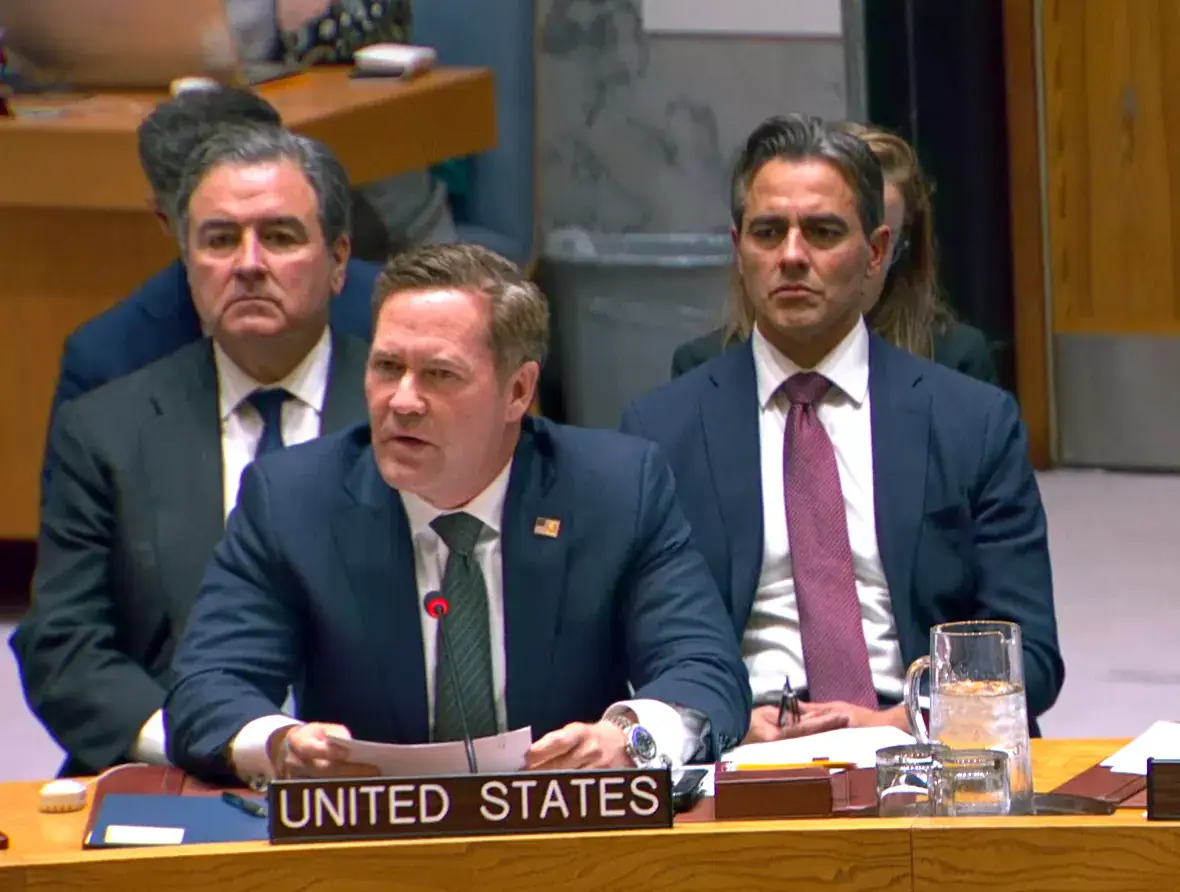
The United States-drafted resolution on Western Sahara was vetoed by Russia at the UN Security Council, killing a text that would have dropped the word "Referendum" from the name of the UN mission and anchored the process in Morocco's Autonomy Plan. The draft, circulated as document S/2026/868, drew 11 votes in favor, one against, and three abstentions. US Ambassador Mike Waltz stated that the veto preserved a self-determination referendum that the United Nations itself abandoned decades ago.
According to US Ambassador Mike Waltz, the United Nations has been expressing doubts over a referendum for 30 years. He cited various UN officials, including Secretary-General Boutros Boutros-Ghali, who in the mid-1990s, "didn't expect that the referendum would prove possible." In 1996, the Council suspended voter identification due to disagreements on who should vote. In 1997, Kofi Annan warned that the referendum "may never happen at all." Waltz emphasized that UN officials have been stating this reality for decades.
Waltz argued that the US position supports the principle of self-determination, but there are many ways to realize and express the will of a people. He maintained that the defeated resolution, backed by 11 members, would have taken historic steps to end the 50-year frozen conflict. The resolution would have extended MINURSO until October 31, 2027, and renamed it the United Nations Mission in Western Sahara as of November 1, 2026.
The US Ambassador highlighted the human cost of the conflict, citing UN reports that nearly two-thirds of children under five in refugee camps suffer from anemia, one-third have stunted growth, and only 10% receive an acceptable diet. He described the conditions as "untenable, unsustainable, and genuinely truly inhumane." Waltz stated that the US will not support a status quo that condemns future generations to more decades of refugee camps.
Waltz tied the vote to the ground gained a year earlier, with Resolution 2797 establishing Morocco's autonomy proposal as the basis for negotiation. He noted that the parties have held three rounds of talks at a high level, covering various aspects of a lasting settlement. The vetoed text would have taken the next steps on the road to freedom and peace.
Despite the defeat, Waltz signaled a managed exit rather than a collapse. He pledged to work with his co-chair, Personal Envoy Staffan de Mistura, and the concerned parties to find a way to negotiate a lasting peace. Waltz emphasized that the US will ensure an orderly and stable drawdown, protecting UN personnel and addressing legitimate security and humanitarian needs.
The Russian veto has preserved the status quo, which Waltz argued is unsustainable. He stated that the US will not lend its vote to business as usual in the face of such conditions. The US will also not support a mission whose name perpetuates something that cannot be done. The conflict has been ongoing for 50 years, and the US is seeking a lasting peace.
Key points
- The US says a self-determination referendum in Western Sahara 'will not happen' after Russia vetoed a UN resolution.
- The vetoed resolution would have dropped the word "Referendum" from the name of the UN mission and anchored the process in Morocco's Autonomy Plan.
- The US supports a lasting peace in Western Sahara, citing the humanitarian crisis in refugee camps.