The United States has imposed sanctions on Rwanda's defense ministry and Zigama Credit and Savings Society, a financial institution, for their support of the M23 rebel group and its political wing, the Alliance for a Congolese and African Renaissance (AFC), in the Democratic Republic of Congo (DRC). The sanctions aim to pressure Rwanda to withdraw its troops from Congolese territory and cease its support for the rebels. The move is part of the US effort to address the ongoing conflict in the DRC's eastern region.
The sanctions against Rwanda's defense ministry and Zigama Credit and Savings Society were announced on October 28, 2026. The US Treasury Department accused Zigama of facilitating financial transactions for the M23 rebels worth millions of dollars and transporting gold from mining sites controlled by the group. The sanctions also target individuals and entities involved in the conflict, including those who have provided support to the M23 and AFC.
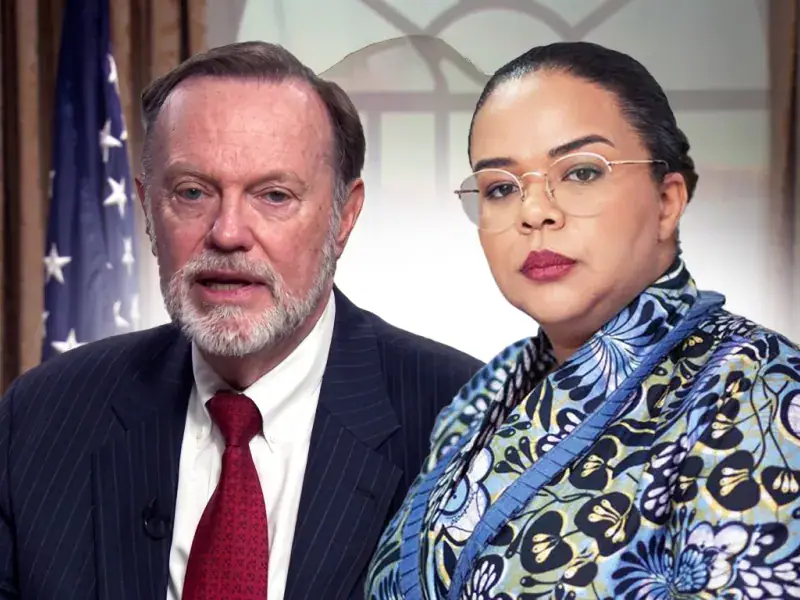
The decision to impose sanctions on Rwanda's defense ministry and Zigama Credit and Savings Society has sparked reactions from various stakeholders. Tibor Nagy, former US Assistant Secretary of State for African Affairs, called for a more balanced approach, suggesting that the US should also sanction the DRC government for its alleged support of armed groups that threaten Rwanda. Nagy argued that sanctioning only one side would not be effective in ending the conflict.
However, DRC Foreign Minister Thérèse Kayikwamba Wagner rejected Nagy's suggestion, arguing that the situations in Rwanda and the DRC are not comparable. She emphasized that the humanitarian consequences of the conflict in the DRC, including thousands of deaths and millions of displaced people, cannot be compared to any perceived threat from the DRC government. Kayikwamba Wagner also questioned why the US would consider sanctioning the DRC government when it has not provided evidence of its alleged support for armed groups.
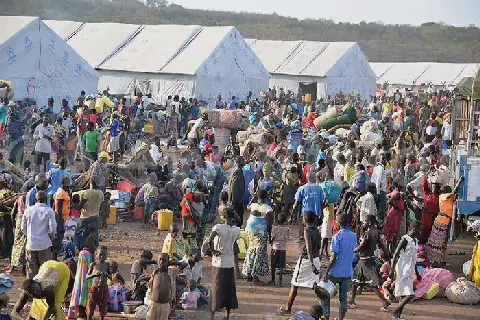
The conflict in the DRC's eastern region has been ongoing for over three decades, resulting in significant humanitarian suffering. The M23 rebels, backed by Rwanda, have been accused of committing human rights abuses and displacing civilians. The DRC government has also been criticized for its alleged support of armed groups, including the Forces démocratiques de libération du Rwanda (FDLR).
The US sanctions against Rwanda's defense ministry and Zigama Credit and Savings Society are part of a broader effort to address the conflict in the DRC. The US has previously imposed sanctions on Rwandan individuals and entities, including the Rwandan army and mining companies accused of trafficking conflict minerals. The sanctions aim to promote peace and stability in the region and hold accountable those who perpetuate violence and human rights abuses.
The reactions to the US sanctions highlight the complexities of the conflict in the DRC and the challenges of addressing it. The conflict involves multiple parties, including the DRC government, Rwanda, and various armed groups, making it difficult to find a solution. The US sanctions are seen as a step towards promoting accountability and pressuring Rwanda to change its behavior, but a lasting solution will require a more comprehensive approach that addresses the root causes of the conflict.
Key points
- The US has imposed sanctions on Rwanda's defense ministry and financial institution over their support for M23 rebels in DRC.
- The sanctions aim to pressure Rwanda to withdraw its troops from Congolese territory and cease its support for the rebels.
- The move has sparked reactions from stakeholders, including Tibor Nagy and DRC Foreign Minister Thérèse Kayikwamba Wagner.