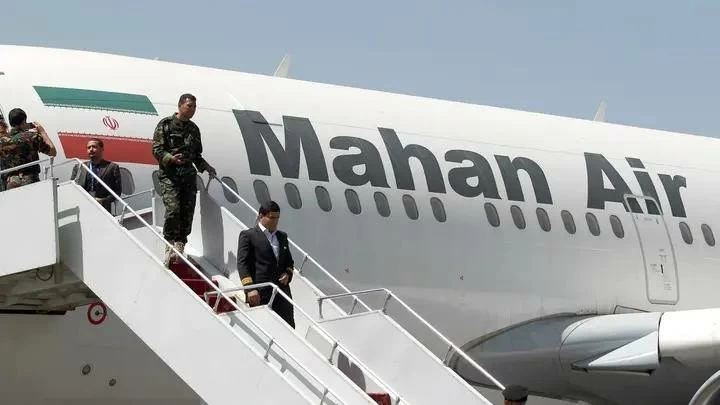
The US has imposed stricter sanctions on Iran's aviation sector, with the new measures taking effect on Wednesday, September 23. The sanctions target Iran's national airline, Iran Air, and other Iranian carriers, as part of the US efforts to increase economic pressure on Iran. The move is aimed at restricting Iran's ability to operate its airlines and access the global financial system.
The US Treasury Department has warned that any entity that deals with Iranian airlines will be cut off from the US dollar system. In an interview with CNBC, US Treasury Secretary Scott Mnuchin said that Iranian airlines would be forced to cease operations from Wednesday, and that any attempts to refuel or provide services to these planes would result in exclusion from the US dollar system.
The new sanctions have already led to the cancellation of flights and changes in flight arrangements. Iran's Civil Aviation Organization reported that Baghdad and Muscat airports would no longer accept Iranian flights from midnight. However, other international flights, including those to Istanbul, were still scheduled to operate normally.
Iranian authorities are negotiating with neighboring countries to change flight routes. The spokesman for Iran's Civil Aviation Organization said that talks were underway to redirect flights to Baghdad to the Najaf airport, while similar discussions were being held with Oman. The Iraqi government has not officially announced its stance on the US sanctions, but sources indicate that Baghdad will comply with the US restrictions.
The sanctions have significant implications for Iranian airlines, which primarily transport Iranian pilgrims to holy sites in Iraq. The US move is expected to further restrict the movement of Iranians, who may face increased difficulties traveling abroad or returning to the country. Iraqi officials have reportedly discussed organizing land routes to compensate for the loss of air travel.
The Iranian aviation sector has already faced significant challenges since the start of the conflict in the Middle East in late February. Several countries, including Georgia, have banned Iranian flights from their airspace, while others, such as Turkey, have suspended flights to and from Iran.
The US sanctions are part of a broader effort to increase pressure on Iran's economy. The measures are likely to have far-reaching consequences for the Iranian aviation sector and the country's ability to access the global financial system. The impact of the sanctions on Iran's economy and the country's ability to respond to the US measures remains to be seen.
Key points
- The US sanctions on Iranian airlines aim to cut off Iran's access to the global financial system.
- The measures have led to flight cancellations and changes in flight arrangements.
- The sanctions are part of the US efforts to increase economic pressure on Iran.