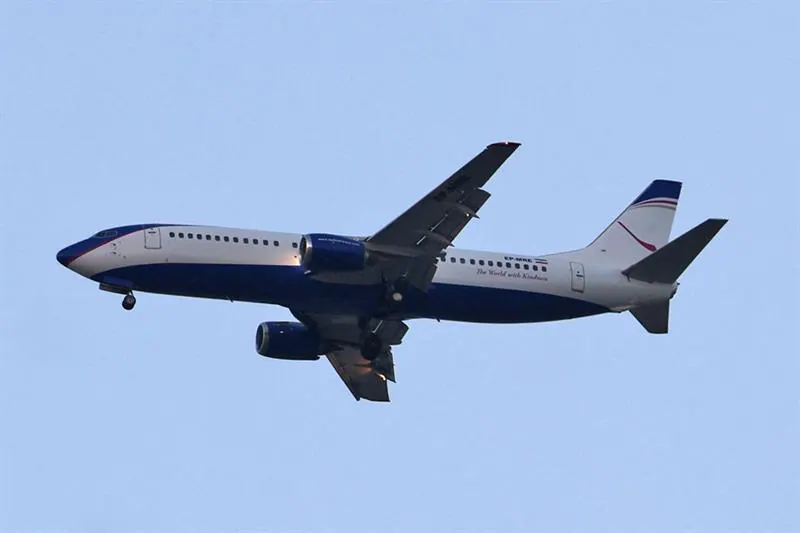
The United States has imposed sanctions on Iran's entire aviation sector, aiming to restrict the country's access to international air travel. Treasury Secretary Scott Bessent stated that the sanctions would lead to the "economic asphyxiation" of the Islamic republic. The measures, which came into effect on September 23, prohibit foreign companies from providing services to Iranian airlines, including fuel, landing services, and ticket sales.
Tehran has responded strongly to the sanctions, denouncing them as illegal and lodging a complaint with the United Nations and the International Court of Justice. Iranian officials claim that the country continues to serve around 30 international destinations from Tehran alone. According to Flightradar24, the number of flights taking off or landing at Tehran's international airport significantly decreased, with only 41 flights recorded on Sunday, compared to an average of 80-90 daily flights before the sanctions.
The sanctions have had a substantial impact on Iran's major airlines, with national carrier Iran Air and privately owned Mahan Air being the hardest hit. On Sunday, only five Mahan Air and two Iran Air flights took off from Tehran airport, compared to around 10 departures each before the sanctions. However, Tehran airport's director claimed that more than 30 international destinations were still being served, with some flights continuing to operate to countries like China, Russia, and Turkey.
China, a key economic ally of Tehran, has rejected the US sanctions as "illegal and unilateral," allowing Mahan Air flights to continue serving Chinese airports. Flights to Russia and Pakistan also continue, although neither country has commented on the sanctions. In contrast, Mahan Air has halted flights to Turkey at the request of Turkish authorities. The sanctions have not been applied in countries like Armenia, Afghanistan, Belarus, and Malaysia, which are primarily served by smaller Iranian airlines.
The United Arab Emirates has suspended all Iranian flights to and from its territory "until further notice," while Kuwait has banned Iranian airlines from entering the country. Other Gulf countries have also suspended flights, according to their airport websites. Iranian flights can no longer travel to Azerbaijan, Georgia, and Iraq, although Iraq is seeking an exemption from sanctions for humanitarian reasons, including medical treatment, education, and religious visits.
The Iraqi government is in talks with the US to exempt certain Iraqi airports from the sanctions, which have disrupted travel for patients, students, and pilgrims. Iranian airlines mainly carry Iraqi Shia pilgrims to Iran's holy cities or Iranians visiting sacred sites in Iraq. The flights also serve Iraqi students studying in Iran and patients seeking medical treatment there. An exemption would allow flights to resume for humanitarian purposes.
The impact of the sanctions on Iranian aviation is expected to be significant, with many flights grounded and international travel restricted. The situation remains fluid, with some countries defying the US sanctions and others complying. The Iranian government has vowed to continue operating flights, while the US has yet to announce whether it will retaliate against countries that do not comply with the sanctions.
Key points
- The US sanctions on Iranian aviation have significantly reduced flights, with Tehran's international airport seeing a decrease of around 50% in flights.
- China, Russia, and Turkey are among the countries that have defied the US sanctions, allowing Iranian airlines to continue serving their airports.
- Iraq is seeking an exemption from sanctions for humanitarian reasons, including medical treatment, education, and religious visits.