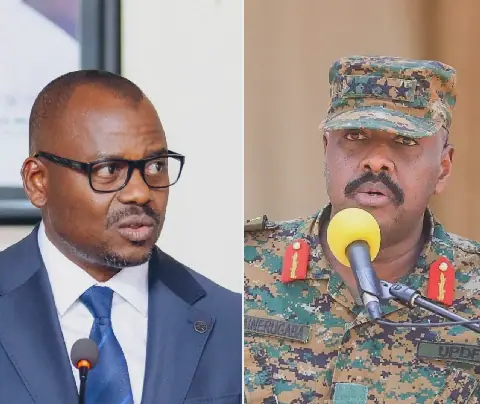
The United States has announced that it will maintain its sanctions against Rwanda, citing the country's failure to comply with the terms of the Washington agreement signed in December 2025. The sanctions, imposed on March 2, 2026, target the Rwandan Defence Forces (RDF) and four high-ranking officers, including generals Vincent Nyakarundi, Ruki Karusisi, Mubarakh Muganga, and Stanislas Gashugi. The measures freeze any assets held in the US and prohibit American citizens and companies from engaging in transactions with the sanctioned individuals and entities.
According to Massad Boulos, senior adviser to US President Donald Trump for Africa, the sanctions were a direct result of Rwanda's invasion of Uvira, which occurred shortly after the signing of the Washington agreement. Boulos stated that the US had given Rwanda the opportunity to withdraw its forces, but ultimately had to impose sanctions due to Kigali's failure to comply. He emphasized that the US is willing to lift the sanctions if Rwanda demonstrates a commitment to upholding its obligations.
The Washington agreement, signed in December 2025, aimed to establish a framework for peace and stability in the region. However, the agreement's implementation remains incomplete, with several key issues still unresolved. One of the main concerns is the status of the M23 rebel group, which has been accused of committing human rights abuses. Boulos acknowledged that the M23 issue remains a challenge, but expressed confidence that the agreement can still be implemented with the cooperation of all parties.
Despite maintaining the sanctions, the US administration has not ruled out the possibility of easing its stance in the future. Boulos noted that there are "encouraging signs" that Rwanda is taking steps to comply with its obligations, and urged Kigali to take advantage of the opportunity to demonstrate its commitment to peace and stability. He also emphasized that the US will continue to monitor the situation closely and adjust its policy accordingly.
The sanctions imposed by the US have significant implications for Rwanda, particularly in terms of its military and economic relationships with the US and other Western countries. The RDF, which has been accused of human rights abuses, relies heavily on international support to fund its operations. The sanctions also restrict the ability of Rwandan individuals and entities to access US markets and financial systems.
The situation in the Democratic Republic of Congo, where the M23 rebel group is active, remains a major concern for the international community. The group has been accused of committing human rights abuses, including the execution of civilians and the recruitment of child soldiers. The US and other Western countries have called on the Congolese government and the M23 to work towards a peaceful resolution to the conflict.
The US administration's decision to maintain sanctions against Rwanda reflects its commitment to promoting peace and stability in the region. The US will continue to work with its international partners to encourage Rwanda and other countries to uphold their obligations and respect human rights. The situation remains fluid, and the US stance may evolve in response to future developments.
Key points
- The US has maintained sanctions against Rwanda due to the country's failure to comply with the Washington agreement.
- The sanctions target the Rwandan Defence Forces and four high-ranking officers.
- The US administration remains open to easing its stance if Rwanda demonstrates a commitment to upholding its obligations.