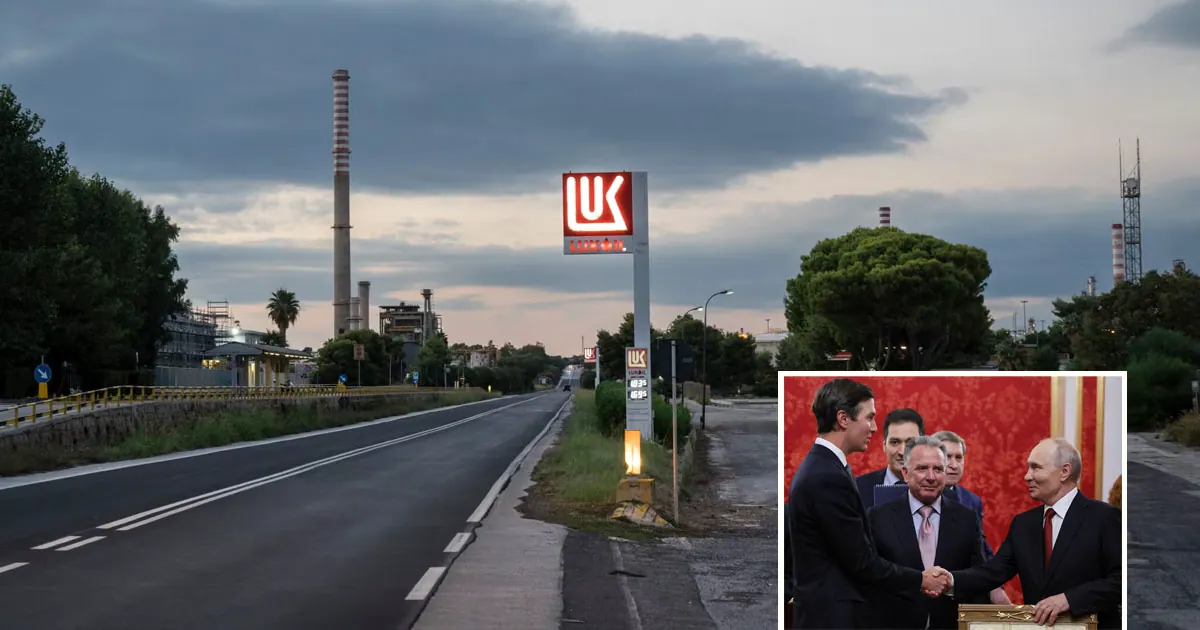
The negotiations between the US and Russia to end the war in Ukraine have expanded to include a multi-billion dollar energy deal. The deal involves the acquisition of Russian oil giant Lukoil's international assets, which include oil fields, refineries, and gas stations worldwide. Lukoil has valued its international assets at around $20 billion. The talks have raised concerns about potential conflicts of interest and the influence of personal interests on the decision-making process.
The US administration had imposed sanctions on Lukoil last year, which led to the company's decision to sell its international assets. The sanctions have given Washington significant influence over the sale process, as any transaction requires US approval to lift the restrictions. The deal has been discussed by Russian President Vladimir Putin and US President Donald Trump's emissaries, Steve Witkoff and Jared Kushner. The two sides see the deal as an opportunity to strengthen trust and contribute to lower global energy prices.
The list of investors interested in acquiring Lukoil's assets includes billionaire Todd Boehly, a major donor to Trump's campaign and a co-owner of the Los Angeles Dodgers. Boehly's investment group, Eldridge Industries, has ties to Trump's inner circle. While there is no evidence that Kushner or Witkoff have a direct financial stake in the deal, their associates and partners stand to benefit financially from the transaction.
The deal has raised concerns about the intertwining of personal interests and government decision-making. Hui Chen, a former federal prosecutor and government ethics expert, described the situation as "effronté" and "extremely concerning." Chen questioned how the US administration evaluates bidders and whether personal interests could influence the outcome of the process.
The US Treasury Department has stated that the Office of Foreign Assets Control (OFAC) implements the foreign policy defined by the White House. The final decision on the deal is expected to be made at the White House, with input from both the US and Russian presidents. The involvement of the US International Development Finance Corporation (DFC) in the deal is seen as a way to strengthen US economic security.
The negotiations between the US and Russia are ongoing, with the two sides working towards a peace plan for Ukraine. The inclusion of the oil deal in the talks has added a new layer of complexity to the negotiations. The deal's success depends on the approval of both the US and Russian governments.
The US-Russia talks on Ukraine have expanded to include a multi-billion dollar oil deal involving Lukoil's international assets. The deal has raised concerns about conflicts of interest and the influence of personal interests on the decision-making process. The final decision on the deal is expected to be made at the White House, with input from both the US and Russian presidents.
Key points
- The US and Russia discuss a peace plan for Ukraine and a multi-billion dollar oil deal involving Lukoil's international assets.
- The deal has raised concerns about conflicts of interest and the influence of personal interests on the decision-making process.
- The final decision on the deal is expected to be made at the White House, with input from both the US and Russian presidents.