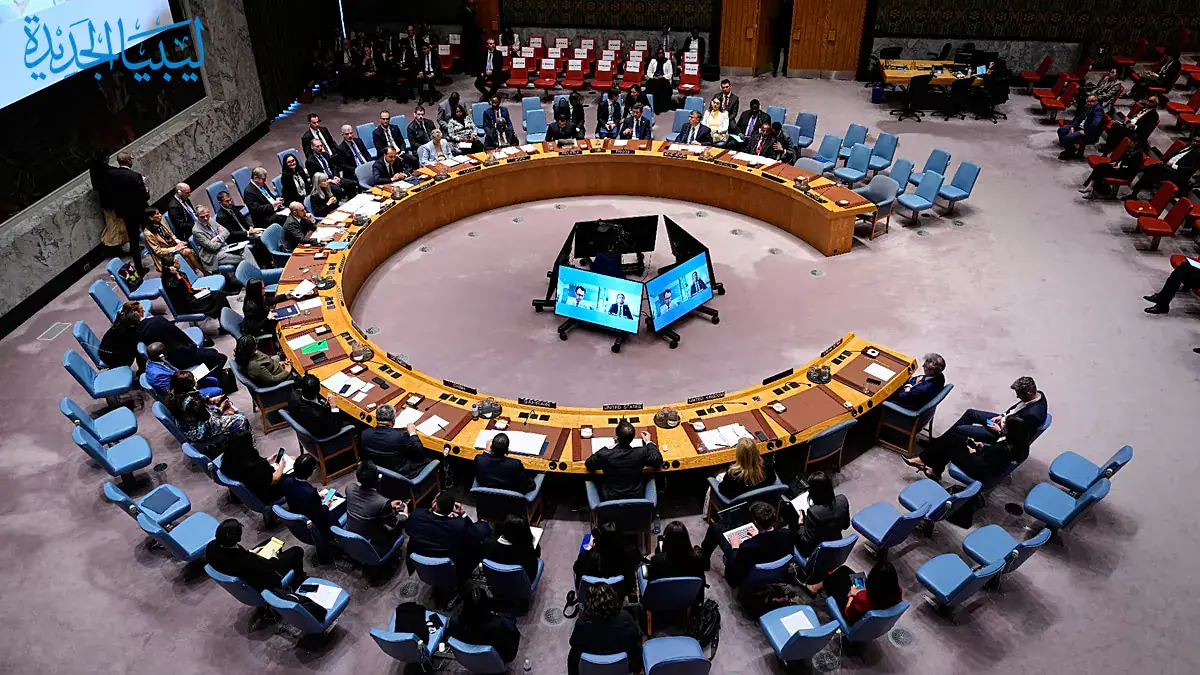
The UN Security Council was unable to reach a consensus on extending the mandate of the UN Mission for the Referendum in Western Sahara (MINURSO) due to a disagreement between the US and Russia. The US proposed a draft resolution that would have extended the mission's mandate for another year, with a focus on the Moroccan autonomy plan as the basis for negotiations. However, Russia vetoed the proposal, citing concerns that it would undermine the peace process.
Russia proposed an alternative draft resolution that would have extended the mission's mandate until October 31, 2027, with its current tasks, including organizing a referendum on self-determination. However, the proposal failed to gain the necessary nine votes, with only three countries supporting it. The failure to reach a consensus leaves the future of the mission, which has been operating in the region since 1991, uncertain.
The Moroccan Royal Court welcomed the failure to extend the mission's mandate and called for the withdrawal of its personnel and equipment from Western Sahara within the coming days. Morocco has long maintained that the Western Sahara is an integral part of its territory and has rejected the idea of a referendum on self-determination. Instead, it has proposed a plan for autonomy under Moroccan sovereignty.
The Polisario Front, which is supported by Algeria and seeks independence for Western Sahara, welcomed Russia's veto of the US proposal. The group's representative to the UN, Sidi Omar, said that the US proposal would have undermined the peace process and threatened security and stability in the region. Algeria also expressed disappointment at the failure to extend the mission's mandate, criticizing the US proposal for being biased towards Morocco.
The US Ambassador to the UN, Michael Waltz, criticized Russia's veto, saying that it would prevent a "historic step towards ending a 50-year-old conflict." He also noted that the referendum that the mission was established to organize had not been held due to disagreements over voter eligibility. Russia's Ambassador to the UN, Vassily Nebenzia, argued that the US proposal was biased towards Morocco and would have limited the options for the future of the region.
China abstained from voting on both proposals, citing a lack of consultation on the US draft. France and the UK expressed regret at Russia's veto, while warning of the consequences of a sudden halt to the mission's work. The humanitarian organization Oxfam warned that a halt to the mission's work could threaten stability in Western Sahara and put civilians and refugees at risk.
The situation in Western Sahara remains complex, with tens of thousands of Sahrawi refugees living in camps in Algeria. The UN mission was established in 1991 to supervise a ceasefire and organize a referendum on self-determination, but the referendum has yet to be held due to disagreements between Morocco and the Polisario Front. The Security Council had previously endorsed the Moroccan autonomy plan as a basis for a settlement and requested a review of the mission's work.
Key points
- The UN Security Council failed to extend the mandate of its mission in Western Sahara due to a disagreement between the US and Russia.
- Morocco has proposed a plan for autonomy under Moroccan sovereignty as a solution to the conflict, while the Polisario Front seeks independence for Western Sahara.
- The failure to extend the mission's mandate leaves the future of the region uncertain and could threaten stability and put civilians and refugees at risk.