A recent study by the Center for Strategic and International Studies, also known as Center for Jamestown, has shed light on Turkey's growing role in Libya and Africa. The study, authored by researcher Brian J. Caramuka, reveals that Turkey is working to solidify its position in Libya as a long-term security partner, with significant implications for the country's military and political future. This development is part of a broader strategy to establish a network of military and commercial bases along critical maritime routes in Africa.
According to the study, Turkey's interest in Libya goes beyond mere stability in the country's internal conflict or maintaining the government in Tripoli. Instead, securing a long-term foothold in Libya has become a crucial objective for Ankara. The country's strategic location at the crossroads of the Mediterranean, North Africa, and the Sahel region makes it a vital gateway connecting Europe to Africa. Additionally, Libya boasts some of the largest proven oil and natural gas reserves on the continent, making it an attractive partner for Turkey.
The 2019 maritime agreement between Turkey and Libya has provided Ankara with a legal and political framework to challenge competing maritime claims from Greece, Cyprus, and Egypt. The agreement has also given Turkish companies priority access to future offshore energy projects. The region's significant hydrocarbon potential, with estimated 107 billion barrels of undiscovered oil and 122 trillion cubic feet of natural gas, makes control of maritime access increasingly important in regional competition.
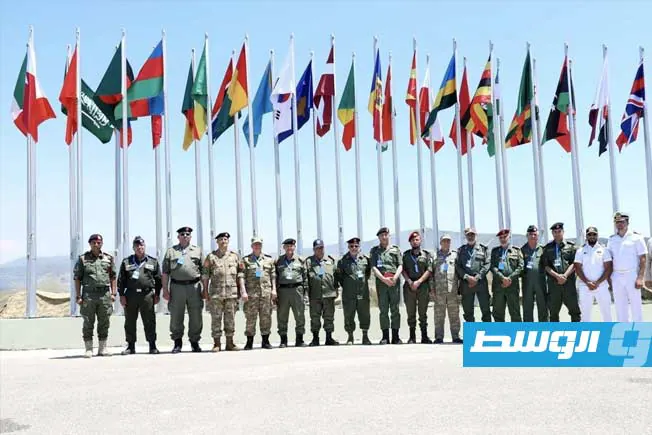
The study highlights a significant shift in Turkey's security strategy in Libya, from mere military support for one faction against another to playing a long-term "security mediator" role, capable of engaging with both main power centers in the country. This transformation was evident in late May, when Turkey hosted military exercises that saw, for the first time, elements of forces from the Government of National Unity and the Libyan National Army participating under a single Libyan flag.
Turkey's growing presence in Libya is also driven by its desire to expand its influence in the region through partnerships with rival factions and a shift from "intervention to long-term security mediation." The study notes that this approach aims to secure Turkey's presence in key bases and ports, such as Misrata and Al-Watiya, and link security partnerships to the 2019 maritime agreement, enhancing Ankara's influence in Eastern Mediterranean energy exploration.
The study warns that Turkey's deepening engagement in Libya poses a challenge to regional competitors and has significant implications for US interests, European energy security, and North African stability. Ankara's efforts to establish a long-term security partnership in Libya are seen as an attempt to counter the influence of regional rivals, including Greece, Cyprus, Russia, and Egypt, which have significant interests in the country.
Beyond Libya, Turkey's growing involvement in Africa is part of a broader strategy to establish a network of military and commercial bases along critical maritime routes. The study notes that Turkey has prioritized partnerships with Libya, Somalia, and Sudan, with their ports serving as gateways to the Mediterranean, Red Sea, and Indian Ocean, respectively. By expanding its presence in key infrastructure projects, Turkey aims to enhance its influence on vital trade routes and promote its energy and security interests.
Key points
- Turkey's growing role in Libya and Africa is driven by its strategic goals, including securing a long-term foothold in the region and expanding its influence through partnerships with rival factions.
- The study warns that Turkey's deepening engagement in Libya poses a challenge to regional competitors and has significant implications for US interests, European energy security, and North African stability.
- Turkey's involvement in Africa is part of a broader strategy to establish a network of military and commercial bases along critical maritime routes, enhancing its influence on vital trade routes and promoting its energy and security interests.