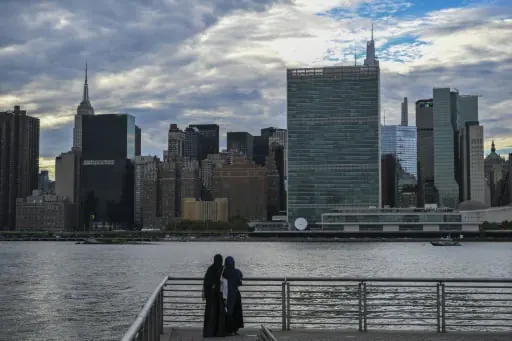
The United States has refused to issue a visa to Sudan's de facto leader Abdel Fattah al-Burhan, preventing him from attending the UN General Assembly in New York. According to diplomatic sources, Burhan was scheduled to address the assembly on Wednesday. The US decision has been confirmed by the UN. This move has raised concerns about the US commitment to the agreement establishing New York as the site of the UN headquarters.
The agreement between the US and the UN stipulates that the US should not impose any impediments on member state representatives' travel. One diplomatic source described the US decision as a "clear violation" of this agreement. Another source suggested that the US had conditioned the visa on Burhan accepting a three-month truce, which the Sudanese government believes would allow the Rapid Support Forces (RSF) to regroup and attack.
Burhan's army has been engaged in a conflict with the RSF since April 2023. The war has resulted in an estimated 200,000 deaths and created the world's largest hunger and displacement crises. The US, along with Saudi Arabia, Egypt, and the United Arab Emirates, has attempted to bring Burhan and his former deputy, RSF commander Mohamed Hamdan Daglo, to the negotiating table.
UN chief Antonio Guterres has expressed deep concern over the US decision. His spokesman, Stephane Dujarric, stated that the secretary-general urges the host country to ensure that visas are issued in accordance with its obligations under the Headquarters Agreement. The UN Secretariat has raised the matter with US authorities and continues to engage with them.
Sudan is currently being represented in New York by Foreign Minister Mohieldin Salem. The US decision to deny Burhan a visa has been seen as a significant development in the conflict. The US has previously refused visas to other high-profile figures, including Palestinian president Mahmud Abbas and some members of Iran's delegation to the UN.
The US decision has implications for the proper functioning of the UN. The organization relies on the full participation of all delegations in its work. The denial of a visa to Burhan has raised questions about the US commitment to multilateralism and its obligations as the host country of the UN headquarters.
The conflict in Sudan has had devastating humanitarian consequences. The international community has called for a peaceful resolution to the conflict. The US decision to deny Burhan a visa has added a new layer of complexity to the situation. The UN will continue to engage with the US authorities to resolve the matter.
Key points
- The US decision to deny a visa to Burhan has been seen as a "clear violation" of the agreement between the US and the UN.
- The conflict in Sudan has resulted in an estimated 200,000 deaths and created the world's largest hunger and displacement crises.
- The US has previously refused visas to other high-profile figures, including Palestinian president Mahmud Abbas and some members of Iran's delegation to the UN.