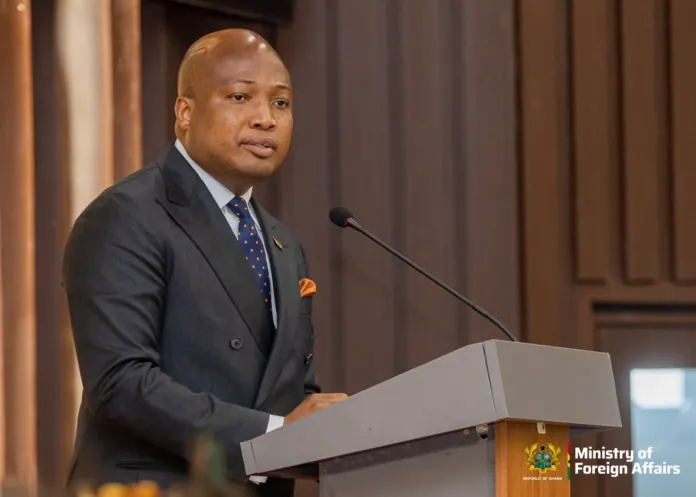
Ghana's Foreign Affairs Minister, Samuel Okudzeto Ablakwa, has announced that the United States has expressed its readiness to collaborate with Ghana on reparatory justice. This development comes despite the US voting against a UN resolution on the issue in March 2026. According to Mr. Ablakwa, the US formally communicated its willingness to work with Ghana towards achieving a fair and just world. The disclosure was made during a High-Level Side Event on the Next Steps, hosted by President John Dramani Mahama in New York on September 23.
The UN resolution, led by Ghana, was adopted in March 2026 with 123 countries voting in favor, 52 abstaining, and three countries, including the US, voting against it. Mr. Ablakwa emphasized that the US decision to engage with Ghana demonstrates that the reparatory justice initiative is not intended to divide countries but to promote healing and reconciliation. He stressed that the Ghana-led effort seeks to bring nations together, fostering a world without racism and discrimination.
President Mahama, as Chair of the Global Advisory Panel on Reparatory Justice, is committed to advancing the agenda in good faith, according to Mr. Ablakwa. He assured that there are no hidden agendas or secret motives, only a desire to build a fair and just world. The Minister highlighted the return of African cultural artifacts as a crucial step in translating reparatory justice commitments into action. Ghana is seeking the return of artifacts held in museums and private collections in Europe and the US.
Mr. Ablakwa commended countries like France, Germany, and the Netherlands for publicly pledging to return African artifacts. He urged other nations to follow their example, emphasizing that these objects are integral to Africa's identity, culture, and heritage. The Minister's comments underscore Ghana's focus on moving from international recognition towards concrete action, including restitution of cultural heritage and development of legal and policy frameworks.
The US decision to engage with Ghana on reparatory justice signals a potential shift in its stance on the issue. While the US voted against the UN resolution, its willingness to collaborate with Ghana suggests a recognition of the importance of addressing historical injustices. Mr. Ablakwa's remarks highlight the significance of this development, emphasizing that it demonstrates a commitment to healing and reconciliation.
Ghana's reparatory justice agenda has gained momentum since the UN resolution, with a focus on concrete actions. The country's efforts have been recognized by various nations, with some pledging support and cooperation. As President Mahama continues to champion the cause, Ghana is likely to play a key role in shaping the global conversation on reparatory justice.
The collaboration between Ghana and the US on reparatory justice may have far-reaching implications for the global community. As the world grapples with issues of historical injustice and racism, the Ghana-US partnership could serve as a model for other nations to follow. With its focus on healing, reconciliation, and cultural heritage, Ghana's reparatory justice agenda is poised to make a lasting impact.
Key points
- The US has signaled its willingness to collaborate with Ghana on reparatory justice despite voting against a UN resolution on the issue.
- Ghana's Foreign Affairs Minister, Samuel Okudzeto Ablakwa, disclosed the US decision during a High-Level Side Event on the Next Steps in New York.
- The collaboration between Ghana and the US may have far-reaching implications for the global community, serving as a model for addressing historical injustices and promoting healing and reconciliation.