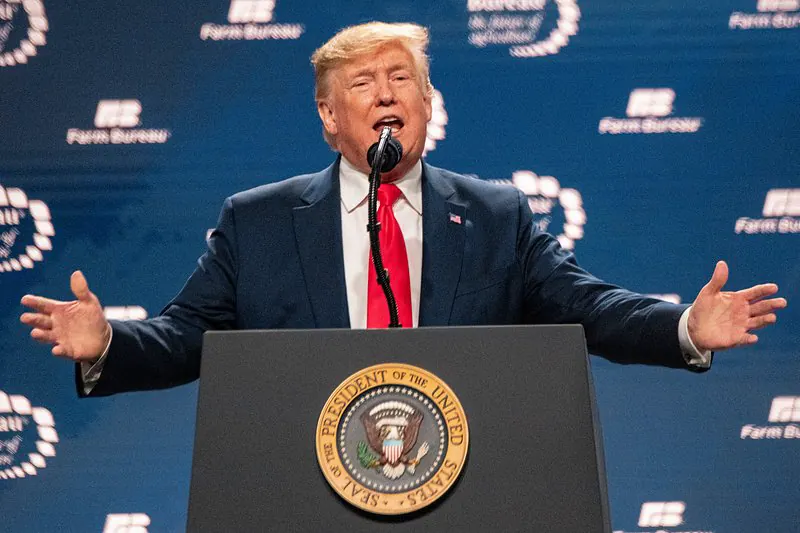
On September 22, US President Donald Trump addressed the 81st session of the United Nations General Assembly, reaffirming America's commitment to protecting its national interests through military force if necessary. The President emphasized that the US will not allow threats to America to take hold in the Western Hemisphere. He highlighted the country's unparalleled military power, which will be utilized to safeguard vital national interests.
During his address, President Trump drew parallels between Latin American drug cartels and the terrorist group Islamic State (ISIS), labeling them as enemies of civilization. He described these groups as a significant threat to global stability, equating the cartels to the "Islamic State of the Western Hemisphere". This comparison underscores the administration's concerns about the growing influence of these groups in the region.
The 81st session of the UN General Assembly, which commenced on September 22, brings together heads of state and government, as well as foreign ministers, to engage in a general debate. The Russian delegation, led by Foreign Minister Sergey Lavrov, is in attendance. The assembly provides a platform for nations to discuss pressing global issues and address pressing concerns.
President Trump's statement reflects the US government's resolve to tackle threats to its national interests. The country's military power is considered a crucial component of its foreign policy, and the President's remarks suggest that it will be employed to protect American interests abroad. This stance has significant implications for global politics, particularly in regions where US interests are perceived to be under threat.
The UN General Assembly session also coincides with the participation of various countries, including Guinea, which is represented by President Mamadi Doumbouya. The Guinean leader's presence at the assembly underscores the country's commitment to engaging with the international community on key issues. Guinea's involvement in global affairs reflects its growing role in regional and international politics.
Meanwhile, in Guinea, various domestic issues are being addressed, including the state of education infrastructure. Reports indicate that some schools, such as the Djoliba primary school in Kouroussa, are in a worrying condition just weeks before the start of the new academic year. The government faces challenges in providing adequate educational facilities for its citizens.
Additionally, other developments are taking place in Guinea, including the launch of a national workshop on capitalizing on the achievements of the PANAFIC program. The event, inaugurated by Minister Djenabou Toure, aims to consolidate the gains made by the program. Furthermore, concerns of local populations were presented to deputies in Gueckedou, highlighting the ongoing efforts to address pressing issues in the country.
Key points
- US President Donald Trump reaffirms America's commitment to protecting its national interests through military force if necessary.