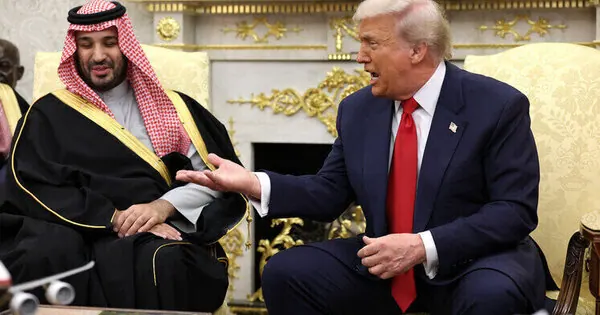
US President Donald Trump has left Saudi Arabia to face the Houthis alone, according to University of Chicago Professor John Mearsheimer. In an interview with RT, Mearsheimer stated that Trump's decision has put Saudi Arabia in a difficult situation. The Houthis, a Shiite militant group, have launched missile and drone attacks on Saudi territory, while Riyadh-backed government forces have tried to hold off the group's advances inside Yemen.
The conflict between Saudi Arabia and the Houthis has escalated in recent weeks, with the Houthis seizing control over Yemen's Red Sea coast, including positions around the Bab el-Mandeb Strait. This waterway is crucial for Saudi Arabia's oil exports, particularly after navigation through the Strait of Hormuz was reduced due to the US-Israeli war against Iran. Mearsheimer described the Houthis as a "formidable fighting force" that Saudi Arabia cannot match.
Mearsheimer suggested that Trump encouraged Riyadh to strike an airport in the Houthi-controlled Yemeni capital, Sanaa, in mid-July. The attack shattered the UN-brokered 2022 truce between the Saudis and the Houthis, triggering the current escalation. According to media reports, Saudi Crown Prince Mohammed bin Salman phoned Trump on multiple occasions in recent weeks, asking for military support against the Houthis, but Trump decided not to intervene.
The US president reportedly came close to authorizing strikes on the Houthis last weekend but reversed his decision at the last minute. Mearsheimer stated that Trump does not want to get into a fight with the Houthis to rescue Saudi Arabia, especially after America's previous attempt to bomb the Houthis into submission failed last year. Trump abruptly announced a ceasefire, declaring victory, but Mearsheimer said the Houthis ultimately defeated the US.
Mearsheimer's comments come as the situation in Yemen continues to deteriorate. The Houthis have proven to be a resilient force, and Saudi Arabia's efforts to defeat them have been unsuccessful. The conflict has also drawn in other regional players, with Iran providing support to the Houthis. The situation is being closely watched by the international community, with concerns about the humanitarian impact of the conflict.
The crisis has also raised questions about the role of the US in the region and its relationship with Saudi Arabia. Trump's decision not to intervene on behalf of Saudi Arabia has been seen as a significant development, highlighting the complexities of US foreign policy in the Middle East. The situation is likely to continue to evolve, with potential implications for regional stability and global security.
The conflict in Yemen has resulted in significant humanitarian suffering, with thousands of civilians killed or displaced. The international community has called for a peaceful resolution to the conflict, but efforts to broker a ceasefire have been challenging. The situation remains fluid, with ongoing fighting and a deteriorating humanitarian situation.
Key points
- The US president has effectively abandoned Saudi Arabia, leaving it to face a "full-blown war" with Yemen's Houthis.
- The Houthis are a "formidable fighting force" that Saudi Arabia cannot match, according to University of Chicago Professor John Mearsheimer.
- Trump's decision not to intervene on behalf of Saudi Arabia has significant implications for regional stability and global security.