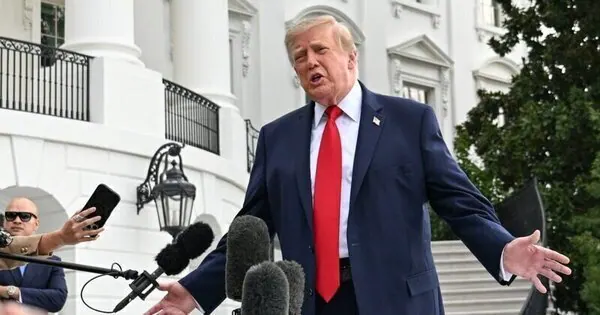
On September 26, US President Donald Trump announced that he was rejecting Iran's plan to reopen the Strait of Hormuz. The plan, which was presented by Iranian Foreign Minister Abbas Araqchi, required steps similar to those outlined in a memorandum signed in Islamabad earlier this year. Trump stated that the deal would not be acceptable, citing Iran's losses in the ongoing conflict.
According to Trump, Iran wants to make a deal to reopen the strait immediately because they are losing badly. He emphasized that the United States has "total control" over the Strait of Hormuz, with 29 ships crossing the chokepoint in the past day. The effective closure of the strait has been a major obstacle to a negotiated settlement aimed at ending the war between the United States and Iran.
The Strait of Hormuz has been a central issue in the conflict, with Tehran restricting access to the waterway in response to US and Israeli attacks on Iran. This has disrupted global oil markets and sent prices soaring. In response, the United States imposed a naval blockade on Iran, diverting ships and preventing them from reaching Iranian ports.
Iranian Foreign Minister Abbas Araqchi had stated that Tehran had given Washington a "concrete" plan to reopen the strait, which could be done within seven days if necessary conditions are met. Araqchi added that the actions the United States should take are not new and are similar to those outlined in the memorandum signed in Islamabad.
The conflict between the United States and Iran has also involved other countries, including China. US Ambassador to China David Perdue stated that Trump had directly warned Chinese President Xi Jinping against providing assistance to Iran during their talks in Washington. Perdue added that Beijing had given Washington assurances that it was not providing such assistance.
The situation in the region remains volatile, with Yemen's President Rashid al-Alimi calling on Yemenis to mobilize and join the armed forces amid Houthi attacks. Al-Alimi also offered a future general amnesty to Iran-backed Houthi fighters and affiliates who leave the group. Meanwhile, Iraqi airports have suspended flights operated by Iranian airlines after the United States targeted Tehran's aviation sector.
The conflict has also had an impact on global trade and travel. The suspension of Iranian flights by Iraqi airports follows similar restrictions imposed by other countries, including Oman, Azerbaijan, Georgia, Turkmenistan, and the United Arab Emirates. The US announcement to impose sanctions on any company doing business with Iranian airlines aims to ground Tehran's entire civilian fleet worldwide.
Key points
- Trump rejects Iran's seven-day plan to reopen the Strait of Hormuz
- The plan required steps similar to those outlined in a memorandum signed in Islamabad earlier this year
- The Strait of Hormuz has been a major obstacle to a negotiated settlement aimed at ending the war between the United States and Iran