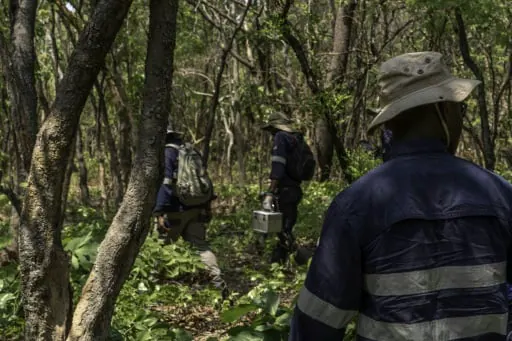
US mining company KoBold Metals is leveraging artificial intelligence (AI) to gain an edge in the search for critical minerals in the Democratic Republic of Congo (DRC). The company's geologists are using high-precision GPS units and tablets connected to an AI system running in real-time on servers in California to explore for lithium, a crucial component in electric car production. This technology allows KoBold to analyze vast amounts of data, including historical geological maps, old drill logs, and satellite images, to create predictive models and target drilling.
The DRC is the world's second-largest producer of copper and the top producer of cobalt, essential for clean energy technologies like rechargeable batteries. However, the country's vast territory remains largely unexplored, presenting ideal conditions for major discoveries. KoBold, founded in 2018 with backing from investors including Bill Gates and Jeff Bezos, is part of a US strategy to secure supplies of strategic minerals and reduce China's dominance in the sector. China currently controls 70 to 80 percent of the Congolese copper and cobalt market.
KoBold has set up its base in Manono, a remote town in the southeastern DRC, a region home to some of the world's most coveted deposits of critical minerals. The company has obtained 14 exploration permits, covering an area of over 3,000 square kilometers, since 2025. KoBold's managing director in the DRC, Benjamin Katabuka, reported encouraging results, although details were not disclosed. The company aims to move into production in a few years' time.
The US and DRC signed a strategic partnership agreement in December, which includes economic cooperation to attract American investment to the Congolese mining sector. However, Katabuka noted that American investment has yet to materialize, despite the agreement. KoBold plans to invest over $50 million in the DRC by early 2027. The company's teams have been collecting an average of 2,000 soil samples per week since April, analyzing them for a specific geochemical signature indicating the presence of pegmatite, the mineral from which lithium is extracted.
KoBold's AI system ingests huge amounts of data, including historical geological maps, old drill logs, and satellite images, to create predictive models. This technology enables the company to target drilling and compete with giants like China's Zijin, which shipped its first tons of concentrate from a nearby mine in June. The AI system has allowed KoBold to detect lithium at specific points, enabling the company to focus its drilling efforts.
The arrival of KoBold in Manono has raised hopes, but also concerns about working conditions and the impact of mining on the local community. The poverty rate in the region is 88 percent, according to official statistics. Local leaders, including Vicar General Wilson Katende, hope that competition will force an improvement in working conditions. However, miners have protested against meagre wages and poor working conditions at existing mines, including Zijin's operation.
The discovery of lithium has brought new life to Manono, but the town still faces significant challenges, including a lack of drinking water and electricity. Territory administrator Cyprien Kitanga noted that mining companies have often left behind environmental damage and failed to benefit the local population. KoBold's investment and use of AI could potentially bring new opportunities and improvements to the region, but it remains to be seen how the company's operations will impact the local community and environment.
Key points
- KoBold Metals is using AI to explore for lithium in the DR Congo.
- The DRC is the world's second-largest producer of copper and the top producer of cobalt.
- KoBold plans to invest over $50 million in the DRC by early 2027.