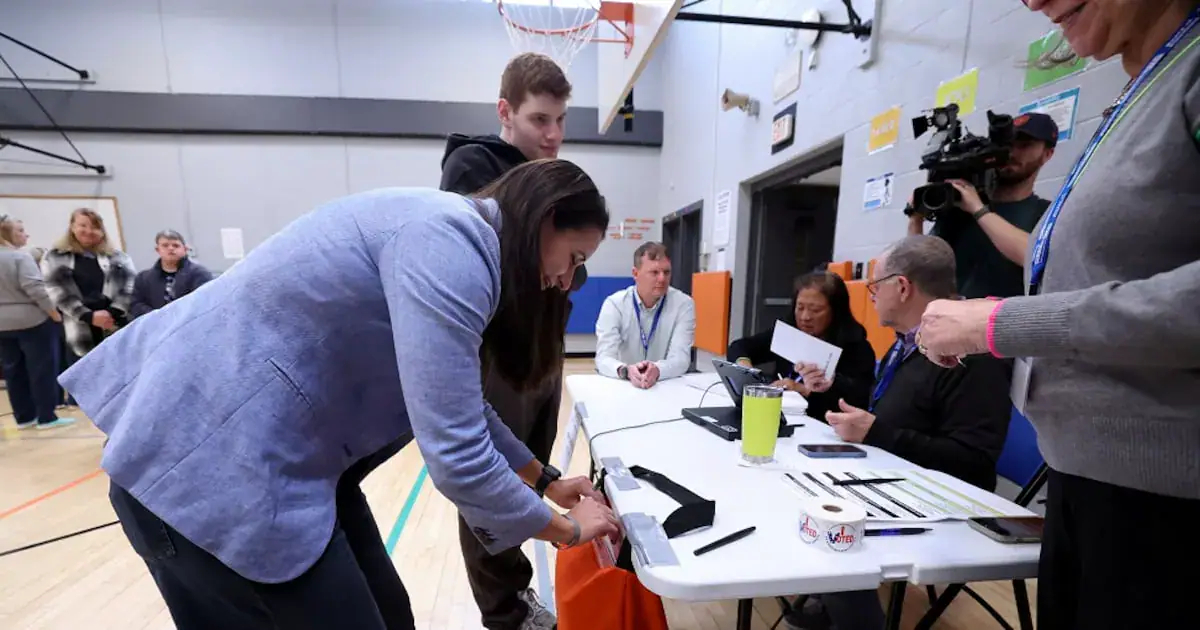
On Tuesday, Americans headed to the polls to cast their votes in the highly anticipated midterm elections. The outcome will serve as a verdict on President Donald Trump's first two years in office. According to surveys and nonpartisan analysts, Democrats are poised to take control of the House of Representatives from Republicans. Meanwhile, control of the Senate remains uncertain, with nearly 10 closely contested statewide races.
The battle for the Senate is heating up, with Republicans fighting to maintain their strongholds. History is not in their favor, as the sitting president's party has lost ground in Congress in all but two midterm elections since World War 2. Trump's approval rating has been hovering near his all-time lows, largely due to voter frustration over the war with Iran and the subsequent rise in fuel prices.
Trump has been actively campaigning for Republican candidates, telling his supporters to "pretend I'm on the ballot." In a television interview, he boasted of his achievements in Venezuela and Iran and expressed optimism for his fellow Republicans. Trump also made a statement about US policy toward Israel, saying that Washington would stop $4 billion in annual funding to Israel after the end of this year.
The president has sought to energize his base with over two dozen campaign rallies since October, mostly in states he easily won in 2016. Republicans have portrayed Democratic candidates as radical and un-American. However, opinion polls show that voters are most concerned about affordability and disapprove of Trump's handling of the issue.
Democratic candidates have gained momentum in several key states, including Michigan, Alaska, Texas, Kansas, and Maine. In Michigan, the Senate contest between Democrat Abdul El-Sayed and Republican Mike Rogers has received attention due to El-Sayed's potential to become the nation's first Muslim senator. The Alaska Senate race has been marred by controversy, with allegations of voter suppression and a lawsuit filed by the justice department.
The justice department has deployed 1,000 election monitors and observers to all 50 states, citing a history of voter access issues and competitive races that could be targets of voter intimidation. There are 47 US House races widely seen as competitive, according to a Reuters analysis. If Democrats win 13 of these races, they will secure a majority in the House.
The outcome of the midterm elections will have significant implications for Trump's presidency and the balance of power in Congress. Democrats have warned that Trump may attempt to challenge the results if Republicans lose. The party must defend all its current seats while winning at least two states that voted for Trump by a double-digit margin in 2016.
Key points
- Democrats are likely to gain control of the House of Representatives.
- The battle for the Senate remains uncertain, with nearly 10 closely contested statewide races.
- Trump's approval rating has been hovering near his all-time lows due to voter frustration over the war with Iran and rising fuel prices.