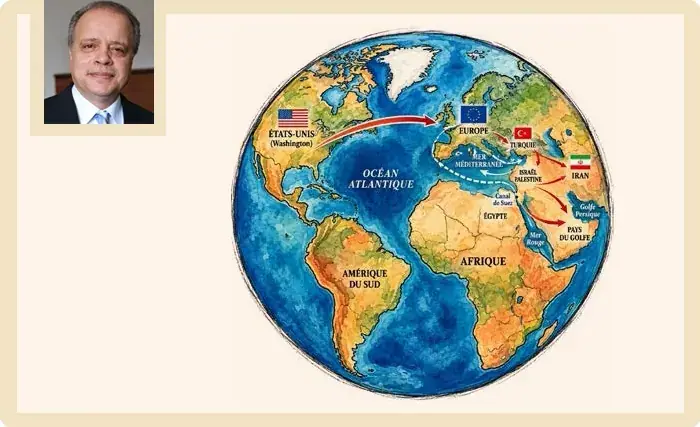
The US midterm elections on November 3, 2026, dealt a significant blow to the Republican Party, with Democrats securing control of both congressional chambers. This shift in power may have far-reaching implications for US foreign policy, particularly in the Middle East and Mediterranean regions. According to a Pew Research Center survey conducted from September 28 to October 4, 2026, 65% of Americans disapproved of President Donald Trump's handling of the Iran conflict, citing rising energy prices, healthcare and education concerns, and trade policy controversies.
Despite the Democratic victory, President Trump retains significant authority in defense and diplomacy. However, the new congressional majority can use its institutional powers to influence foreign policy, including controlling budget allocations, conducting investigations, and holding hearings. This paradox of a weakened president domestically and a strong executive abroad sets the stage for the future of US policy in the Middle East, Europe, and the Mediterranean. An analysis by the Italian Strategic Studies Institute (ISPI) on November 5, 2026, highlighted the limitations of Trump's regional activism, noting that his pragmatic approach has yielded fragile results.
The Iran conflict remains a critical issue in the new US policy landscape. Military operations against Iran, backed by the US and Israel, have not led to the collapse of the Islamic Republic or a lasting resolution to the nuclear question. Instead, they have strengthened Iran's strategic position in the region, particularly in the Strait of Hormuz. For Tehran, Trump's electoral defeat is a political satisfaction but not a guarantee of security, as the possibility of renewed military action remains.
The relationship between the US and Israel may also undergo significant changes. While the Democratic victory does not jeopardize the strategic alliance between Washington and Tel Aviv, it does signal a shift in the political landscape. Support for Israel, once a bipartisan consensus, is now more contested within the Democratic Party, with some lawmakers advocating for Palestinian rights. This may lead to increased congressional scrutiny of US military aid to Israel and the handling of conflicts in Gaza and the West Bank.
The Gulf countries, including Saudi Arabia, the United Arab Emirates, and Qatar, are likely to seek to consolidate their security guarantees from the US while diversifying their partnerships, particularly with China and other Asian powers. The fragile ceasefires in Lebanon and Yemen underscore the limitations of a diplomatic approach based on ad hoc agreements, and the ongoing tensions in the region highlight the need for more sustainable solutions.
For Tunisia, these developments necessitate a strategic reappraisal of its Mediterranean environment. The country's leaders will need to navigate the complex implications of the US midterm elections and their potential impact on regional dynamics. This includes monitoring the evolving relationships between the US, Iran, Israel, and the Gulf countries, as well as the potential consequences for European and Mediterranean security.
As the US foreign policy landscape continues to evolve, one thing is clear: the Democratic victory in the midterm elections has set in motion a complex and potentially transformative process. The next few months will be crucial in determining the contours of US policy in the Middle East and the Mediterranean, with significant implications for regional stability and global security.
Key points
- The US midterm elections have created a paradox in US foreign policy, with a weakened president domestically and a strong executive abroad.
- The Democratic victory may lead to increased congressional scrutiny of US military aid to Israel and the handling of conflicts in Gaza and the West Bank.
- The Gulf countries are likely to seek to consolidate their security guarantees from the US while diversifying their partnerships, particularly with China and other Asian powers.