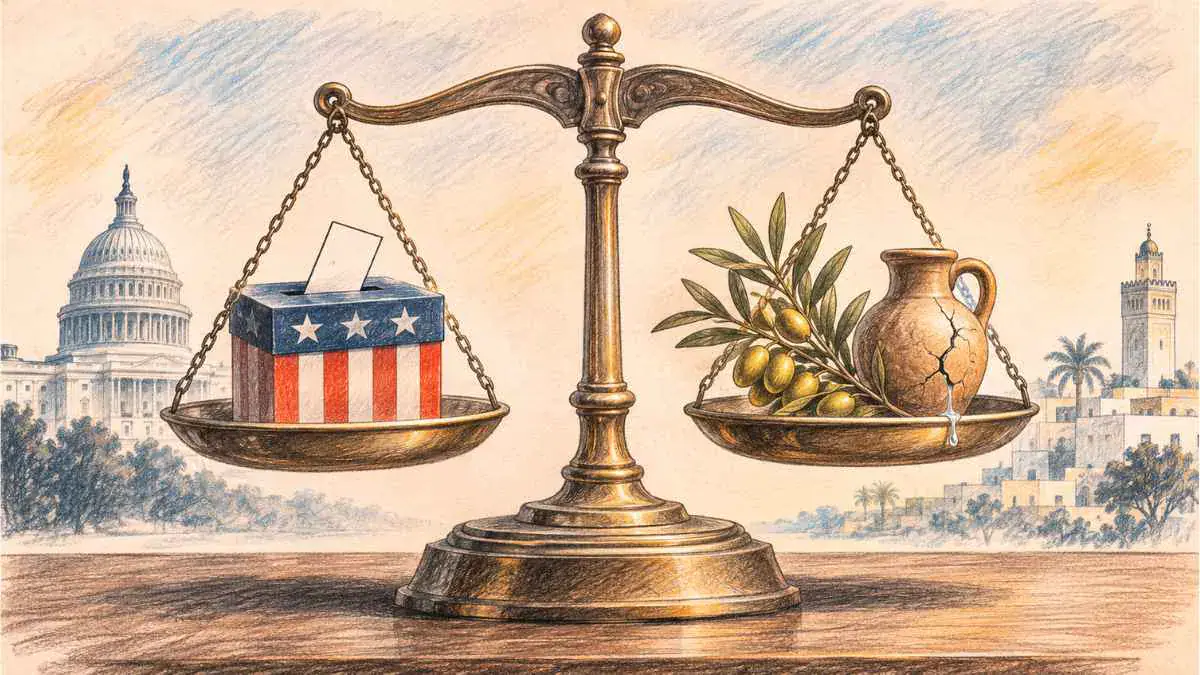
The recent US midterm elections have resulted in a significant shift in power, with Democrats regaining control of both the House of Representatives and the Senate. This development has major implications for the global economy, including Tunisia. The elections highlighted the American people's dissatisfaction with the current economic situation, citing inflation, cost of living, and international tensions as key concerns. According to a report by La Semaine ÉCO, this new political landscape in Washington may have far-reaching consequences for countries like Tunisia.
Tunisia is facing several pressing economic challenges. The country's olive oil production is expected to decline by 40% to 300,000 tonnes in the 2026-2027 campaign, while Europe is anticipating a bountiful harvest. This could negatively impact Tunisia's exports and underscores the need to focus on packaging, national branding, and value-added products. Additionally, the over-exploitation of groundwater resources, with approximately 34,000 illegal wells reported, poses both economic and environmental risks.
The Tunisian government's finances are also under scrutiny. The Parliament is currently examining a 2027 budget proposal that allocates around 68.9 billion dinars for expenditures. However, previous budget reports have been delayed, highlighting the importance of transparency in public finances to foster trust and investment. In a related development, 40 Tunisian companies participated in Ecomondo 2026 in Rimini, discussing recycling, raw material recovery, and water reuse.
The Ecomondo 2026 event offered a glimpse into a potential new industrial driver for the Mediterranean region: the circular economy. To capitalize on such opportunities, Tunisia must convert these connections into tangible investments. Meanwhile, advancements in artificial intelligence have sparked debate about our relationship with the future, including concerns about the risks of technological transformations.
The US midterm elections may lead to increased parliamentary oversight of American trade policies, but this does not guarantee the elimination of tariffs. As a result, Tunisian exporters must prioritize diversifying their markets and securing outlets. With neighboring countries like Morocco and Algeria bolstering their industrial and energy sectors, Tunisia must focus on its strengths, including small and medium-sized enterprises, innovation, and administrative simplification.
To overcome its challenges, Tunisia must produce verifiable results, including publishing public accounts on time, protecting water resources, modernizing industries, and increasing the value of its exports. The recent US midterm elections serve as a reminder that economic promises have political consequences, and Tunisia must learn from this experience. Sovereignty lies not only in possessing resources but also in effectively managing them.
In related news, the Tunisian government has allocated 241.7 million dinars for student scholarships and loans in 2027. Additionally, the country has improved its global ranking in innovation, climbing five places in the 2026 worldwide rankings. These developments, along with a strategic agreement between ARABSAT and Es'hailSat to enhance audiovisual broadcasting, demonstrate Tunisia's efforts to address its economic challenges and capitalize on new opportunities.
Key points
- The US midterm elections have significant implications for Tunisia's economy.
- Tunisia faces pressing economic challenges, including declining olive oil production and over-exploitation of groundwater resources.
- The country must prioritize diversifying its markets, securing outlets, and focusing on its strengths to overcome its economic challenges.