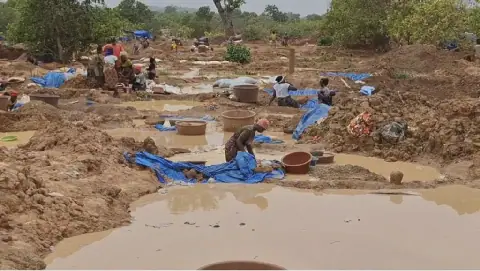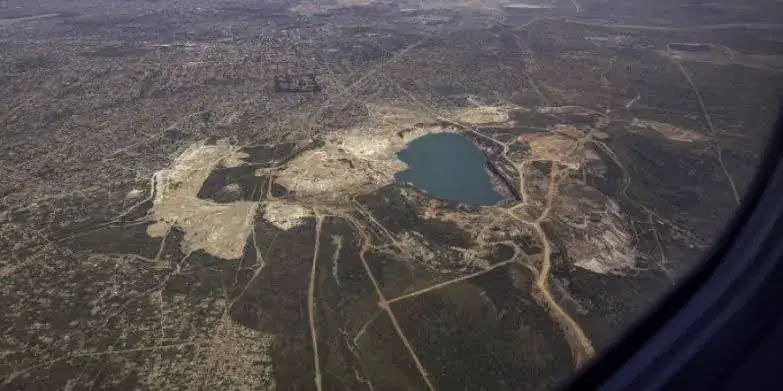
The United States has initiated an economic offensive in multiple African nations to secure critical minerals, crucial for modern technologies and representing enormous potential that remains largely untapped. This move began in 2026 with investments and partnerships in countries such as Guinea, South Africa, Mozambique, and Kenya. These partnerships, often between states with unclear contours, aim to tap into Africa's rich mineral resources.
A strategic partnership was concluded in December 2025 between the US and the Democratic Republic of the Congo (DRC), highlighting Washington's economic offensive. The agreement allows the DRC to identify a portfolio of mining assets where US investors have a right of first offer. In return, Kinshasa received diplomatic support from Washington on security issues in eastern DRC, which has faced conflicts for over 30 years.
Several US companies have announced significant mining investment projects in Africa. Virtus Minerals, in association with India's Lloyds Metals & Energy, has announced the purchase of Chemaf, a Congolese company specializing in copper and cobalt, heavily indebted. The financial and operational aspects of this acquisition still need to be finalized. Meanwhile, the American Orion Critical Mineral Consortium is negotiating a 40% stake in Glencore's Congolese mines of Mutanda and Kamoto.
The DRC has called on the US to move from signed agreements to real investments. However, the victory of the Democratic Party in the US midterm elections could complicate the implementation of partnerships concluded by the Republican administration of President Donald Trump. The Democrats have announced their intention to open investigations into the conditions under which the Trump administration conducted negotiations.
Several African countries aim to derive economic benefits from these partnerships. The Zimbabwean government has suspended raw mineral exports, preceding a total ban in 2027, requiring "valuation and transformation on national territory." The ban has prompted mining companies to rush to build lithium processing plants. Similarly, the DRC has suspended cobalt exports, of which it is the world's largest producer.
The interest in African minerals has led to several large infrastructure projects, particularly in transportation. The goal of these corridors, such as Simandou in Guinea or the regional Lobito corridor between DRC and Angola, is to secure and accelerate mineral transport to a port, often by rail. A part of the mining production in southern DRC is transported by trucks to South African ports, while another part takes the rail to the Angolan port of Lobito.
In some African countries, US investors remain cautious and demand guarantees to secure their investments. Discussions are underway between Washington and Kinshasa to improve the business climate in DRC, perceived as high-risk due to endemic corruption, an uncertain fiscal framework, and weak legal protection mechanisms. The DRC expects concrete investments in 2027, but significant changes are not expected soon, as mining projects take time to develop.
Key points
- The US has launched an economic drive in Africa to secure critical minerals essential for modern technologies.
- The Democratic Republic of Congo has partnered with the US, allowing US investors a right of first offer on certain mining assets.
- African countries, including Zimbabwe and the DRC, are pushing for local valuation and transformation of their minerals.