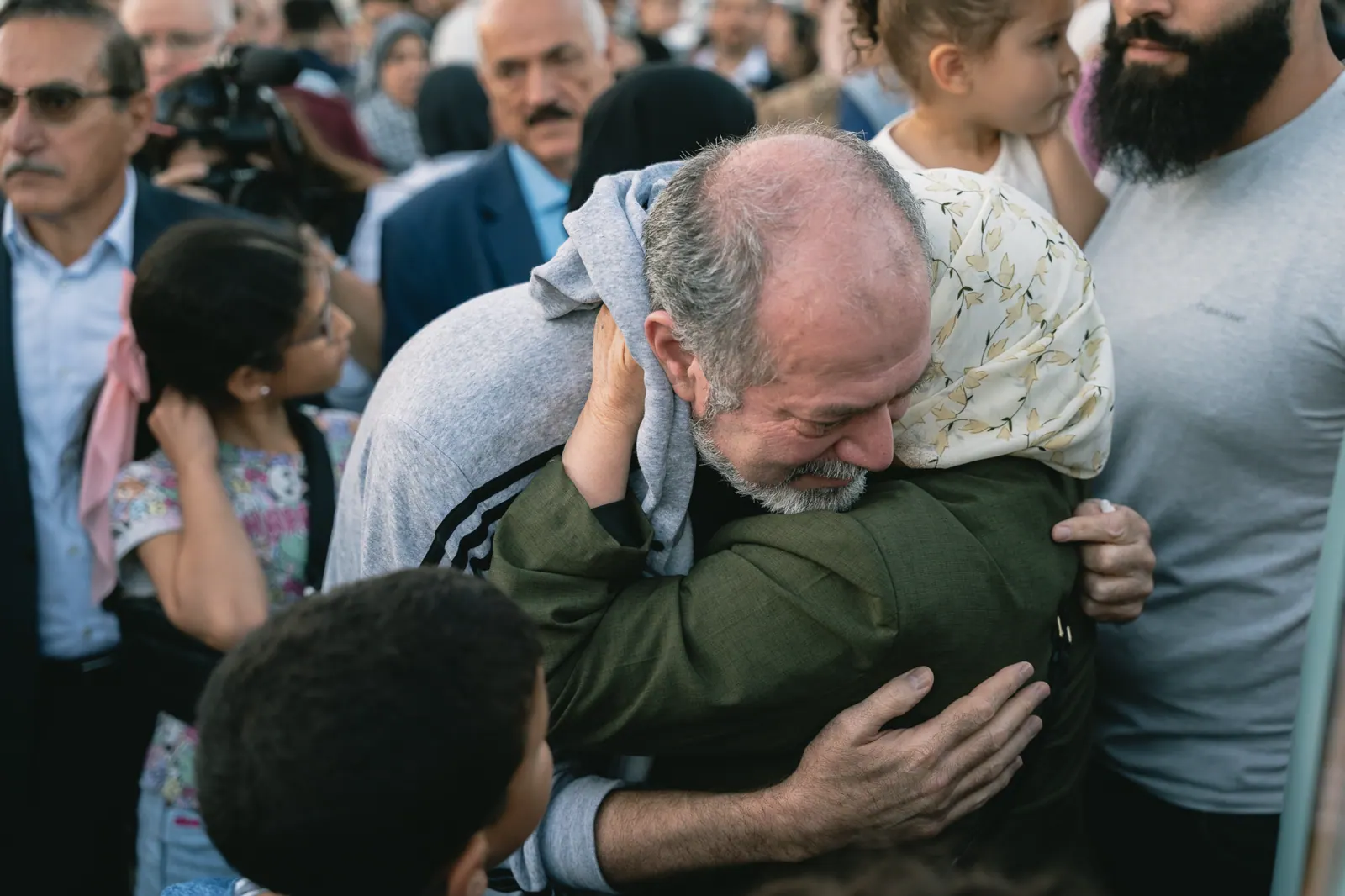
A US federal immigration judge in Chicago has ruled that the Trump administration can deport Palestinian-American human rights activist Salah Sarsour under a controversial law used to target activists who speak out against Israeli genocide in Palestine. Sarsour, a renowned human rights activist and president of the largest mosque in Wisconsin, has been a vocal advocate for Palestinian rights.
Sarsour's case has been closely watched as a test of the First Amendment under President Donald Trump. The activist has been targeted by Zionist groups for his advocacy, and his case has drawn widespread attention. Despite the judge's ruling, Sarsour vowed to continue fighting, stating that he will not give up.
The judge rejected allegations that Sarsour had obtained his green card through fraud and had falsely claimed to be a US citizen to vote. However, under the Cold War-era law, the judge ruled that Sarsour could be deported based on Secretary of State Marco Rubio's assertion that his advocacy for Palestinian liberation could have "adverse consequences" for US foreign policy interests.
The law used to target Sarsour has been criticized for its broad application and potential for abuse. The judge also relied on Israeli charges against Sarsour from the late 1980s and early 1990s, when Sarsour was growing up in the West Bank. Sarsour's lawyers have argued that the Israeli judicial system is flawed and that their client's rights were not protected.
Human rights groups have expressed concern over the judge's ruling, citing the potential for abuse of the law. "The decision of a US judge to deport Salah Sarsour based on information from a country committing genocide and known for torturing Palestinian prisoners is shocking," said Janan Najeeb, executive director of the Muslim Women's Coalition.
Sarsour's lawyers have vowed to appeal the ruling, arguing that the judge ignored key evidence and relied on flawed information. "We know that the ICE filings were incomplete, and we know that the Israeli government had no evidence – none – that Salah engaged in the activities for which he was convicted, apart from false confessions written in Hebrew," said one of Sarsour's lawyers.
The case has sparked widespread concern over the Trump administration's efforts to target Palestinian-American activists. Sarsour's deportation case is part of a broader effort to silence pro-Palestinian activists, according to the Center for Constitutional Rights. The organization has filed a lawsuit on behalf of Mahmoud Khalil, a Columbia University student who was also targeted by the administration.
Key points
- The Trump administration's use of a Cold War-era law to target Palestinian-American activists has raised concerns over free speech and due process.