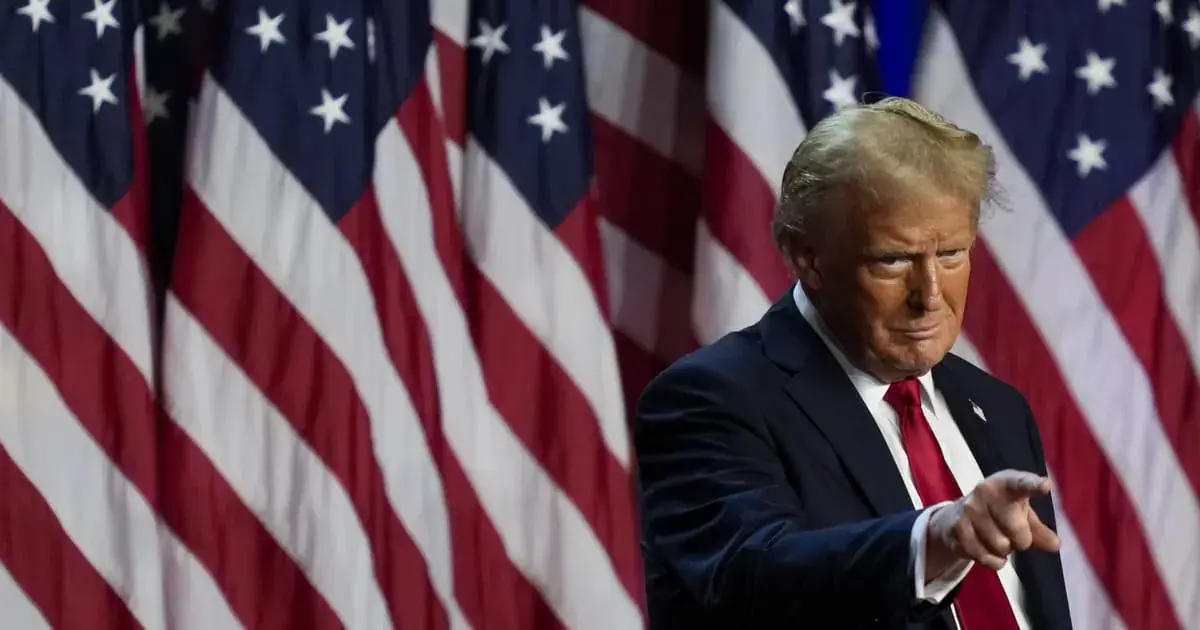
A federal judge in Washington has halted President Donald Trump's second executive order limiting birthright citizenship. Judge Christopher R Cooper of the US District Court for the District of Columbia granted a classwide preliminary injunction in Nathan v Trump, stopping the government from enforcing the order against the children it covers while the case continues. The order, signed on 6 August, told federal agencies not to recognise the citizenship of US-born children with no US-citizen parent in four new categories.
The order targeted children of an "alien enemy", defined to include members of designated foreign terrorist organisations and specially designated global terrorist groups. It also covered children of a "foreign government employee", including ambassadors and embassy or consulate staff who are nationals of that country, people working for a foreign government in an official role, and staff of international organisations with such immunity. The International Monetary Fund, the United Nations, and the World Health Organisation were named as examples.
The plaintiffs, parents and children proceeding under pseudonyms, were backed by the American Civil Liberties Union and four of its affiliates. They filed the case, Nathan v Trump, in Washington in September. The lead child plaintiff, "Nathan", was born in Washington in August to French parents on G-4 employment visas who both work for international organisations. Another plaintiff baby, "Eleanor", was born through commercial surrogacy in the US in October to Australian parents.
Judge Cooper said the Supreme Court's June ruling in Trump v Barbara left no room for the sequel. He wrote that the President cannot carve out new exceptions to birthright citizenship for children born within the United States and subject to its laws. The Citizenship Clause promises citizenship to practically all children born in the United States, the judge wrote. He added that earlier in the year, the Supreme Court kept that promise by striking down EO1.
The injunction binds the secretaries of Homeland Security and State and the Social Security Commissioner, barring them from enforcing the order against class members or otherwise denying their citizenship. The class covers nearly all US-born children subject to the order and their parents, except children of accredited diplomats. The ruling leaves two corners of the order untouched: the ambassador category and the territories category.
For Ghanaian parents in the US, the decision means children born in the country keep their citizenship, including those whose parents work for a foreign government or an international organisation without diplomatic immunity. The opinion discusses that category only in those terms. The freeze stays in place while the lawsuit runs its course. The government had asked the judge to stay the injunction pending appeal, but he refused.
The groups said after the ruling that they would keep defending the right against further attempts to narrow it. Cody Wofsy of the ACLU's Immigrants' Rights Project, who is lead counsel, said birthright citizenship "is the law of the land". The Supreme Court has twice rejected efforts to gut birthright citizenship, in 1898 and again earlier this year, Wofsy added.
Key points
- A US judge has blocked President Donald Trump's executive order limiting birthright citizenship.
- The order targeted children of an "alien enemy" and "foreign government employee".
- The decision means children born in the US keep their citizenship, including those whose parents work for a foreign government or an international organisation without diplomatic immunity.