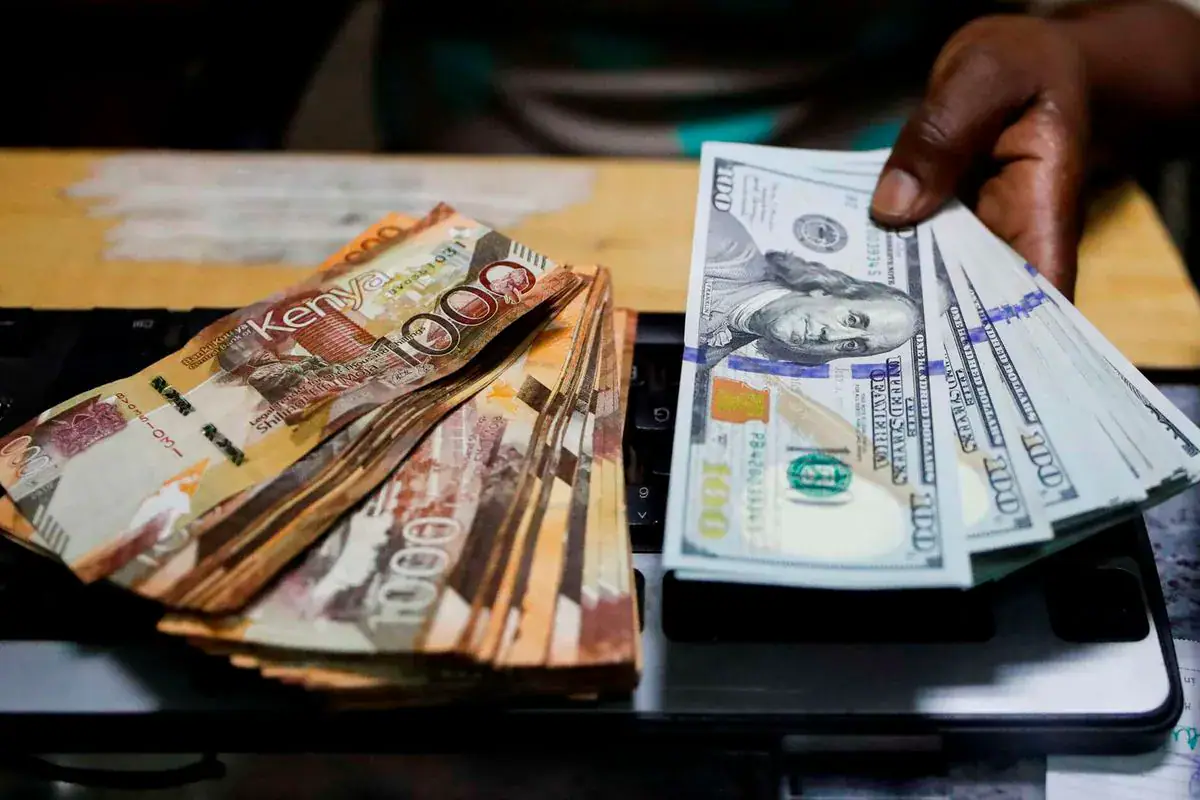
Kenyans living in the United States have significantly reduced the amount of money they send back home. In the first 10 months of the year, they sent Sh42.9 billion less, a 14.3 percent drop from the same period last year. This decline has resulted in the US share of diaspora remittances falling below half for the first time since country-level data has been published. The US share decreased to 46.85 percent from 54.49 percent last year.
The decline in US remittances has coincided with a growing contribution from alternative markets, particularly the United Arab Emirates, Australia, and the United Kingdom. In the 10-month period, remittances from the UAE jumped 81.2 percent to $188.6 million, while those from Australia increased by 26.4 percent to $239.6 million. The UK also saw a 14.7 percent growth in remittances to $342.8 million, retaining its position as Kenya's second-largest source of diaspora cash.
The Central Bank of Kenya reported that total remittances from Kenyans abroad dropped marginally by 0.32 percent to $4.20 billion. Despite this decline, the inflows represent a significant source of foreign exchange and financial support for Kenyan households. The weakening US market was pronounced in October, with remittances falling 28.1 percent to $178.45 million. The US share of total October inflows consequently dropped to 41.46 percent from 56.53 percent.
The decline in US remittances has raised questions about the sustainability of a major source of foreign exchange and financial support for Kenyan families. President William Ruto aims to turn overseas employment into a major source of jobs for Kenya's growing pool of skilled and semi-skilled workers. However, the current trends pose a challenge to this ambition. The government has secured overseas employment for over 540,000 Kenyans through the Kazi Majuu programme.
CBK Governor Kamau Thugge attributed the weaker remittance performance partly to reduced contributions from the US and Saudi Arabia. He noted that remittances inflows remained resilient, supported by diversified source countries and the impact of government policies to export skilled labour. However, the central bank has lowered its remittance growth forecast for 2026 to 0.7 percent from an earlier projection of 1.5 percent.
The decline in remittances from Saudi Arabia was particularly sharp, with a 50.7 percent drop to $132.5 million. This compares with $268.9 million received in the corresponding period last year. In contrast, Kenyans in Canada and Germany registered gains, with remittances increasing 15.6 percent to $158.2 million and 10.9 percent to $174.4 million, respectively.
The money sent by Kenyans abroad helps households pay school fees, meet healthcare costs, finance housing, and sustain daily consumption. It also provides dollars needed to pay for imports and meet external obligations. The changing trends in diaspora remittances will likely have a significant impact on Kenya's economy, and the government will need to adapt to these changes to support its citizens.
Key points
- The US share of diaspora remittances has fallen below half for the first time since country-level data has been published.
- Remittances from the UAE and Australia have increased significantly, offsetting the decline in US remittances.
- The decline in remittances poses a challenge to President William Ruto's ambition to turn overseas employment into a major source of jobs for Kenya's growing pool of skilled and semi-skilled workers.
Reporting sources
- US inflows now less than half diaspora cash after Sh43bn dip · Business Daily Africa