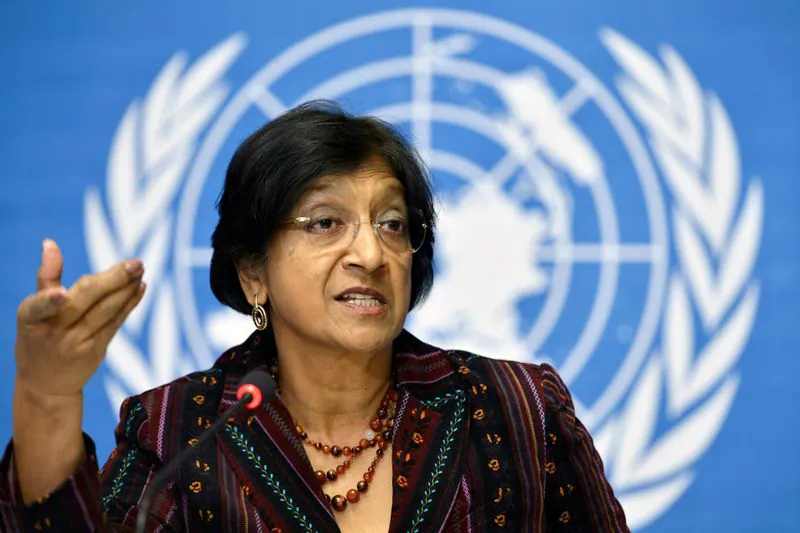
The United States imposed sanctions on the International Criminal Court on October 9, 2026, just hours after South African jurist Navi Pillay was awarded the Nobel Peace Prize. Pillay, a human rights defender and former United Nations High Commissioner for Human Rights, was recognized for her efforts in championing peace and international law. The sanctions, imposed by US President Donald Trump's administration, aim to punish companies that provide services to the court, potentially crippling its ability to operate.
The International Criminal Court's deputy prosecutor, Nazhat Shameem Khan, condemned the sanctions, stating that they would not halt the tribunal's work. Khan emphasized that the sanctions are intended to undermine the rule of law internationally and the work of an independent judicial institution. The ICC has received strong public backing from its member countries, including major US allies, and is based in the Netherlands, an EU and Nato member.
The US has long been hostile to the ICC, which was founded in 2002 to prosecute war crimes, crimes against humanity, and genocide. Washington has denounced the ICC over arrest warrants issued for Israeli officials, including Prime Minister Benjamin Netanyahu, and a past investigation into actions of US soldiers in Afghanistan. The ICC counts 125 countries as member states, including all EU countries and all members of the Nato alliance, apart from the US and Turkey.
The Nobel Peace Prize committee awarded the prize to Pillay, citing her efforts to hold war criminals accountable and ensure justice for victims of abuse. The committee's citation was seen as a reminder of the importance of international law at a time when judges and institutions are under political attack. Pillay served as a judge on the ICC's Appeals Chamber from 2003-2008 and has been a vocal advocate for human rights and international justice.
US Secretary of State Marco Rubio stated that the sanctions were structured to give the court and its member states an opportunity to address US concerns. Rubio emphasized that the US expects its allies to "rein in the court" and address US concerns. The US Treasury issued four general licences, allowing some transactions for ICC telecommunications, software, and pension payments, and transactions linked to ICC detainees.
The sanctions have been prepared for months by court officials, who have shifted office computers from Microsoft software to open-source equivalents and made new arrangements for banking and health insurance. The court's registrar, Osvaldo Zavala Giler, called earlier in the week for the EU to be prepared to use a so-called "blocking mechanism" that lets it shield European countries from the extraterritorial effects of sanctions.
The US sanctions typically bar all US-based companies from any work with a sanctioned organisation, forcing banks to shut accounts, insurers to end coverage, and software companies to halt cooperation. The Trump administration previously imposed targeted sanctions on court officials during his first term, which were rescinded under President Joe Biden. Washington announced new sanctions just days after Trump returned to office in January 2025.
Key points
- The US imposed sanctions on the International Criminal Court hours after South African judge Navi Pillay won the Nobel Peace Prize.
- The sanctions aim to punish companies that provide services to the court, potentially crippling its ability to operate.
- The ICC has received strong public backing from its member countries, including major US allies.