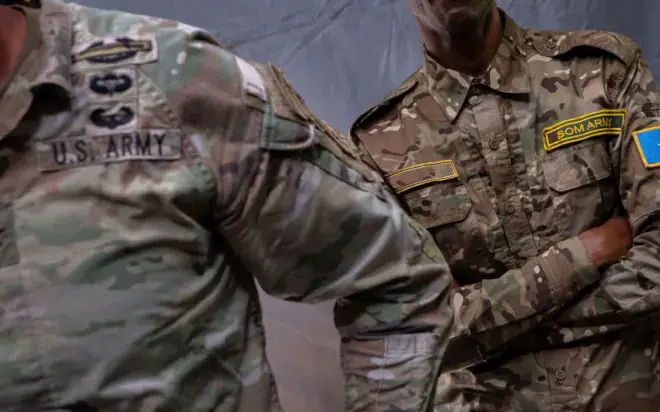
A recent series of airstrikes in southern Somalia, coordinated by the United States, has raised concerns over the potential harm to civilians. The attacks, targeting al-Shabaab militants, have driven many residents to seek refuge alongside the River Juba, where rising water levels pose a significant threat to their safety. According to eyewitnesses, the airstrikes have been "constant" and have resulted in significant civilian casualties, with many bodies reportedly left in the streets.
The situation in Jilib, a city in southern Somalia, is particularly dire. Residents have described the airstrikes as pinning the population beside the rising river, with many forced to wade through floodwaters to escape the violence. Cayni Ali, a 27-year-old mother of six, recounted her experience of being trapped by the floodwaters, with her home being destroyed in the process. Her story is just one of many that highlight the devastating impact of the conflict on civilians.
The US military strategy has been accused of "weaponising" the El Niño weather phenomenon, which is forecast to intensify Somalia's rainy season. Sources monitoring the Juba floodplain have expressed concerns that the airstrikes are deliberately pushing the population into flood-prone areas, potentially leading to large-scale deaths in the months ahead. This has raised questions over the ethics of using mapping data, intended to mitigate civilian casualties, to inflict harm.
Analysts have questioned the US military's tactics, with Jethro Norman, a senior researcher at the Danish Institute for International Studies, describing the situation as a "reversal of process" where humanitarian remote sensing is being used to inflict casualties rather than mitigate harm. The US military has denied these allegations, stating that they do not target civilians and take feasible measures to mitigate harm.
Despite these denials, concerns over the potential humanitarian impact of the conflict remain. The International Committee of the Red Cross (ICRC) has foreseen "severe flooding" in the Juba River basin, which is of "particular concern" according to UN agencies. The lack of preparedness in al-Shabaab-controlled areas, combined with a shortage of boats and flood protection investment, has raised fears of a catastrophic event.
The impact of El Niño on Somalia has been devastating in the past, with the 2023 floods displacing over 1.2 million people. This year's event is expected to be just as severe, if not worse. The country's aid budget has been significantly reduced, from $2.2bn in 2023 to just $300,000, further exacerbating concerns over the country's ability to respond to the crisis.
As the situation in Somalia continues to deteriorate, concerns over the potential humanitarian impact of the conflict are growing. With the floodwaters expected to rise further, the international community is calling for urgent action to mitigate the effects of the crisis. The US military's tactics have raised questions over the ethics of using weather phenomena as a method of warfare, and the need for greater accountability in the conflict.
Key points
- The US military's airstrikes in Somalia have driven civilians into flood-prone areas, raising concerns of large-scale deaths.
- The El Niño weather phenomenon is forecast to intensify Somalia's rainy season, potentially leading to severe flooding.
- The conflict has resulted in significant civilian casualties, with many bodies reportedly left in the streets.