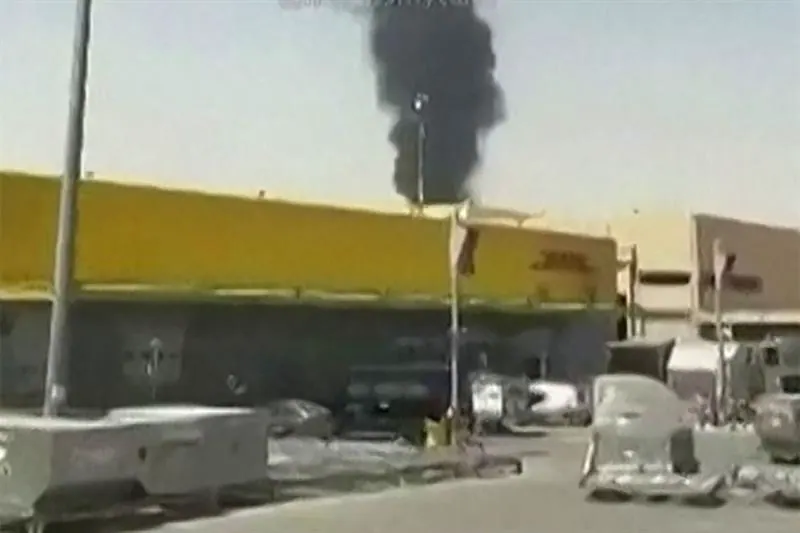
The United States has expressed concerns over a potential rapid escalation of hostilities in the Middle East after Houthi rebels from Yemen launched an attack on Riyadh, Saudi Arabia's capital, on September 19. The attack, which was claimed by the Houthis, targeted several sites in and around the city, including an Aramco fuel tank near the airport. The incident has raised fears of a wider conflict in the region, with the US warning its citizens of a heightened risk of escalation.
The attack on Riyadh marked a significant escalation of the conflict between the Houthis and the Saudi-led coalition, which has been fighting the rebels in Yemen since 2015. The Houthis, who are backed by Iran, have been launching increasingly sophisticated attacks on Saudi targets in recent weeks, including missile strikes on oil facilities and military bases. The Saudi coalition has responded with airstrikes on Houthi positions in Yemen, but the rebels have continued to launch attacks on Saudi territory.
The US had initially declined to support Saudi Arabia's military campaign against the Houthis, but with the recent escalation of attacks, it is becoming increasingly difficult for the Trump administration to remain on the sidelines. The director of the US Central Intelligence Agency, John Ratcliffe, met with Egyptian President Abdel Fattah Al-Sissi in Cairo on September 20, amid growing concerns over the conflict's impact on regional stability.
The conflict in Yemen has already had a significant impact on the global economy, with oil prices surging above $100 per barrel in recent weeks. The Houthis' control of the strategic Bab el-Mandeb strait, which connects the Red Sea to the Gulf of Aden, has disrupted shipping and trade in the region. The Saudi coalition has accused the Houthis of targeting civilian infrastructure, including oil facilities and ports.
The Houthi rebels have claimed that their attacks on Saudi Arabia are in response to the coalition's continued airstrikes on their positions in Yemen. The rebels have also accused Saudi Arabia of targeting civilian areas, including residential neighborhoods and infrastructure. The conflict has resulted in hundreds of deaths and over 110,000 displaced people, according to UN estimates.
Turkish Foreign Minister Hakan Fidan has said that his country is in talks with Saudi Arabia and Pakistan to address the growing crisis in the region. Fidan, whose country is a partner in a mutual defense pact with Saudi Arabia and Pakistan, said that Turkey is willing to provide military support to its allies if needed. The diplomatic efforts come as the conflict in Yemen continues to escalate, with no clear end in sight.
The recent attacks on Riyadh have raised concerns over the potential for a wider conflict in the region, with some analysts warning of a possible miscalculation that could lead to a broader war. The US warning of a rapid escalation of hostilities has added to the sense of urgency, with diplomatic efforts underway to try to contain the crisis and prevent further violence.
Key points
- US warns of rapid escalation in Middle East conflict after Houthi rebels attack Riyadh
- Conflict in Yemen has resulted in hundreds of deaths and over 110,000 displaced people
- Diplomatic efforts underway to contain crisis and prevent further violence