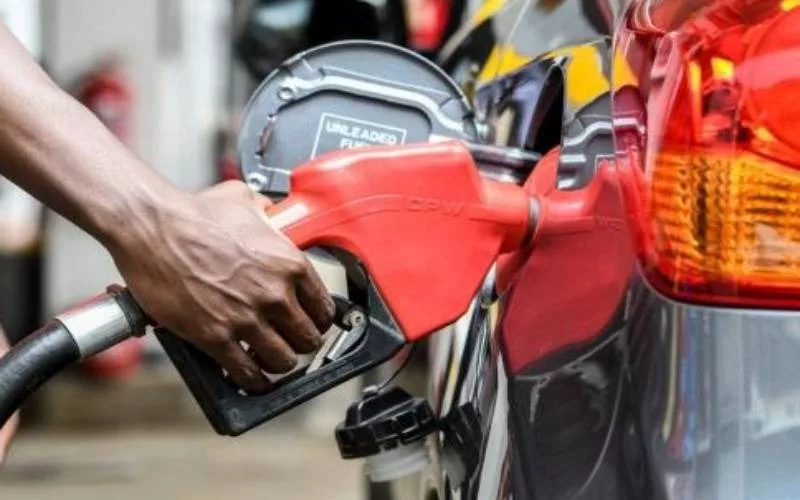
US President Donald Trump has announced a deal with Russian President Vladimir Putin to import diesel into the US, sparking criticism from lawmakers and international leaders. The deal, which was announced on Friday, will see Russia release 300,000 tonnes of diesel immediately, followed by 500,000 tonnes in November and one million tonnes after that. A further three million tonnes will be delivered within a short period, dependent on the condition of Russia's refineries, which have been attacked by Ukraine.
The move has been criticised by some Republican and Democratic lawmakers, who believe the deal violates US laws. A group of seven senators, including four Republicans and three Democrats, have urged Trump to reverse course, stating that the US should not provide Putin with a financial lifeline while Russia continues to kill Ukrainian civilians. The lawmakers added that Congress had explicitly banned Russian energy imports in 2022 to prevent American dollars from financing Putin's war against Ukraine.
Not everyone is opposed to the deal, however. Republican Thomas Massie has said that the US should lift sanctions on all petroleum products. Trump's Treasury Secretary Scott Bessent has also defended the agreement, stating that it will work through existing legal channels to help bring prices down. Bessent added that anyone in Congress who said it would not work was wrong.
Global fuel prices have soared since the US-Israel war with Iran began at the end of February, with the fighting severely disrupting supplies of crude oil. The rising prices have become a key issue for Americans ahead of next month's midterms elections, which will determine if Trump's Republican Party maintains control of Congress. Polls show a majority of Americans disapprove of Trump's handling of the economy and the war in Iran.
The deal has also been criticised by international leaders, including Canadian Prime Minister Mark Carney and UK Defence Secretary Wes Streeting. They have called on the US and other allies of Ukraine to focus on ramping up pressure on Russia to end the war. Ukrainian President Volodymyr Zelensky has welcomed a separate announcement by Trump that Russia and Ukraine had reached an "energy ceasefire", but there was no response from Moscow.
Analysts have questioned whether Russia is capable of providing the quantity of diesel promised and the extent to which doing so will ease prices for American consumers. The US uses approximately 3.6 million barrels of diesel a day, so even if Russia delivers its promised 300,000 tons this month, it will only amount to approximately half of the US daily consumption.
The US Treasury is suspending sanctions on Russian diesel exports until 7 April as part of the deal, but other assets like those in American banks are still frozen. Ukrainian President Volodymyr Zelensky has called the deal a gift to Putin that amounts to "an investment in a war that must be ended". The average diesel price in the US is currently $6.28 a gallon, down from the record high of $6.53 recorded at the end of September.
Key points
- The US deal with Russia to import diesel has sparked criticism from lawmakers and international leaders.
- The deal is seen as a way to ease pressure on American consumers, who are facing high fuel prices due to the ongoing war with Iran.
- Analysts have questioned whether Russia can deliver the promised quantity of diesel and the impact it will have on US fuel prices.