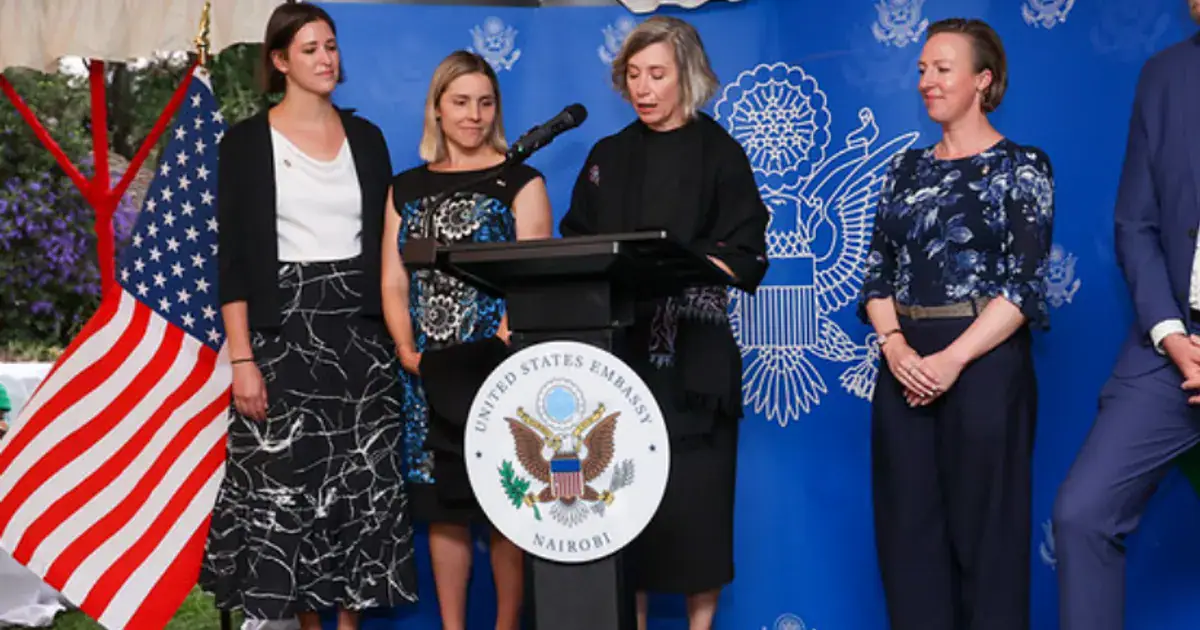
The United States Embassy in Nairobi has commended Kenyan law enforcement agencies and prosecutors for their role in an international investigation into an alleged student financial aid fraud network linked to Kenyan nationals. The Embassy named the Directorate of Criminal Investigations, Asset Recovery Agency, Office of the Director of Public Prosecutions, Kenya Revenue Authority, and Financial Reporting Centre among the Kenyan institutions that assisted the investigation. This cooperation led to the seizure of more than $750,000 in cryptocurrency from an account belonging to a Kenyan national connected to the alleged scheme.
The alleged fraud scheme, dubbed Operation Ghostbusters, involved criminals stealing personal information belonging to American citizens and using it to create fraudulent applications for Federal Student Aid. The identities were allegedly used to enrol fictitious students in American colleges and universities. After the government disbursed student loans and grants, tuition and other charges were deducted, while the remaining funds were allegedly diverted into bank accounts controlled by fraudsters and their associates.
The US Embassy's statement followed a post by the White House highlighting the alleged involvement of Kenyan nationals in the fraud investigation. The White House accused individuals linked to the network of using stolen American identities to obtain federal student aid and divert the money for personal gain and to overseas co-conspirators. The US Department of Justice and the White House Task Force to Eliminate Fraud led the crackdown.
The developments came hours after the US Justice Department announced charges against five defendants in three separate cases in Virginia, Nebraska, and New Jersey, alongside the seizure of more than $750,000 in cryptocurrency connected to the alleged network. Among the cases announced by the Justice Department is that of Francis Mogambi, a Kenyan citizen indicted in Nebraska on five counts of theft of government money and five counts of aggravated identity theft.
Prosecutors allege that between November 2025 and May 2026, Mogambi worked with associates in Kenya to steal American identities, fraudulently enrol fictitious students, and redirect federal student aid payments. He is accused of retaining 30 per cent of the proceeds and sending the remainder to his alleged co-conspirators in Kenya. In a separate case in Virginia, an unnamed Kenyan national was indicted over an alleged scheme involving more than 700 fraudulent student aid refund deposits worth approximately $1.44 million.
The US Embassy expressed gratitude for the assistance and professionalism of Kenyan law enforcement officers and prosecutors, noting that intelligence provided by local agencies had contributed to the cryptocurrency seizure. The Embassy stated that the investigation was not over, signalling further enforcement action as authorities continue tracking individuals and assets linked to the alleged network.
Chargé d’Affaires Susan M. Burns praised the longstanding cooperation between Kenya and the United States in tackling international fraud rings. The US Embassy stated that it is deeply grateful for the assistance and professionalism of Kenyan law enforcement and prosecutors. The estimated losses in the wider investigation are believed to exceed $200 million, with the scheme dating back to at least 2021.
Key points
- The US Embassy commended Kenyan agencies for their role in seizing $97 million in cryptocurrency linked to an alleged student financial aid fraud network.
- The alleged fraud scheme involved stealing American identities to obtain federal student aid and diverting the money for personal gain and to overseas co-conspirators.
- The investigation is not over, with further enforcement action expected as authorities continue tracking individuals and assets linked to the alleged network.