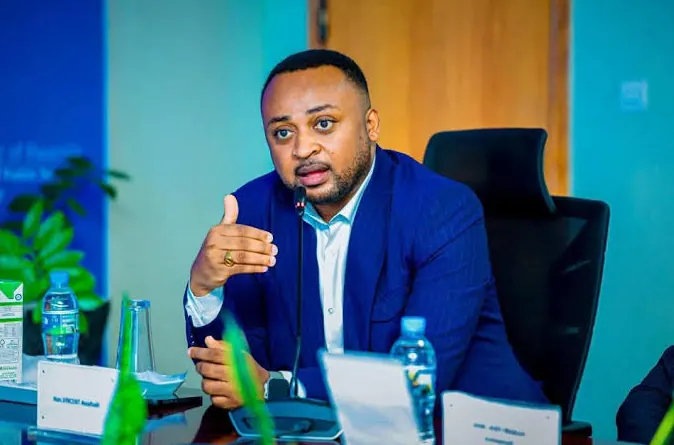
Ghana's Parliamentary Minority has raised concerns over the National Sports Authority's (NSA) visa arrangements for the 2026 FIFA World Cup. According to Vincent Ekow Assafuah, Ranking Member on Parliament's Youth and Sports Committee, the US Embassy's Fraud Prevention Unit flagged four applicants over discrepancies concerning their positions and links to the NSA. The applicants in question are Ralph Egyir Quianoo, Belinda Tsey, Francis Frimpong Agyemang, and Beryl Joycelyn Baabe Duut.
The four applicants were presented to the US Embassy as an Operations Coordinator, Business Administrator, World Cup Coordinator, and Research and Technology Officer, respectively. However, the Minority's checks indicated that none of those positions appeared in the NSA's organisational structure. This raised concerns about the legitimacy of the applicants' identities and their relationship with the NSA. The US Embassy's Fraud Prevention Unit subsequently requested employment letters or other documents to establish the applicants' relationship with the NSA.
The NSA responded to the embassy's request on the same day, 18 March 2026, with a letter confirming the appointments and travel support for the four individuals. According to Mr. Assafuah, this response has raised more questions than answers. The Minority is now calling for an investigation to determine who prepared the list of applicants, who verified the information provided, and who authorised its submission to the US Embassy.
The allegations form part of wider scrutiny of Ghana's arrangements for the 2026 World Cup, including concerns over visa facilitation and travel arrangements for the tournament. The Minority's concerns have sparked debate about the need for greater transparency and accountability in the management of Ghana's sports infrastructure. The country's preparations for the World Cup are being closely watched, and any irregularities could have significant implications for the country's reputation.
Mr. Assafuah's concerns centre on the institutional identities under which the four individuals were presented to the US authorities. He questioned who created these identities and how the applicants were identified and presented to the US Embassy. The Minority's call for an investigation has sparked a renewed focus on the need for good governance in Ghana's sports sector.
The US Embassy's role in flagging the discrepancies has been highlighted as a key aspect of the story. A foreign diplomatic mission's Fraud Prevention Unit identified the discrepancies and sought evidence establishing whether the individuals were actually employed by the NSA. This development has raised questions about the vetting process for visa applicants and the potential for irregularities in the submission of applications.
The Minority's allegations have significant implications for Ghana's sports sector. The country's reputation and credibility are at stake, and the need for a thorough investigation into the allegations is clear. The outcome of the investigation will be closely watched, and it remains to be seen what consequences will arise from the US Embassy's flagging of the four NSA World Cup visa applicants.
Key points
- The US Embassy's Fraud Prevention Unit flagged four NSA World Cup visa applicants over discrepancies in their positions and links to the authority.
- The Minority is calling for an investigation to determine who prepared the list of applicants, who verified the information provided, and who authorised its submission to the US Embassy.
- The allegations form part of wider scrutiny of Ghana's arrangements for the 2026 World Cup, including concerns over visa facilitation and travel arrangements for the tournament.