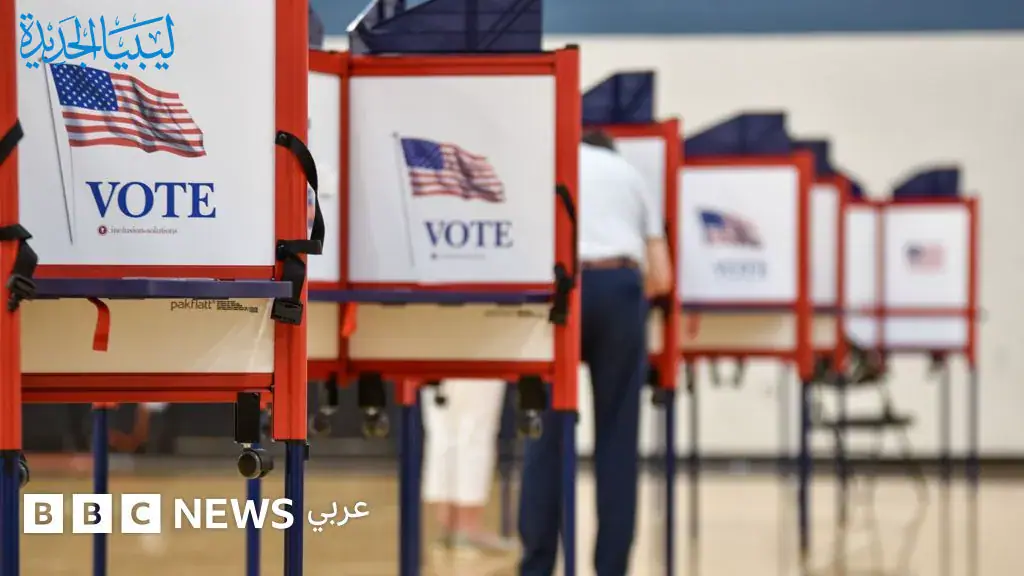
The US election has become a critical issue for voters in Michigan, with the war in Gaza and US support for Israel taking center stage. In the 2024 presidential election, voters who traditionally supported the Democratic Party, such as Samira Lqman, voted for Donald Trump's re-election due to his stance on Gaza and Israel. Lqman, an American of Yemeni origin, stated that her vote was motivated by her dissatisfaction with the US support for Israel, saying, "Either Gaza or nothing. If your position on Gaza, Israel, and Palestine is not good, we don't want you in office, and we won't give you our votes, regardless of your party affiliation."
The war in Gaza has become a critical issue in the US election, particularly in Michigan, where the Democratic and Republican parties are competing for control of the Senate. The election is seen as a crucial test of the US support for Israel and its impact on the American people. The candidates, Abdul Rahman Sid, a Democrat, and Mike Rogers, a Republican, have taken different stances on the issue. Sid has described the Israeli military operations in Gaza as "genocide," while Rogers has opposed reducing US military aid to Israel, citing national security concerns.
Michigan has the highest percentage of Arab Americans in the US, and many of them are voters who traditionally support the Democratic Party. However, some Arab American voters are now reconsidering their support due to the party's stance on Gaza and Israel. In the 2024 primary election, over 100,000 voters chose not to vote, expressing their dissatisfaction with President Joe Biden's support for Israel. This development has led to a shift in the Democratic Party, with some candidates, such as Sid, taking a more pro-Palestinian stance.
The US support for Israel has become a contentious issue in the election, with some voters feeling that the US is not doing enough to protect Palestinian rights. Sid, who is running for the Senate, has been criticized by some Jewish voters for his comments on Israel. However, he has also gained support from some Arab American voters who see him as a champion of Palestinian rights. The election has highlighted the complexities of the US-Israel relationship and its impact on American voters.
The Republican Party has also been active in courting Jewish voters in Michigan, with Rogers describing himself as a strong supporter of Israel. However, some critics have accused him of fueling Islamophobia by portraying Sid as sympathetic to Islamic extremism. The election has become a test of the candidates' ability to balance their support for Israel with their commitment to protecting the rights of all minorities.
The outcome of the election is uncertain, with both parties vying for control of the Senate. The war in Gaza has become a critical issue in the election, with voters on both sides passionately debating the US role in the conflict. The election has also highlighted the diversity of the American people and the complexities of their views on Israel and Palestine.
The election has significant implications for the future of US foreign policy, particularly with regard to the Middle East. The candidates' stances on Gaza and Israel reflect their broader views on human rights, national security, and the role of the US in the world. As the election approaches, voters in Michigan and across the US are grappling with the complexities of the issue and the implications for their communities and the world at large.
Key points
- The US election has become a critical issue for voters in Michigan, with the war in Gaza and US support for Israel taking center stage.
- The candidates, Abdul Rahman Sid and Mike Rogers, have taken different stances on the issue, reflecting their broader views on human rights, national security, and the role of the US in the world.
- The election has significant implications for the future of US foreign policy, particularly with regard to the Middle East.