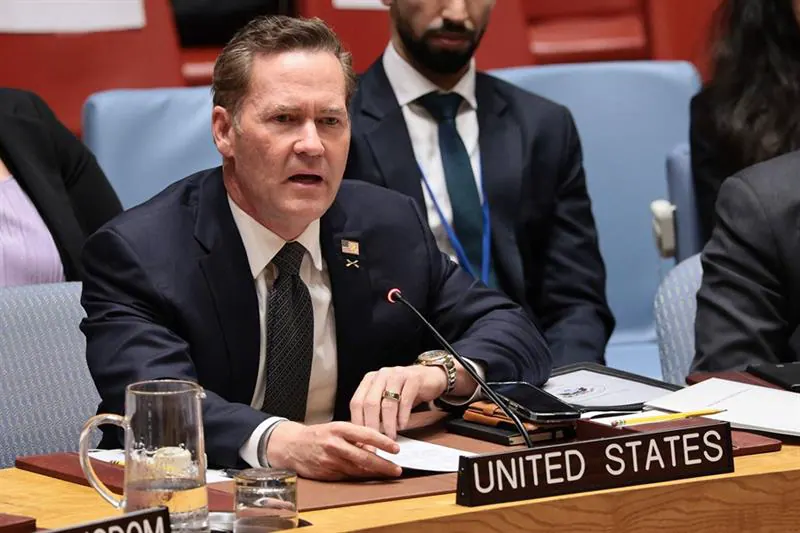
The United States has dismissed a proposal by Iran to reopen the Strait of Hormuz, a crucial waterway for global energy supplies, as 'cynical' and non-negotiable. The proposal, announced by Iranian Foreign Minister Abbas Araghchi at the United Nations earlier in the week, requires the release of frozen Iranian assets, lifting of sanctions on Iranian oil, and an end to the US naval blockade.
US Ambassador to the UN Mike Waltz stated in an interview with NBC that the proposal was an attempt by Iran to put something on the table that they knew was unacceptable. Waltz criticized the proposal, saying it asked for significant concessions from the US in exchange for a potential agreement. The US has maintained a naval blockade in the region, which has been a point of contention between the two nations.
US President Donald Trump rejected the deal on Saturday, stating that Iranian leaders wanted the deal because 'they are losing so badly.' Trump has taken a hard stance against Iran, and his administration has been critical of the country's actions in the region. The US Treasury Department has also claimed successes in isolating Iran economically, further straining relations between the two nations.
Araghchi responded to Waltz's comments, denouncing what he described as 'old, unproved accusations.' He emphasized that Iran is willing to open the strait if certain conditions are met, which he claimed were not new demands. Araghchi expressed pessimism about the prospect of a deal, citing the US administration's behavior over the past two years.
The Strait of Hormuz is a vital waterway for global energy supplies, with a significant portion of the world's oil passing through it. The US naval blockade has been in place since 2018, when the US withdrew from the Joint Comprehensive Plan of Action (JCPOA) and reimposed sanctions on Iran. The blockade has had a significant impact on Iran's economy and has been a major point of contention between the two nations.
Waltz stated that President Trump is open to negotiations but will keep all options on the table to achieve a favorable agreement. He emphasized that the US will not be pressured into accepting a deal that does not meet its requirements. The US and Iran have had a tumultuous relationship, with tensions escalating in recent years.
The rejection of Iran's proposal has added to the uncertainty surrounding the country's nuclear program and its relations with the US. The international community remains concerned about the potential for conflict in the region, and efforts to find a diplomatic solution to the crisis continue.
Key points
- The US has dismissed Iran's proposal to reopen the Strait of Hormuz as 'cynical' and non-negotiable.
- The proposal required the release of frozen Iranian assets, lifting of sanctions on Iranian oil, and an end to the US naval blockade.
- The US and Iran have had a tumultuous relationship, with tensions escalating in recent years.