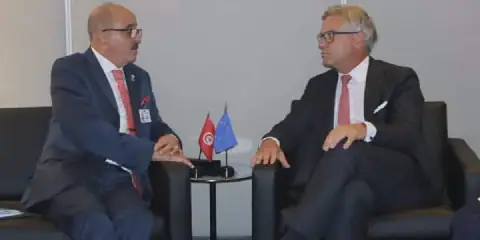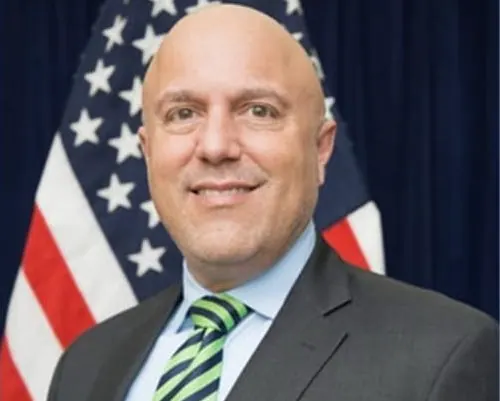
On the sidelines of the 81st United Nations General Assembly, the US has reaffirmed its strategic priorities in Africa. Phillip Assis, the francophone spokesperson for the US Department of State, has outlined Washington's key objectives on the continent. These priorities include combating terrorism through AFRICOM, reforming bilateral health aid, and promoting commercial diplomacy and investment opportunities in major projects like Simandou. In an exclusive interview with Africaguinee.com, Assis detailed the evolution of US-Africa relations, highlighting Guinea's crucial role in West Africa.
The US is prioritizing peace and security in Africa, with a focus on regions like West Africa where terrorism is a growing concern. According to Assis, the Trump administration has received 11 African heads of state at the White House in the first 18 months of its mandate, demonstrating the importance of these relations. However, the US has shifted its approach from humanitarian aid to a more commercial and equitable partnership. This new approach aims to create mutually beneficial opportunities, with the goal of promoting economic prosperity and stability as a bulwark against extremism.
The US military has close ties with African armed forces, with regular joint exercises like African Lion to enhance interoperability and operational effectiveness against regional terrorist threats. Assis confirmed that the Department of Defense collaborates actively with African forces, sharing best practices and expertise through AFRICOM. While specific intelligence-sharing arrangements are not publicly disclosed, Assis emphasized that US engagement aims to facilitate the exchange of experiences and strengthen collective operational capacities.
The US has reoriented its international health assistance, prioritizing effectiveness and urgent priorities. In response to the Ebola crisis in the Democratic Republic of Congo, the US has mobilized over $800 million, making it the largest contributor. The US now favors direct bilateral agreements with governments, rather than relying on NGOs, to promote more transparent and equitable health partnerships. This approach emphasizes responsibility for governments to manage their own public health.
The new US health aid model involves a co-investment mechanism, with a total commitment of $24.6 million. This includes $14.5 million in direct US aid and $10.1 million invested by partner countries in their own programs. According to Assis, this partnership demonstrates a shared financial responsibility and aims to produce measurable results in areas like HIV/AIDS, malaria, and tuberculosis.
The US is also focused on strengthening medical capacities in Africa, including the training of local healthcare professionals. While specific arrangements vary by country, Assis noted that each agreement is tailored to address the unique needs of the host country. In the case of Guinea, the US Embassy in Conakry would be better placed to provide details on the specific roadmap for the country.
As several African countries seek to attract investment and develop their economies, Assis emphasized the importance of transparent and responsible governance. The US has established strict evaluation mechanisms in its bilateral agreements, based on measurable results and a commitment to accountability. With 34 such agreements in place, including 23 in sub-Saharan Africa, the US aims to promote sustainable development and prosperity on the continent.
Key points
- The US has committed $24.6 million to a new health aid model in Africa, with a focus on direct bilateral agreements and measurable results.
- The US is prioritizing peace and security in Africa, with a focus on combating terrorism through AFRICOM and promoting economic prosperity.
- The US has shifted its approach to Africa from humanitarian aid to a more commercial and equitable partnership, aiming to create mutually beneficial opportunities.