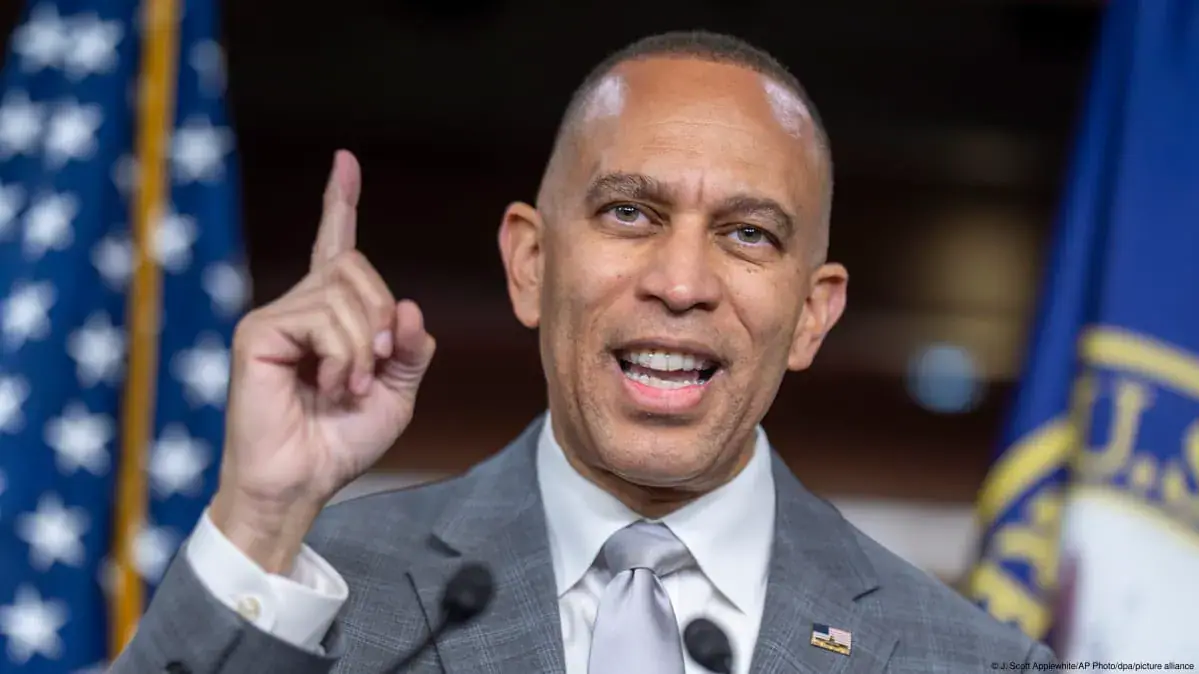
On November 18, 2026, US Democrats officially designated Hakeem Jeffries as their candidate for Speaker of the House, a move that could make him the first Black person to hold the position in January 2027. As an Afro-descendant, Jeffries' potential ascension to the role would mark a significant milestone in the history of the US legislative body. His background and family history have garnered attention, particularly his second name, Sekou, which honors Ahmed Sékou Touré, the first president of independent Guinea in 1958.
Jeffries' family history is rooted in pan-Africanism, with his father, Marland Jeffries, passing down a sense of heritage and roots to his children through their names. Hakeem Jeffries' brother, Hasan, was given the second name Kwame, in reference to Kwame Nkrumah, a key figure in Ghana's independence in 1957 and the country's first president in 1960. Both Touré and Nkrumah were prominent advocates for pan-Africanism and African emancipation. This heritage has contributed to Jeffries' distinct perspective as he prepares to assume one of the highest positions in the US legislative branch.
As Speaker, Jeffries would occupy the third position in the line of succession to the US presidency, following the vice president. His election would not only be a personal achievement but also a testament to the evolving landscape of American politics. Despite some dissent within the Democratic Party, particularly from progressive factions, Jeffries secured the support of 251 members of the caucus, with only 11 opposing his candidacy. This backing demonstrates a broad consensus within the party.
However, Jeffries' candidacy was not without controversy. Some progressive voices within the Democratic Party expressed concerns about his commitment to certain social reforms, such as universal healthcare, and his connections to pro-Israeli organizations and lobbies. Despite these criticisms, Jeffries maintained his position and previously achieved a significant political coup by being elected as the leader of the Democratic group in the House of Representatives in 2022.
Another notable figure in US politics, New York Mayor Zohran Mamdani, shares a similar story of heritage and naming. Born in Kampala, Uganda, on October 18, 1991, Mamdani has spoken publicly about the significance of his second name, Kwame, which honors Kwame Nkrumah. His father, Mahmood Mamdani, a professor at Columbia University in New York, has expertise in African political history, which likely influenced the choice of his son's name.
The stories of Jeffries and Mamdani illustrate the transmission of African heritage within families in the United States. Both men have been influenced by their families' connections to African history and the pan-African movement. These narratives highlight the complex and diverse experiences of African diasporic communities in the US, where family histories and cultural heritage continue to shape individual identities and perspectives.
As Hakeem Jeffries prepares to potentially become the first Black Speaker of the House, his background and family history serve as a reminder of the evolving nature of American politics and the increasing representation of diverse voices in leadership positions. With his centrist politics and strong party support, Jeffries is poised to make history and assume a critical role in shaping the US legislative agenda.
Key points
- Democrat Hakeem Jeffries is set to become the first Black Speaker of the House in January 2027.
- Jeffries' family history is rooted in pan-Africanism, with his second name, Sekou, honoring Ahmed Sékou Touré.
- New York Mayor Zohran Mamdani shares a similar story of heritage, with his second name, Kwame, honoring Kwame Nkrumah.