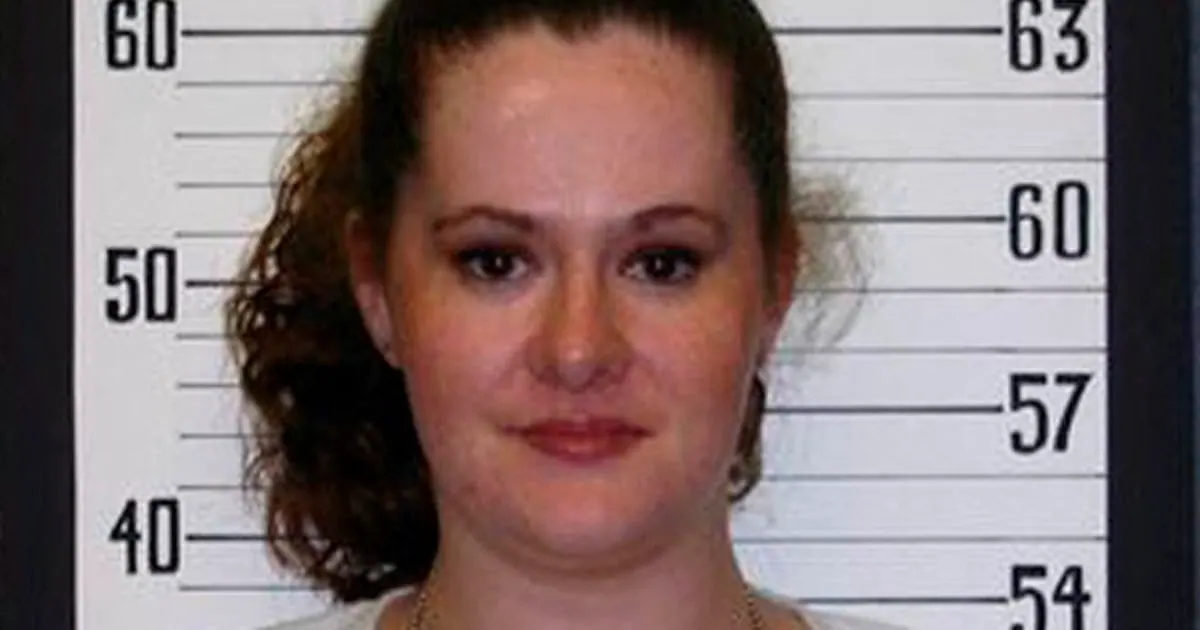
Convicted killer Christa Pike, who survived Tennessee's effort to execute her by lethal injection last week, has regained consciousness and is speaking, her lawyers said in a statement. Pike, 50, was sentenced to death for her role in the torture-murder of 19-year-old schoolmate Colleen Slemmer three decades ago. Despite severe injuries to her arms from the insertion of intravenous lines during the aborted execution, Pike remains under medical care. Her lawyers described her condition as critical, with a long recovery expected.
Pike's lawyers said on Friday that their client remained unconscious, critically ill, and hooked to a ventilator to breathe, as doctors laboured to clear the drug pentobarbital from her system. However, by Tuesday, they reported that she was conscious, speaking, and continues to receive critical medical care. Pike's prognosis remains unclear, and a court hearing on her case is scheduled for Wednesday in Davidson County Chancery Court. The hearing pertains to her lawyers' request for a court order to preserve evidence from the failed execution.
Pike's petition for clemency, denied last week by Republican governor Bill Lee, argued that her death sentence had failed to properly account for her childhood trauma as the victim of sexual abuse, neglect, and untreated mental illness. Her lawyers also highlighted that she had endured nearly 30 years of solitary confinement. Pike's case has drawn attention from death penalty opponents, who argue that the incident exposed the inherent barbarity of executions.
The execution attempt, which lasted roughly two-and-a-half hours, was described as prolonged distress for Pike as correction department personnel struggled to administer two doses of pentobarbital intravenously. Pike was heard gasping, crying, whimpering, and breathing loudly through much of the procedure. The bungled attempt to establish intravenous lines left both of Pike's arms "swollen, burned and blistered".
Pike's attorneys and journalists who witnessed the execution attempt described the scene as chaotic. Her lawyers accused state officials of having shrugged off prior warnings from Pike's doctors that her small veins and a blood disorder would make placing IV lines especially difficult. During the procedure, Pike's lawyers filed an emergency court motion to halt it, but by then, prison officials had stopped the execution attempt and called an ambulance.
The night of the execution attempt, the correction department defended its handling of the situation, saying it had "followed every step of the state's lawful, established execution protocol". However, agency commissioner Frank Strada has resigned and will leave his post this month, the governor announced on Saturday. Lee had previously ordered a suspension of any scheduled executions for the rest of the year and a third-party review of what happened in Pike's case.
Pike was 18 in January 1995 when she, her 17-year-old boyfriend, Tadaryl Shipp, and a third companion lured Slemmer into a wooded area on the University of Tennessee campus in Knoxville and killed her. Pike and Shipp confessed to the killing, and both were convicted of first-degree murder. Pike was sentenced to death, while Shipp received a life sentence with the possibility of parole.
Key points
- Christa Pike, 50, survived a lethal injection attempt in Tennessee after a botched execution.
- Pike's lawyers argue that her death sentence did not account for her childhood trauma and mental illness.
- The incident has sparked debate about the use of lethal injection and the death penalty in the US.