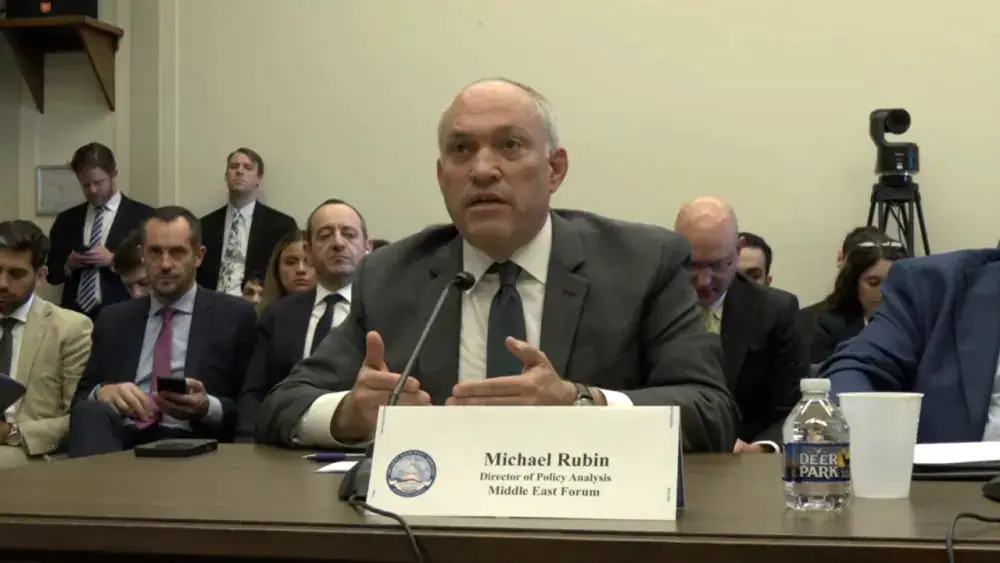
Michael Rubin, a former Pentagon official, has expressed concerns over Rwanda's continued support for Democratic Republic of Congo President Félix Tshisekedi, despite US sanctions on Rwanda. In an article in the Washington Examiner, Rubin criticized the US government's approach to the conflict between Rwanda and DRC, saying it prioritizes economic interests over good governance and sustainable security in the region. He argued that the US has ignored corruption and political issues in DRC.
Rubin, now a political analyst at the Middle East Forum, acknowledged that the Trump administration has focused more on Central Africa than previous administrations. However, he questioned whether the US approach would lead to lasting peace, citing the significant economic interests at play in DRC. Rubin highlighted DRC's vast natural resources, estimated to be worth $24 trillion, and its potential to become a major source of minerals and other essential materials for modern technology and industry.
Rubin criticized Tshisekedi's governance since taking office, citing concerns over the 2018 elections and ongoing corruption. He also expressed concerns over the use of ethnic-based militias for political gain in DRC. Rubin argued that the US has overlooked the historical security cooperation between Rwanda and DRC and accused Tshisekedi of using ethnic-based militias for political gain.
Rubin also criticized the US government's handling of the Allied Democratic Forces/M23 (now known as FRN) militant group, saying it was formed due to Kinshasa's failure to implement agreements with former rebels. He described a visit to M23-controlled areas in 2024, where he observed improvements in security, food availability, and infrastructure.
The US imposed sanctions on Rwanda on October 28, 2026, including on the Ministry of Defense and the CSS financial institution. Washington accused these entities of supporting the M23 militia and undermining efforts to halt the conflict in eastern DRC. Rwanda has denied allegations of supporting M23 and emphasized the need to address its security concerns, particularly the threat from the FDLR militia.
Rubin questioned whether the US sanctions on Rwanda would help resolve the conflict, warning that they could damage Washington's relationship with Kigali without addressing the problems in Kinshasa. He also cautioned that corruption could undermine US investment in DRC, despite its natural resource wealth. Rubin accused Massad Boulos, an advisor to President Donald Trump, of seeking deals with Tshisekedi that prioritize business opportunities over political stability and sustainable development.
Rubin urged the US government to reassess its approach to DRC, emphasizing the need to combat corruption, address ethnic-based militias, and promote good governance. He argued that this approach is crucial for achieving lasting peace and protecting US interests in Central Africa. Rubin concluded that the US must prioritize these issues to ensure a stable and prosperous region.
Key points
- US sanctions on Rwanda aim to pressure Kigali over its alleged support for M23 militia in DRC.
- Rubin criticizes US for prioritizing economic interests over good governance in DRC.
- DRC's natural resources estimated to be worth $24 trillion.