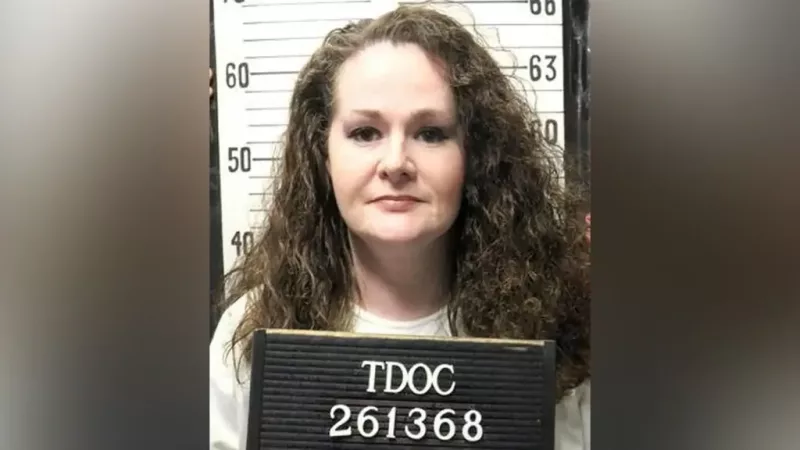
Christa Pike, a 50-year-old convicted murderer, was scheduled to be executed by lethal injection in Tennessee on Wednesday evening. However, the attempt to carry out her death sentence failed, and she was taken to an off-site medical facility where she is being provided with life-saving measures. Pike was sentenced to death in 1996 for the murder of 19-year-old Colleen Slemmer, which she committed alongside her then-boyfriend Tadaryl Shipp.
The execution attempt involved administering two syringes of the drug pentobarbital, but Pike's legal team claimed that these failed to stop her heartbeat, and she could still be heard snoring. The Tennessee Department of Correction defended the method used, stating that the protocol does not allow for additional procedures beyond what was carried out. However, the state protocol does not clearly specify what should happen if an inmate remains alive after a second dose.
Medical experts have provided theories on why the dosage given to Pike proved to be non-fatal. Dr. Joel Zivot, a professor at the Emory University School of Medicine and a medical expert retained by Pike's legal team, said that she probably never achieved a sufficient blood level of pentobarbital to cause apnea and cardiovascular failure. Zivot also expressed concerns that Pike may have suffered a brain injury due to the delay in resuscitation.
The state governor, Bill Lee, has ordered a third-party review of the incident and announced that the year's last remaining execution will not go ahead as planned. Pike's lawyers and opponents of the death penalty have raised concerns about the suffering of inmates during botched executions. Maya Foa, the chief executive of international legal organization Reprieve, said that the secrecy surrounding lethal injections makes it difficult to know exactly what went wrong.
Pentobarbital is a potent sedative used in lethal injections to cause death. Its use has been scrutinized in recent years, with concerns raised about its potential for causing unnecessary pain and suffering. The US federal government banned its use in federal executions under the presidency of Joe Biden, but individual states like Tennessee can choose their own methods.
This is not the first botched execution in Tennessee this year. In May, the execution of Tony Carruthers was postponed after staff were unable to find a vein to administer a lethal injection. Across the US, the issue of botched executions continues to cause alarm, with over a third of executions in 2022 being botched or highly problematic, according to the Death Penalty Information Center.
The attempted execution of Pike has raised questions about what happens next and whether authorities will try again to execute her. There is a historical precedent for authorities making a second attempt to execute those on death row. Pike's health status remains unclear, and her lawyers continue to provide her with life-saving measures. The incident has sparked renewed debate about the death penalty and the need for greater transparency and accountability in the execution process.
Key points
- The attempted execution of Christa Pike has raised concerns about the suffering of inmates during botched executions and the need for greater transparency and accountability in the execution process.
- The use of pentobarbital in lethal injections has been scrutinized in recent years, with concerns raised about its potential for causing unnecessary pain and suffering.
- This is not the first botched execution in Tennessee this year, and the issue of botched executions continues to cause alarm across the US.