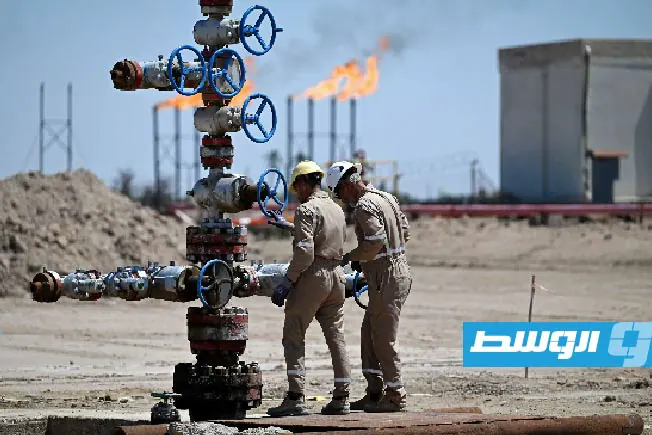
The United States and its international coalition have ended their nearly 12-year presence in Iraq, but the US still exercises considerable control over Iraq's oil revenues. This control, established in 2003 following the US-led invasion, allows Washington to significantly influence Baghdad's economic and political stability. The primary mechanism for this control is the management of Iraq's oil revenues through the Federal Reserve Bank of New York.
The arrangement was initially designed to collect Iraq's oil revenues and use them for the country's reconstruction and development. The goal was to protect these revenues from lawsuits and claims related to Saddam Hussein's regime. In 2003, US President George W. Bush issued an executive order to set up this arrangement, which was subsequently renewed by all subsequent US presidents. Over time, the Development Fund for Iraq became an account under the Iraqi Central Bank at the Federal Reserve Bank of New York, a situation that persists to this day.
Despite the Iraqi government's increased control over its financial affairs since the early years of the US occupation, the continued US influence over Iraq's oil revenues highlights the ongoing American leverage in the country's economic landscape. In 2020, the Iraqi government requested the withdrawal of US troops from the country, but reportedly backed down after the US threatened to cut off Iraq's access to funds held at the Federal Reserve Bank of New York.
Oil is Iraq's primary source of income, accounting for approximately 90% of the country's budget. This gives the US significant influence over Iraq's economic and political stability. According to Iraqi government officials, the current arrangement has helped stabilize Iraq's finances and protect its public finances. The system also provides international confidence in the management of oil revenues and facilitates smooth access to the dollars necessary for trade and imports.
The arrangement supports exchange rate stability, enhances confidence in the Iraqi economy, and strengthens domestic financial institutions and economic sovereignty. It also allows the government to counter some parties, including Iran-aligned groups, that seek to ease restrictions on dollar access. The US imposed sanctions on Iraqi banks and individuals last year, accusing them of laundering money for Iran.
Iraq's oil revenues remain held at the Federal Reserve Bank of New York. The Iraqi Central Bank historically relied on dollar auctions as its primary mechanism for providing dollars. However, the country formally ended this auction system in early 2025, following intense US pressure as part of a broader campaign to combat alleged dollar smuggling to sanctioned entities, particularly Iran.
The restrictions on Iraq's dollar supply have led to the emergence of an unofficial parallel market, resulting in a price disparity between the official exchange rate set by the Central Bank and the black market rate. This price difference essentially represents a risk premium for transactions conducted outside the official system. Iraq is also affected by US and Western sanctions on Iran, which Baghdad uses as an important economic lifeline.
Key points
- The US maintains control over Iraq's oil revenues through the Federal Reserve Bank of New York.
- This control gives the US significant influence over Iraq's economic and political stability.
- The arrangement has been in place since 2003, despite changes in the US-Iraq relationship.