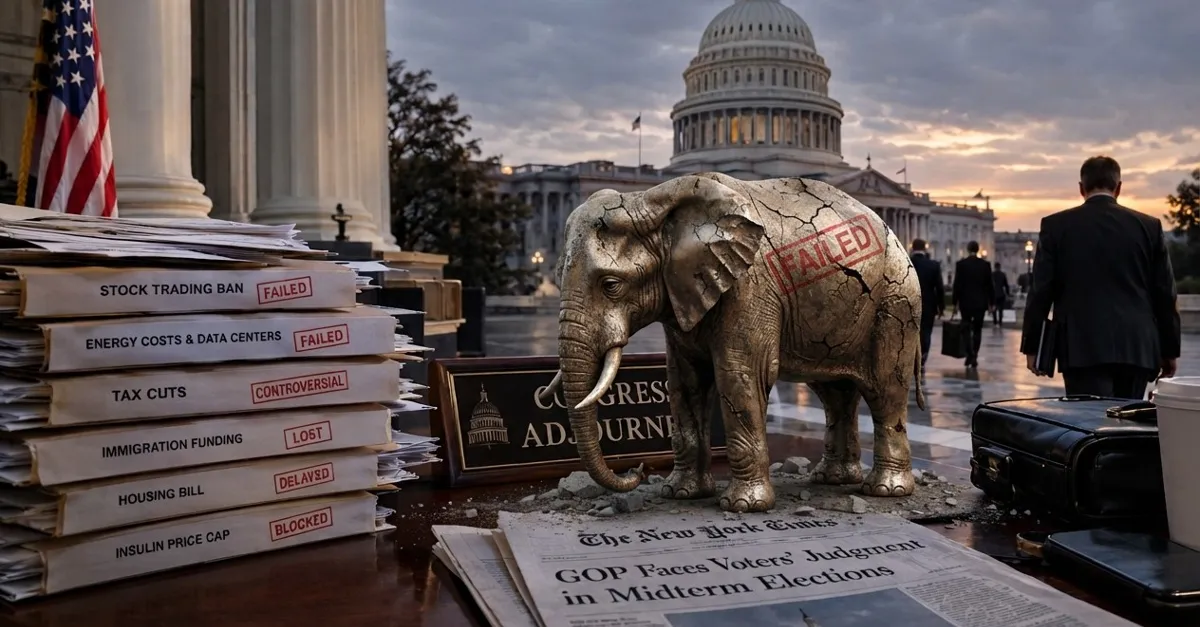
The US Congress has concluded its legislative session ahead of the midterm elections, with many Americans still feeling the pinch of economic hardship. Despite efforts to pass legislation addressing these concerns, the Republican-led Congress was unable to deliver meaningful results. According to a report by The New York Times, the party's last-ditch efforts to pass bills restricting stock trading by members of Congress and capping energy costs for data centers failed to gain traction.
The Republican Party's legislative record has been met with criticism, with many of their key initiatives, such as a contentious tax cut bill and a funding bill for immigration procedures, facing significant backlash. A bill aimed at addressing housing costs also stalled, with President Donald Trump refusing to sign it. Instead of defending their record, Republican leaders opted to warn voters about the potential consequences of Democratic victories in the midterm elections.
Senate Majority Leader Mitch McConnell's counterpart, Senator Chuck Schumer, described the Republican efforts as "desperate actions that will not bear fruit," emphasizing that they would have little impact unless they became law. In contrast, Senator John Hosted from Ohio expressed confidence that his party's message would resonate with voters, saying that Republicans had provided opportunities to address the cost of living crisis, but were thwarted by Democrats.
The Republican Party's struggles were further highlighted by the Senate's decision to devote two weeks to debating collegiate sports legislation, while voters remain preoccupied with economic concerns, the war in Ukraine, and rising living costs. Senator John Kennedy from Louisiana criticized the approach, stating that there were pressing issues that required attention, including a bill to cap insulin prices.
Several Republican senators expressed concerns about the party's prospects in the midterm elections, with Senator Jim Justice from West Virginia noting that voters' financial struggles would be a significant factor in their decisions. He emphasized that if voters were unable to pay their bills, it would not matter how much they liked Republicans.
The Republican Party's campaign arm, led by Senator Tim Scott, has taken notice of shifting dynamics in key states, such as Kansas, which has become more competitive than expected. In light of these developments, Senator Thom Tillis from North Carolina advised Republican candidates to focus on local issues rather than national agendas.
As the midterm elections approach, Republican senators are reassessing their strategy. Senator John Cornyn from Texas observed that even failed legislative efforts have value, saying that it was essential to demonstrate that they were trying, even if they did not succeed.
Key points
- The US Congress has adjourned with few legislative accomplishments.
- Republican efforts to pass legislation addressing economic concerns were met with criticism and failure.
- The party's struggles ahead of the midterm elections have led to a reappraisal of their strategy.