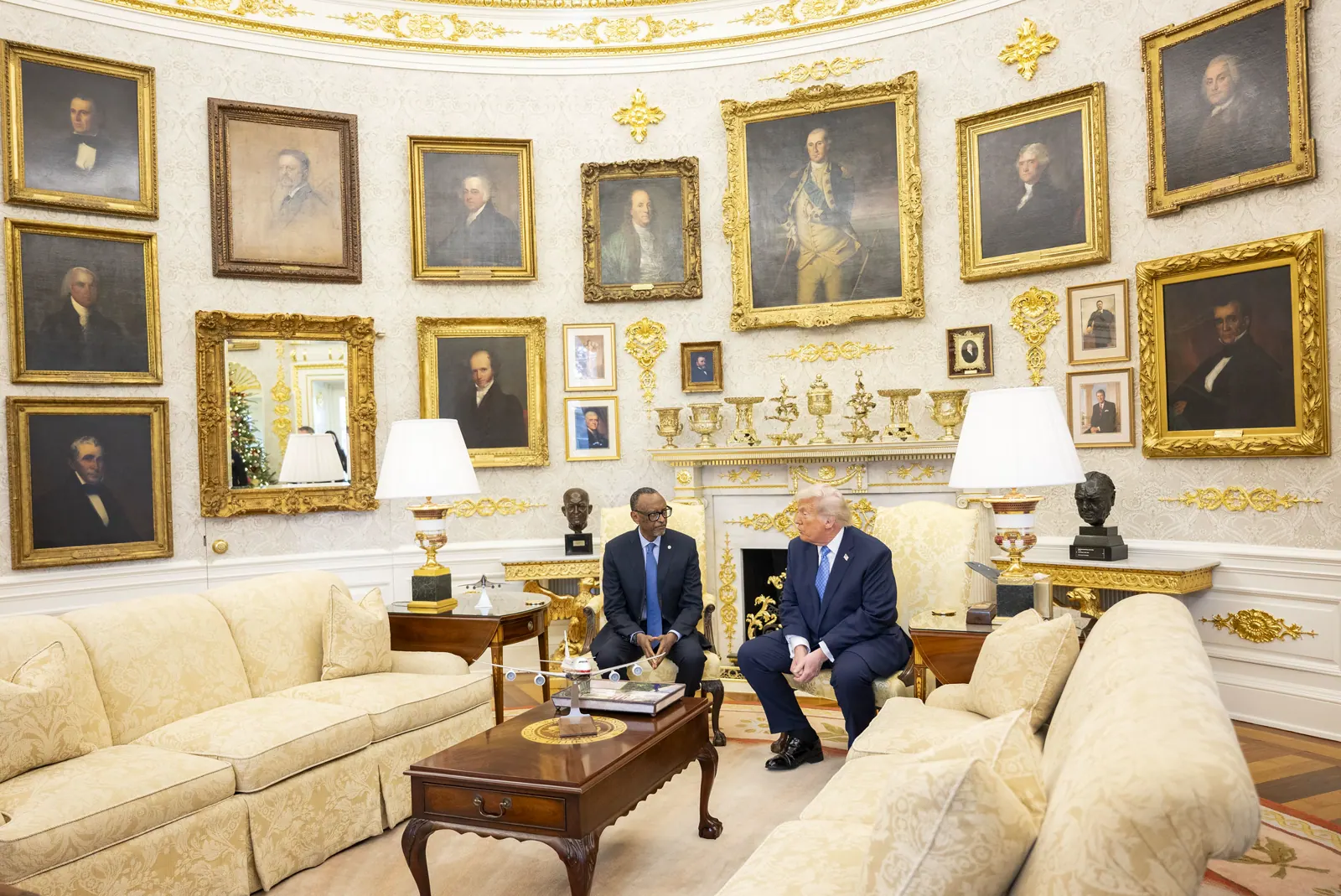
The implementation of the Washington Accords for Peace and Prosperity has drawn attention in Washington, with US officials and lawmakers highlighting Rwanda's efforts to meet its obligations. In June 2026, US Secretary of State Marco Rubio acknowledged that Rwanda was fulfilling its commitments under the Washington framework. This recognition came after a meeting between US Congressman Joe Wilson and Rwanda's Foreign Minister Olivier Nduhungirehe, where Wilson expressed appreciation for Rwanda's full implementation of the peace deal.
The Washington Accords contain commitments for both Rwanda and the Democratic Republic of Congo, covering security, disengagement of forces, neutralization of the FDLR, protection of civilians, and regional economic cooperation. A joint statement issued by the US, Rwanda, and DRC in March 2026 outlined coordinated measures involving Rwanda's disengagement and the DRC's intensified efforts to neutralize the FDLR. The agreement is reciprocal, and Rwanda emphasizes that its obligations cannot be separated from those undertaken by the DRC.
One of the most important obligations placed on Kinshasa concerns the FDLR, an armed group Rwanda regards as an existential threat. The International Contact Group for the Great Lakes, which includes the US and European governments, recently urged the DRC to develop an operational plan and realistic timeline for effectively neutralizing the FDLR. The group also warned that operational cooperation or co-location with FDLR elements would be inconsistent with those commitments.
Despite the commitments, Kinshasa continues to keep the FDLR on the front lines and provide it with ammunition and financial support. The FDLR cannot be dismantled without political will in Kinshasa, and there is little evidence that such political will exists. DRC President Tshisekedi appears to be giving the group greater means to continue fighting, which is hardly a secret and increasingly visible.
Congolese Minister Anzulini has toured Western capitals claiming that he had a "signed deal" with the FDLR, even as the group continues to receive means to fight alongside the FARDC, Burundian army, Western mercenaries, and Wazalendo forces. The situation around Minembwe has become another major test of the peace process, with a UN Group of Experts report documenting intensified military operations in the area.
Rwanda has alleged that FARDC, Burundian forces, and allied armed groups have contributed to the encirclement and humanitarian isolation of Banyamulenge communities around Minembwe. Rwanda's position is clear: it has demonstrated its willingness to implement its commitments and expects the DRC to do the same, particularly on the FDLR and military de-escalation. The Great Lakes region has seen too many peace agreements fail at the implementation stage.
The Washington Accords offer another opportunity, but only if Kinshasa is held to its obligations. A peace agreement cannot work when one side is expected to implement its commitments while the other continues to arm the very forces it has pledged to neutralize. The international community must ensure that both parties implement the agreement simultaneously and verifiably to achieve lasting peace in the region.
Key points
- Rwanda has fulfilled its commitments under the Washington Accords, while the DRC's commitment to neutralizing the FDLR is questioned.
- The DRC continues to provide support to the FDLR, an armed group that Rwanda regards as an existential threat.
- The international community must hold Kinshasa to its obligations for the Washington Accords to achieve lasting peace in the region.