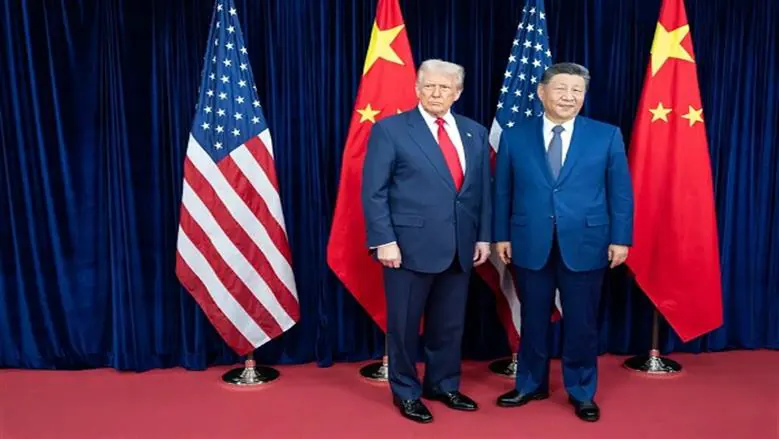
The upcoming meeting between US President Donald Trump and Chinese President Xi Jinping in Washington this week has sparked hopes of a renewed understanding between the two nations. However, despite the cordial atmosphere surrounding the meeting, the trade truce between the US and China continues to face repeated tests. Both countries have taken actions against each other in sensitive economic and technological areas.
The agreement reached between Washington and Beijing during the leaders' meeting in South Korea last year helped ease economic relations. The US agreed to reduce some punitive tariffs on Chinese exports in exchange for China's commitment to continue exporting vital minerals. However, the US claims that China's exports of certain minerals essential for the automotive and semiconductor industries remain restricted.
The US has also expressed concerns that China's purchases of US agricultural products have not met the expected levels. New Chinese regulations have raised fears among US companies operating in the Chinese market. Since March, the Chinese government has expanded its oversight of global companies operating within the country, including imposing restrictions on unsanctioned audits of supply chains.
In response, the US has continued to impose restrictions on Chinese technology entering the US market, from routers to human-like robots. The US has accused China of copying US artificial intelligence models and added several Chinese companies to a list of firms linked to the Chinese military. China has retaliated by imposing sanctions on seven US companies that help institutions inspect and map supply chains.
The relationship between Washington and Beijing has been likened to a game of water polo, with both sides trying to maintain stability on sensitive issues while continuing to compete and exert pressure in other areas. The two leaders are expected to discuss extending the trade truce, which is set to expire on November 30.
China is seeking a longer extension of the truce, while the US proposes a six-month extension, allowing for more frequent renegotiation and pressure on Beijing to fulfill its commitments. The US is pushing China to meet its previous commitments to purchase US agricultural products and Boeing aircraft.
The meeting between Trump and Xi is also expected to cover issues such as intellectual property, cybersecurity, and the opioid crisis. The two nations are working to establish a "trade council" that could help reduce tariffs on $30 billion worth of goods from each side.
Key points
- US-China trade truce faces repeated tests ahead of Trump-Xi summit.
- US and China impose restrictions on each other's technology and trade.
- Trump and Xi to discuss extending trade truce and other key issues.