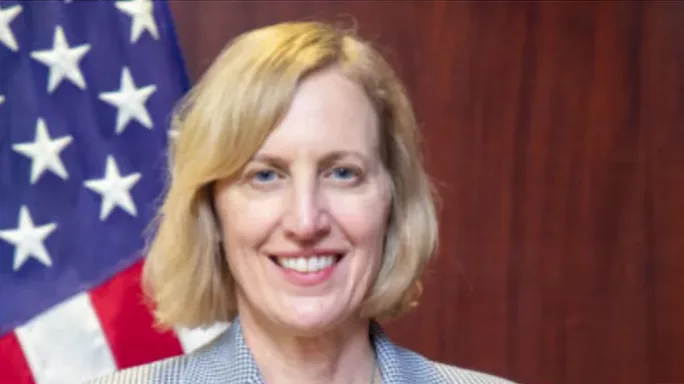
The United States has thrown its weight behind Kenya's campaign to clean up illicit financial flows, providing a significant boost to the country's efforts to exit the grey list. US Chargé d'Affaires Susan Burns said Washington is impressed by the measures Kenya has taken and would give a "very positive" sentiment on the country's fight against money laundering. Burns commended Nairobi for developing a vigorous remedial plan and policies aimed at strengthening financial transparency.
The endorsement comes at a critical moment for Kenya, which has spent more than two years trying to convince the Financial Action Task Force (FATF) that reforms introduced since its February 2024 grey-listing are producing meaningful results. The US backing is particularly significant because Washington has previously raised concerns over Kenya's exposure to financial crime. Last year, the US State Department's International Narcotics Control Strategy Report described Kenya as vulnerable to money laundering, financial fraud, and terrorist financing.
Kenya was placed under FATF increased monitoring in February 2024 after the global financial-crime watchdog concluded that the country had failed to make sufficient positive and tangible progress in addressing weaknesses identified in its 2022 mutual evaluation. At the time, Kenya had only two of the 40 FATF recommendations rated compliant, while 26 were partially compliant and 11 non-compliant. Effectiveness was also weak, with nine of 11 immediate outcomes rated low.
The grey listing triggered a sustained regulatory response. Kenya amended its anti-money laundering laws in 2023 and again in 2025. The Anti-Money Laundering and Combating of Terrorism Financing Laws (Amendment) Act, 2025, widened and strengthened AML obligations across sectors including accounting, estate agency, retirement benefits, mining, SACCOs, and public benefit organisations. It has also enacted the Virtual Asset Service Providers Act in October 2025, creating a legal framework for licensing and supervising cryptocurrency and other virtual-asset businesses.
Kenya has simultaneously strengthened beneficial-ownership requirements, financial-sector supervision, suspicious-transaction reporting, targeted financial sanctions, and cooperation between agencies involved in financial investigations. The Central Bank of Kenya says its AML mandate now covers commercial banks, mortgage finance companies, microfinance banks, money-remittance providers, foreign-exchange bureaus, digital-credit providers, and payment-service providers. It has also undertaken a survey of cross-border physical cash movements and a preventive-measures survey.
FATF has acknowledged the progress. In April 2024, 15 recommendations were re-rated, with several moving from non-compliant or partially compliant to compliant or largely compliant. A further review in August that year resulted in another 14 recommendations being upgraded. The February 2026 FATF reviews noted stronger supervisory capacity, the new framework for virtual-asset providers, and a sustained increase in terrorism-financing investigations and prosecutions.
Despite the progress, Kenya remained on the grey list in FATF's June 2026 review. The watchdog wants Nairobi to improve risk-based supervision, increase suspicious-transaction reporting, and improve the quality and use of financial intelligence. The country has been feeling the pinch of the grey list, with an IMF assessment warning that the designation could further affect capital inflows. A vote of confidence from Washington can help reinforce the message to international banks and investors that Kenya is addressing the weaknesses that prompted its grey-listing.
Key points
- The US has expressed support for Kenya's efforts to combat money laundering.
- Kenya has made significant progress in strengthening its anti-money laundering laws and regulations.
- The country remains on the grey list, with FATF calling for further improvements in risk-based supervision and suspicious-transaction reporting.