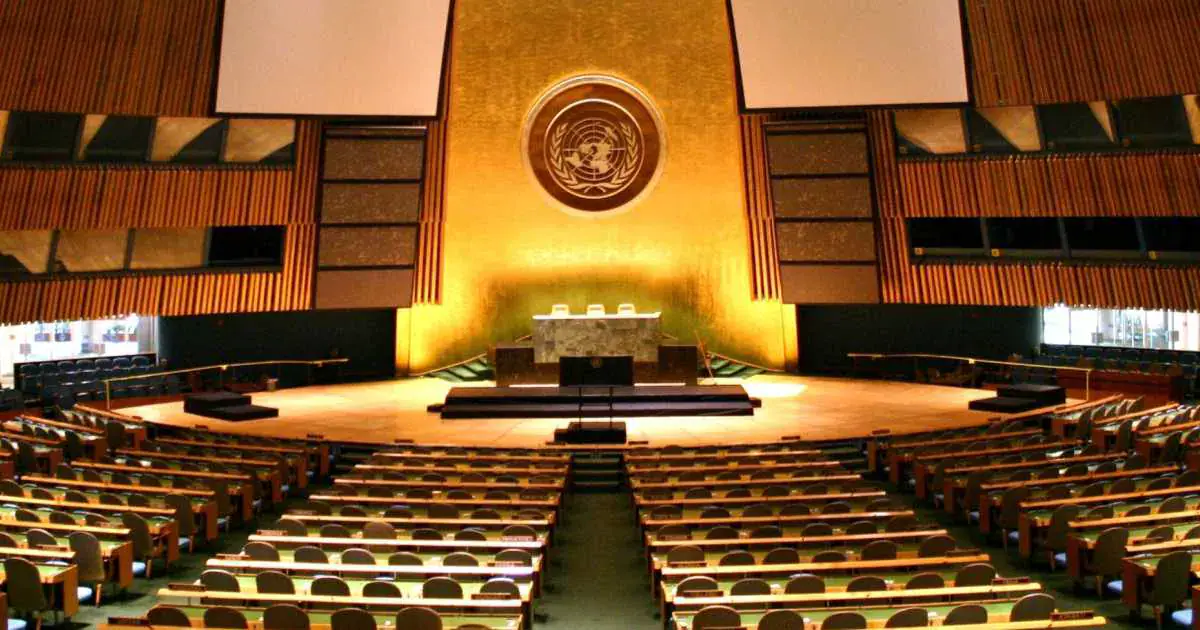
The United Nations General Assembly's Third Committee has adopted a resolution condemning extrajudicial, summary or arbitrary executions, despite attempts to water down the language to exclude LGBTIQ people. The resolution, presented every two years, affirms that states have an obligation to investigate and prosecute unlawful killings and provide justice for victims. It identifies groups at high risk, including journalists, human rights defenders, Indigenous Peoples and victims of so-called honour killings.
The resolution has included people killed because of their sexual orientation since 2002 and their gender identity since 2012. However, Egypt introduced an amendment on behalf of most members of the Organisation of Islamic Cooperation to remove references to sexual orientation and gender identity from the resolution. The amendment failed, with 74 countries voting to retain the protections, while 69 supported removing them.
Notably, the United States voted in favour of the amendment, marking the first time it has backed removing this language from the resolution. South Africa voted against the move, while several other African countries, including Ghana, Nigeria and Uganda, supported the amendment. Activists are concerned that more countries voted to remove references to sexual orientation and gender identity this time than in 2024.
A recent report by Outright International documented 233 killings of LGBTIQ people between January 2020 and July 2026. The organisation argues that the report provides strong evidence for retaining references to sexual orientation and gender identity in the resolution. "Behind every case in our report is a grieving family and community, often still waiting for an investigation or justice," said Ohotuowo Ogbeche, Global Researcher at Outright International.
Outright International warned of "a sharp shift in the politics of the General Assembly", pointing out that a similar Egypt-led amendment removed language on sexual orientation and gender identity from the UN's disability rights resolution in December last year, also with the support of the US. The organisation urged all countries that voted to retain references to sexual orientation and gender identity to stand by their decision.
The extrajudicial killings resolution still needs to be adopted by the General Assembly next month. Outright International's Executive Director, Maria Sjödin, asserted that governments must keep the language intact and make clear that the right to life belongs to everyone. The resolution was adopted with 131 votes in favour, none against, 47 abstentions and 15 countries not voting.
Activists are alarmed that 69 countries, including the US and China, sought to remove references to LGBTIQ people from the UN resolution. The vote has sparked concerns about the increasing opposition to LGBTIQ rights at the UN.
Key points
- The US voted in favour of an amendment to remove LGBTIQ protections from a UN resolution on extrajudicial killings.
- A report documented 233 killings of LGBTIQ people between January 2020 and July 2026.
- The UN resolution still needs to be adopted by the General Assembly next month.