The US-backed Board of Peace has proposed a six-month, $2.45bn plan to initiate reconstruction and governance in Gaza. The plan, unveiled at a meeting in New York, aims to support President Donald Trump's 20-point plan to end the Israel-Hamas war. The proposal includes 66 projects, focusing on infrastructure, education, and health initiatives. The board acknowledged significant hurdles to be overcome, with full reconstruction estimated to cost $35.2bn over the medium term and $71.4bn in the next 10 years.
The plan is primarily aimed at potential donors who will be asked to fund the reconstruction of the war-devastated territory. The ceasefire, which took effect on October 10, was intended to pave the way for a broader process to rebuild Gaza under the Board of Peace's guidance. However, the US-backed plan has largely stalled, with the Israeli military expanding its control of Gaza and occupying about 60% of the territory. Hamas has not given up its weapons, and the international military force and new government have not entered Gaza.
The board's high representative, Nikolay Mladenov, stated that progress depends largely on Hamas disarming, a step the group has refused to take. Mladenov also pressed Israel to scale back its military operation, emphasizing that the process is not bound by a calendar. The board faces key questions, including laying out plans for reconstruction, a timeline for deploying the international force, and a new government. Additionally, they must address plans to disarm Hamas and bring in essential building materials.
US Gen Jasper Jeffers, commander of the international stabilisation force planned for Gaza, outlined a five-step approach to demilitarising Hamas. The approach begins with the deployment of the multinational unit, starting with troops from Kosovo and Morocco, followed by personnel from Albania and Kazakhstan. Their task is to demilitarise the territory and decommission Hamas' military infrastructure, with the goal of gradually transferring security control to the interim government.
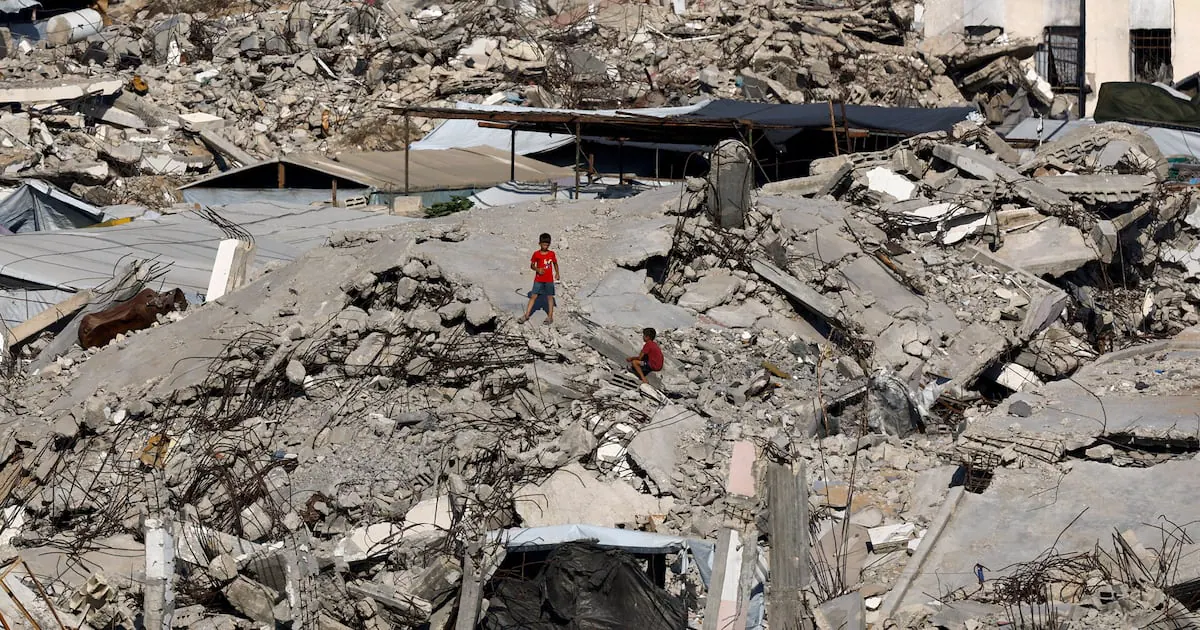
The proposed plan includes ambitious infrastructure, education, and health initiatives designed to support Trump's 20-point plan. The board's proposal aims to address the immense needs in Gaza, where the majority of Palestinians continue to live in tent camps or ruins of their former homes. The international community will be crucial in providing the necessary funding for the reconstruction efforts.
Despite the challenges, the Board of Peace remains committed to making progress. Mladenov emphasized that they want to ensure the process works, and they are not bound by a specific timeline. The board will continue to work towards finding a solution, with the ultimate goal of rebuilding Gaza and improving the lives of Palestinians.
The Board of Peace's proposal is a significant step towards addressing the crisis in Gaza. The plan's success will depend on the cooperation of various parties, including potential donors, Israel, and Hamas. The international community will be watching closely as the situation in Gaza continues to unfold.
Key points
- The US-backed Board of Peace proposes a six-month, $2.45bn plan to initiate reconstruction and governance in Gaza.
- The plan's success depends on Hamas disarming and Israel scaling back its military operation.
- The Board of Peace faces significant challenges, including securing funding and coordinating with various parties.