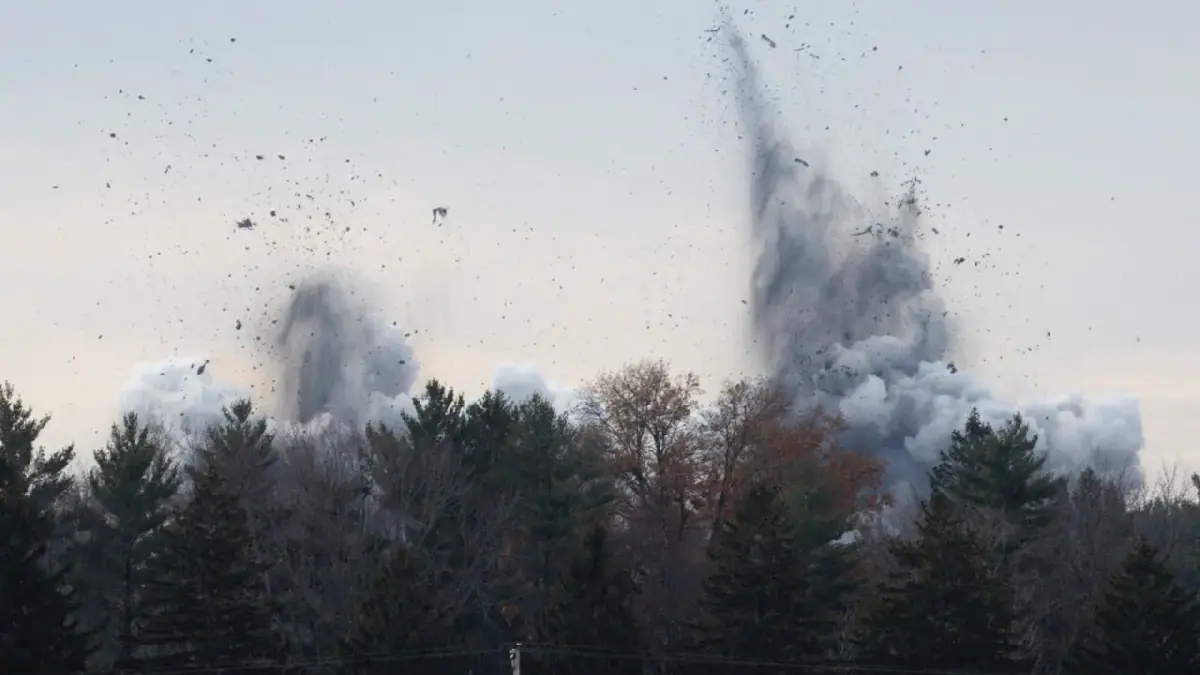
The US Army conducted a controlled detonation of five tons of degraded lead azide at an ammunition plant in southeastern Iowa on Wednesday. The explosion, which occurred around 9am, was necessary due to concerns that the unstable materials could detonate uncontrollably as temperatures dropped. The event raised health and environmental worries over lead dust in the air, leading to public frustration about the lack of information.
Residents reported seeing two plumes of smoke from several miles away as the blast occurred. Many ignored warnings to remain indoors and instead watched the explosion from a safe distance. Classes were cancelled at schools not already closed for the Thanksgiving holiday, and a local gas station temporarily closed for safety reasons. Some residents took precautions by sealing their windows and doors to minimize potential exposure to lead dust.
The detonation was originally scheduled for last Friday but had been changed three times due to public concern and to implement additional safety measures. The Army felt immediate action was necessary, as the materials risked becoming even more volatile. Officials recommended that residents within five miles of the site evacuate to avoid potential lead dust exposure. They assured the public that barriers around the blast zone would help contain the explosion’s effects.
The Army constructed additional barriers around the detonation site and planned to spray over 100,000 gallons of water on the materials to mitigate lead dust from the explosion. The lead azide was stored at the Iowa facility since 2009 but was found to have partially crystallised during a March inspection, raising concerns about spontaneous detonation.
A court ruling on Monday proceeded with the detonation plan despite environmental groups’ lawsuits challenging it. The appeals court determined that safeguards by the US Environmental Protection Agency were sufficient to control the lead dust. Acting Secretary of the Army Adam Telle urged the public not to panic, emphasizing the measures in place to minimize risks.
Despite reassurances, many homes and farms remained in the potential path of toxic dust, which poses risks especially to children and pregnant women. Local residents expressed both concern and resignation about the situation. Many noted that while the timing was unfortunate, the issue needed urgent attention to prevent further risks to public health and the environment.
The controlled detonation was targeted to direct the plume towards Missouri and away from the nearby city of Burlington. The incident highlights the challenges of managing hazardous materials and the importance of balancing safety concerns with environmental and health risks. The situation will likely continue to be monitored for any long-term effects on the local community and environment.
Key points
- The US Army detonated 5 tons of degraded lead azide at an Iowa ammunition plant due to concerns over spontaneous detonation.
- The controlled explosion was carried out with additional safety measures, including barriers and water spraying, to minimize lead dust exposure.
- The incident raised health and environmental concerns among local residents, who expressed frustration and resignation about the situation.
Reporting sources
- US Army Conducts Controlled Detonation of Lead Explosives in Iowa Amid Contamination Concerns · sierraleonetoday.co.com