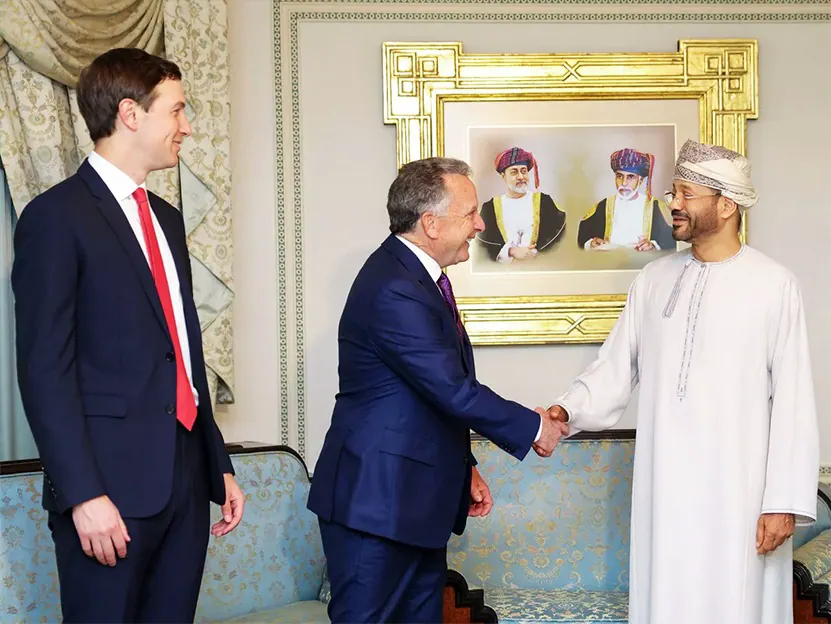
In a significant development, top officials from Iran and the United States held talks at the United Nations in New York, marking the first such meeting since June. The discussions, mediated by Qatar, involved Iran's Foreign Minister and US President Donald Trump's envoy, Steve Witkoff. According to Witkoff, the talks aimed to find a constructive and promising path forward. The meeting comes against the backdrop of heightened tensions between the two nations.
The talks follow a series of escalating events, including air strikes launched by the US and Israel on Iran on February 28. Iran responded with attacks on Israel and US bases in the Gulf, as well as blocking the Strait of Hormuz, a critical waterway that previously accounted for 20% of the world's oil and liquefied natural gas passage. The closure of the strait has led to significant fluctuations in oil prices and increased pressure on Trump to find a resolution to the conflict.
In his address to the UN General Assembly, Trump touted his accomplishments on the economy, immigration, and crime, remarks that seemed aimed at US voters ahead of the midterm elections. He spent much of his speech justifying the war with Iran, arguing that it had prevented Tehran from obtaining a nuclear weapon and demonstrating the value of "peace through strength." This stance contrasts with that of UN Secretary General António Guterres, who warned of deepening global divisions.
Guterres emphasized the "interdependence" of the world's peoples, highlighting the need for diplomacy and cooperation. In contrast, Trump's remarks were seen as more confrontational, with the US president arguing that ultimatums, rather than deal-making or compromise, were the key to achieving peace. The differing approaches reflect the significant challenges facing international diplomacy in the current global landscape.
Iran, meanwhile, has repeated its demand for the US to end its "acts of aggression." The country's stance is likely to be a major point of contention in any future talks. The US and Iran have a long history of tensions, with the current conflict dating back to the US withdrawal from the Iran nuclear deal in 2018.
The talks in New York are seen as a crucial step towards de-escalation, with Qatar playing a key mediating role. The involvement of Witkoff, Trump's envoy, suggests that the US is taking the talks seriously. However, the outcome of the discussions remains uncertain, with many challenges still to be overcome.
As the US heads into Congressional elections in November, Trump faces increasing pressure to find a way to end the conflict. The economic implications of the conflict, including the impact on oil prices, are likely to be a major concern for voters. The international community will be watching closely to see if the talks in New York can lead to a more peaceful and stable situation in the region.
Key points
- The US and Iran have held their first talks since June, mediated by Qatar, in an effort to de-escalate tensions.
- The conflict has had significant economic implications, including fluctuations in oil prices and pressure on Trump to find a resolution.
- The talks reflect differing approaches to international diplomacy, with Trump advocating for "peace through strength" and Guterres emphasizing interdependence and cooperation.