A senior US State Department official has stated that the India-Middle East-Europe Economic Corridor (IMEC) is a top priority for the US and India, but its progress is being hindered by the situation in the Middle East. The official noted that the project has faced geo-political disruptions since its inception, and much of the route runs through the Middle East, making regional stability a crucial factor. Despite the challenges, the US and India remain committed to advancing the project.
The IMEC project was launched in September 2023 at the G20 Summit in New Delhi, with a founding memorandum signed by India, the US, Saudi Arabia, the UAE, the European Union, Italy, France, and Germany. The corridor aims to improve connectivity, reduce transport costs, and strengthen regional supply chains. It consists of two main strands: an eastern leg connecting India to the Gulf, and a northern leg linking the Gulf to Europe via West Asia and the Mediterranean.
The senior US State Department official acknowledged that the project has faced delays due to the Gaza war and the US-Iran confrontation. However, groundwork on the project has not stopped entirely, with route-mapping work underway among participating countries, particularly on shipping and trucking corridors. The official expressed optimism about IMEC's long-term prospects, but noted that Saudi Arabia, Jordan, the UAE, and Israel still need to work out their respective roles.
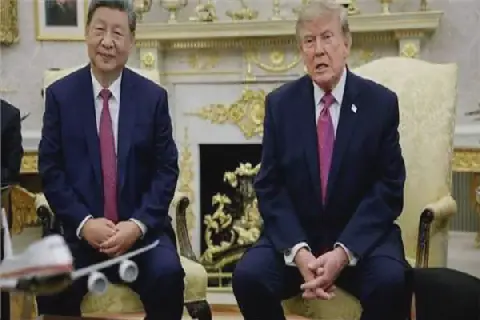
US President Donald Trump has endorsed IMEC, describing it as "one of the greatest trade routes in all of history." He argued that Iranian attacks on shipping in the region underscored the need to move Middle East energy infrastructure away from routes controlled by Tehran. The US and India are eager to advance the project, but the situation in the Middle East remains a significant challenge.
External Affairs Minister S Jaishankar has been highlighting India's concerns over attacks on seafarers, emphasizing the need for stable maritime zones and continuity of statehood for island and coastal states. India and Liberia have brought together a group to address these concerns. Jaishankar has also met with Cyprus Foreign Minister Constantinos Kombos to discuss bilateral ties and regional challenges.
The IMEC project has the potential to transform trade and economic relations between India, the Middle East, and Europe. The corridor is envisioned as a linked chain of ports and railways, with goods from Indian ports traveling by sea to a Gulf port, then by rail through Saudi Arabia and Jordan to Israel's Mediterranean coast, before continuing by sea to ports in France, Italy, and Greece.
Analysts view IMEC as a long-term infrastructure ambition rather than a near-term alternative to existing energy transit routes. Despite the delays, the US and India remain committed to advancing the project, which they believe will have a significant impact on regional trade and economic development. The project's success will depend on the stability of the Middle East region and the ability of participating countries to work together.
Key points
- The India-Middle East-Europe Economic Corridor is a top priority for the US and India, but its progress is being hindered by the situation in the Middle East.
- The project aims to improve connectivity, reduce transport costs, and strengthen regional supply chains between India, the Middle East, and Europe.
- The US and India remain committed to advancing the project, which they believe will have a significant impact on regional trade and economic development.