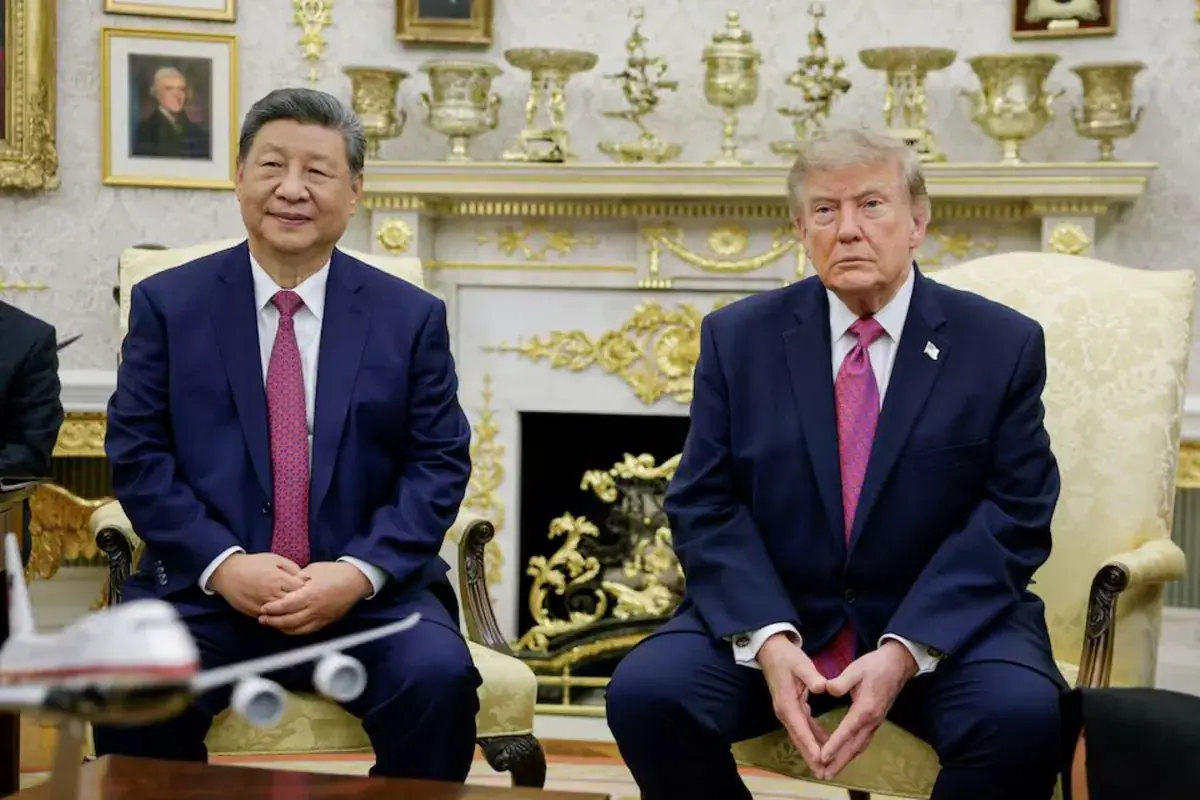
US President Donald Trump and Chinese leader Xi Jinping are scheduled to meet on the sidelines of an APEC leaders' summit in China later this week. The meeting aims to keep a fragile trade truce that is set to expire in January on track. The trade truce was reached after a series of escalating tariffs and retaliatory measures between the two countries. The US and China have been engaged in a trade war since February 2025.
The trade war between the US and China began in February 2025 when Trump imposed a 10 percent duty on Chinese goods over fentanyl and immigration concerns. China responded with levies on US coal, LNG, crude oil, and autos, and curbed exports of five metals key to defense and clean energy. The US doubled fentanyl-related tariffs on China to 20 percent in March 2025, and China retaliated with 10 percent-15 percent levies on US agriculture, hitting $21 billion in exports.
The trade tensions escalated rapidly in April 2025 when Trump unveiled sweeping "Liberation Day" tariffs, including 34 percent on China, effective April 9. China retaliated with matching tariffs, and both sides escalated rapidly, with US tariffs rising to 84 percent and then 125 percent, and China's tariffs climbing to 84 percent and then 125 percent. Beijing also curbed rare-earth exports and warned citizens against US travel.
A 90-day pause in the trade war was agreed upon in May 2025, cutting US tariffs on Chinese goods to 30 percent from 145 percent, while China cut its tariffs to 10 percent from 125 percent. The pause was extended for another 90 days in August. However, the trade truce was short-lived, and tensions flared up again in October 2025, when China widened rare-earth export controls, and Trump responded with an additional 100 percent tariff and export controls on critical software.
Trump and Xi struck a trade truce in October 2025 after talks in South Korea, where Trump agreed to trim tariffs in exchange for Beijing cracking down on fentanyl precursors, resuming soybean purchases, and pausing rare-earth export controls. However, the US Supreme Court ruled against Trump's emergency tariffs in February 2026, striking down the China fentanyl tariffs and the reciprocal tariff regime. Trump responded with a temporary 10 percent global duty under a different statute.
In May 2026, Trump visited Beijing for a summit with Xi, where the two sides announced plans to create new Boards of Trade and Investment, while China agreed to purchases of Boeing jets and US farm products. However, the US imposed new 12.5 percent tariffs on goods from 60 trading partners, including China, in July 2026, over allegations that those countries failed to curb imports made by forced labor.
The two countries made good on a September agreement to extend their tariff truce for two months, and US and Chinese officials also held the first official meeting of the Board of Trade. The meeting aimed to discuss ways to strengthen economic ties and address trade concerns. The US and China have agreed to lower tariffs on a $60 billion batch of non-sensitive goods, and a deadline for a broader trade accord has been pushed into next year.
Key points
- The US-China trade truce is set to expire in January.
- The trade war between the US and China began in February 2025.
- The US and China have agreed to create new Boards of Trade and Investment.
Reporting sources
- How Trump and Xi went from tariff war to trade truce · The Citizen