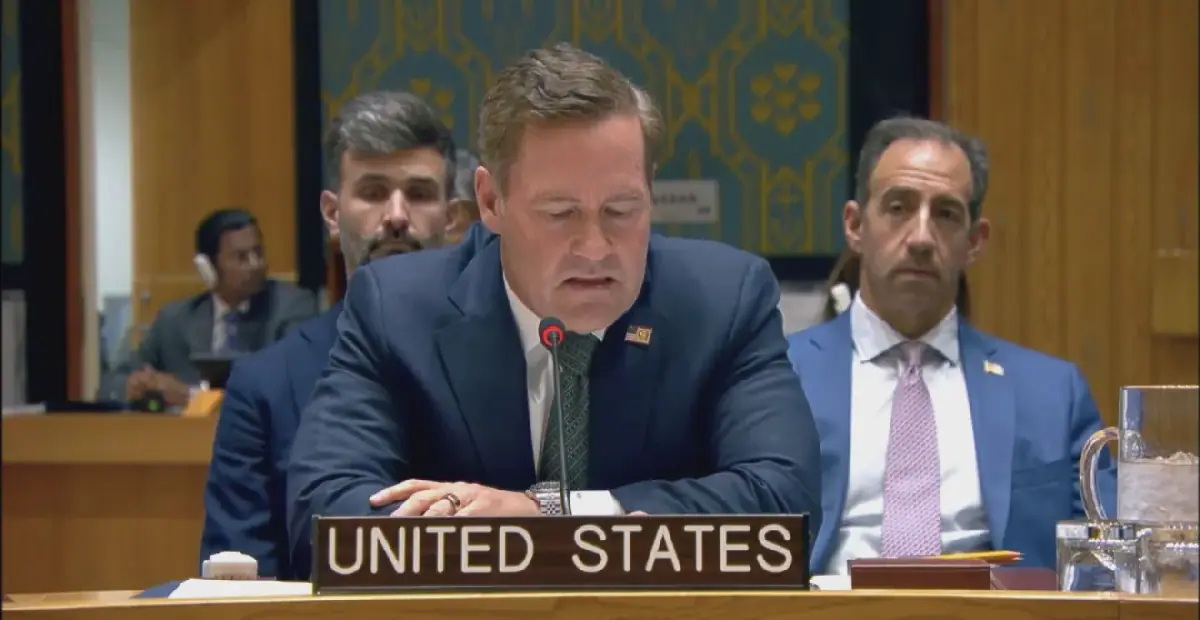
US Ambassador to the United Nations, Mike Waltz, addressed the UN Security Council, highlighting the infeasibility of a referendum in Western Sahara. He stated that all UN Secretaries-General since the 1990s have acknowledged the impossibility of holding a referendum. Waltz emphasized that the UN itself has expressed doubts about the feasibility of the referendum.
Waltz cited various reports and statements from UN Secretaries-General, including Boutros Boutros-Ghali, Kofi Annan, and others, who have expressed concerns about the feasibility of the referendum. He mentioned that in 1996, the Security Council suspended the identification of voters due to disagreements among parties. In 2002, Annan and his personal envoy, James Baker, concluded that implementing the original settlement plan was highly unlikely.
The US Ambassador stressed that the US supports the principle of self-determination but emphasized that there are various ways to achieve this. He stated that the US had presented a resolution, supported by 11 members of the Security Council, which aimed to take concrete steps to end the 50-year-old conflict. Waltz expressed regret that some council members used their veto power to block the resolution.
Waltz highlighted the humanitarian crisis in the Tindouf refugee camps, where nearly two-thirds of children under five suffer from anemia, and one in ten children receives adequate nutrition. He emphasized that the situation is inhumane and unsustainable, with refugees living in camps for over 50 years. The US Ambassador called on the Security Council to reconsider the situation.
Waltz mentioned that the US is willing to work with the UN Secretary-General to ensure a organized and stable withdrawal of the UN Mission for the Referendum in Western Sahara (MINURSO). He emphasized the need to protect UN personnel and meet the legitimate security and humanitarian needs of the region.
The US Ambassador expressed disappointment with the current situation, describing it as unacceptable. He stated that the situation in Western Sahara is a frozen conflict that has lasted for 50 years, with a new generation born and raised in refugee camps. Waltz emphasized the need for a negotiated peace and called on the parties to work towards a lasting solution.
Waltz concluded by emphasizing the US commitment to finding a peaceful solution to the conflict. He stated that the US will continue to work with the UN Secretary-General, the parties involved, and other stakeholders to achieve a negotiated peace that addresses the legitimate concerns of all parties.
Key points
- US Ambassador Mike Waltz emphasizes the infeasibility of a referendum in Western Sahara.
- The humanitarian situation in Tindouf refugee camps is inhumane and unsustainable.
- The US is willing to work with the UN Secretary-General to ensure a stable withdrawal of MINURSO.