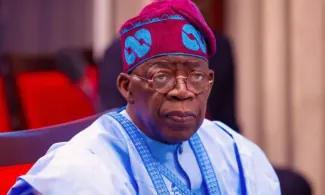
The U.S. Attorney's Office for the District of Columbia, led by Jeanine Pirro, has been defending the FBI and DEA's refusal to fully disclose law enforcement records on Nigerian President Bola Ahmed Tinubu. The records were sought by transparency activist Aaron Greenspan under the Freedom of Information Act. In a recent court filing, the government asked a federal judge to grant summary judgment to the FBI and DEA, arguing that they conducted reasonable searches and properly withheld or redacted information protected by federal law.
The brief, signed by Assistant U.S. Attorney Samantha-Josephine Baker, says the FBI searched for "Bola" and "Tinubu" separately and manually reviewed pages in a multi-subject file. The agencies also claim they released information that could be separated from material they consider exempt. The government relies on several FOIA exemptions, including those that protect federal grand-jury information, pen-register data, internal prosecutorial strategy, confidential sources, investigative techniques, and private individuals' identities.
The filing invokes Exemption 5, describing the records as reflecting the "thought process, strategy and legal impressions" of U.S. Attorney's Office personnel working with federal investigators on third-party criminal cases. It also invokes Exemption 7(F), which covers law-enforcement records whose release could endanger someone's life or physical safety. A source close to the case characterized Pirro's role as a strong defense of Tinubu, saying "When you have Jeanine Pirro defending Tinubu. That is the entire Trump administration."
Pirro's office is advocating for the federal agencies' position, stating that the withholdings protect law-enforcement, privacy, and safety interests. Pirro urged the court to rule in favor of FBI and DEA in her submission, saying the court should grant the defendants' motion and enter judgment in favor of the agencies. Pirro's political relationship with U.S. President Donald Trump is part of the context surrounding her leadership of the office, having been appointed interim U.S. Attorney for the District of Columbia in May 2025.
The case began before Pirro took office, with the D.C. federal court ruling in April 2025 that the CIA could refuse to confirm or deny whether it held responsive records. The court directed the FBI and DEA to search for and process non-exempt records. Tinubu's lawyers filed a separate brief on August 28, 2026, asking the court to uphold the agencies' redactions and withholdings, arguing that the records concern Tinubu's private interests and that their disclosure could invade his privacy.
Greenspan's lawsuit seeks historical FBI and Drug Enforcement Administration records concerning Tinubu and others. He discussed three U.S. court cases connected to a 1990s investigation into a heroin-trafficking network in an interview. The cases include a criminal prosecution of members of the alleged network, a separate case involving Nigerian businessman Abiodun Agbele, and a civil forfeiture proceeding involving funds held in an account in Bola Ahmed Tinubu's name.
The lawsuit is ongoing, with the court yet to make a decisive ruling. A source close to the case cautioned against expecting a decisive revelation, saying "There is no real smoking gun." The government's latest filing was seen as a strong pushback against Greenspan's request, with the source describing it as "a very strong pushback against Aaron's request" and characterizing Baker as "a top government lawyer."
Key points
- US Attorney Jeanine Pirro, a Trump ally, is defending the FBI and DEA's refusal to disclose law enforcement records on Nigerian President Bola Ahmed Tinubu.
- The government argues that the records are exempt from disclosure under several FOIA exemptions, including those that protect federal grand-jury information and confidential sources.
- The case has sparked controversy, with Greenspan's lawsuit seeking to shed light on historical records concerning Tinubu and others.