The situation in Haiti continues to deteriorate with alarming reports of gang violence. According to the UN High Commissioner for Human Rights, 5700 victims have been recorded since January 2026. This surge in violence is attributed to the ongoing turf war between two major gangs and their allies in Port-au-Prince. The gangs, known as the G9 and G-Pep, have controlled up to 90% of the city since 2023.
To address the crisis, the UN High Commissioner for Human Rights and experts recommend accelerating the deployment of a multinational security mission and strictly enforcing an arms embargo to counter the gangs. Additionally, they stress the need to combat impunity, reform the judicial system, ensure humanitarian access, and promote an inclusive political transition.
In response to the escalating violence and the government's inability to contain it, a self-defense movement known as "bwa kale" has emerged. This armed group aims to combat the gangs, adding another layer of complexity to the situation. Various solutions have been proposed, ranging from robust security measures to softer approaches, to restore order and stability in Haiti.
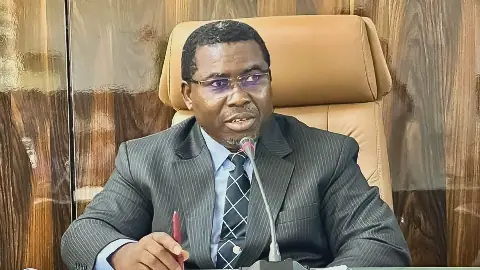
Professor Joseph Vincent Ntuda Ebodé, a prominent Cameroonian academic, emphasizes the need for a genuine national refoundation in Haiti. He notes that restoring state authority requires a combination of security, political reform, and international support. This involves providing substantial operational support to the Haitian National Police and deploying a multinational security mission to stabilize critical areas.
Experts also recommend organizing transparent and inclusive elections to establish a legitimate government. This would involve electing a president and parliament to replace the current transitional government. Furthermore, clarifying the distribution of powers between the president and prime minister is crucial to preventing institutional blockages.
The international community has responded to the crisis, with the UN recently extending the presence of the Gang Suppression Force (FRG) in Haiti for six months. While the Haitian government has welcomed this decision, its long-term effectiveness in stabilizing the country and protecting civilians is debated due to logistical constraints and its fundamentally military approach.
The situation in Haiti remains critical but not hopeless. Various stakeholders, including international organizations, governments, and local groups, are working together to find a lasting solution. The path to stability and peace in Haiti seems long and challenging but with concerted efforts, there is hope for a better future.
Key points
- The UN High Commissioner for Human Rights reports 5700 victims of gang violence in Haiti since January 2026.
- Experts recommend a combination of security, political reform, and international support to restore state authority in Haiti.
- The international community debates the effectiveness of a multinational security mission in stabilizing Haiti.